




News and views


Geosciences, Australian minerals and Australian prosperity
The Australian Academy of Science welcomes the Australian Government’s renewed investment in Geoscience Australia (GA). This investment will help drive our nation’s critical minerals industry through large-scale mapping and exploration.

Shaping a science system to support our national ambitions
The Australian Academy of Science is developing a 10-year plan to demonstrate how science needs to evolve to achieve our national ambitions and advance Australian interests locally and globally.
The path of pesticides: researcher named Australian representative for global prize
Research into the insidious and far-reaching impacts of pesticides has seen an environmental engineer chosen to represent Australia in a global competition for breakthroughs in sustainability science.
Australia's extinction crisis: public hearing statement
Australia is failing to halt, slow, or reverse the loss of biodiversity. We have one of the worst records of species extinctions of any continent, with nearly 50% of the world’s known and historically recorded mammal extinctions.
Global marine heatwave a stark reminder: President’s statement
The US National Oceanic and Atmospheric Administration (NOAA), a leading authority in climate and oceanic research, declared a global coral bleaching event overnight.
Thomas Davies 2024 grant to support nine marine, soil and plant researchers
From the genetics of bacteria that help legumes thrive, to the impact of microplastics in coastal wetlands and the path of sulphur through the sea and beyond—the 2024 Thomas Davies Research Grant for Marine, Soil and Plant Biology is supporting the wide-ranging work of nine early- and mid-career researchers.
Coral reefs, protein folding and climate change: Research conferences win funding
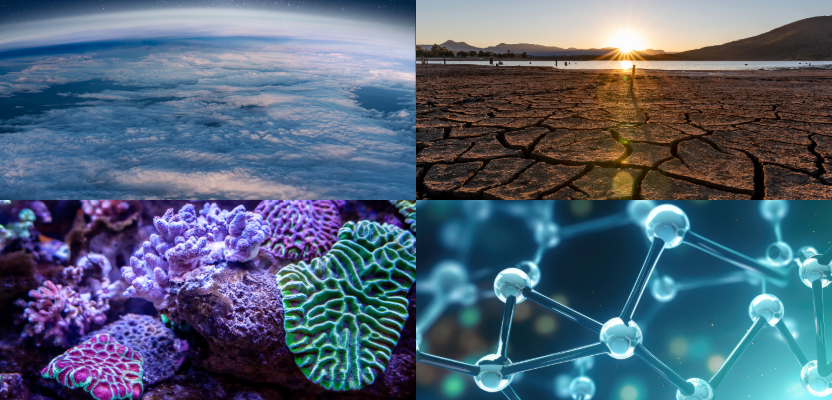
The Australian Academy of Science is proud to support scientific research through sponsorship of research conferences that focus on rapidly developing fields of research.
Restoring turtle habitats, protecting lizards and helping frogs with the Margaret Middleton Fund
Three early-career researchers have been awarded funding for ecology projects thanks to the Margaret Middleton Fund for endangered Australian native vertebrate animals.
2024 Max Day Awards: restoring ecosystem engineers and protecting marine environments from microplastics
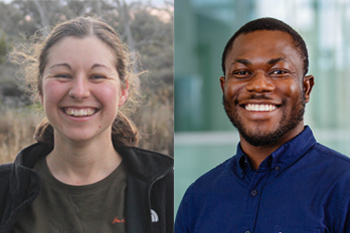
Two early career researchers have each been awarded a 2024 Max Day Environmental Science Fellowship Award for their interdisciplinary research on protecting the environment.