


Fellows' biographical memoirs
Each biographical memoir of deceased Fellows of the Academy is carefully researched, resulting in a unique biographical collection of celebrated lives and important achievements.


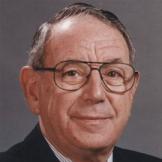
Hans Charles Freeman 1929–2008
Hans Freeman was a leading figure in X-ray crystallography and other advanced X-ray techniques in Australia and internationally. He played an important role in gaining access for Australian scientists to international facilities such as synchrotron radiation sources at the dawning of the era of ‘Big Science’.
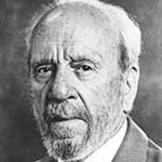
Herbert Cole Coombs 1906-1997
With the death of Herbert Cole ('Nugget') Coombs on 29 October 1997, Australia lost its greatest public servant, a man who spent his life as an employee of the Commonwealth initiating major civilizing activities in economic and cultural fields, and after his retirement became a great champion of the rights of Aboriginal Australians.
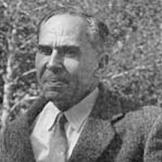
Herbert George Andrewartha 1907-1992
Herbert George Andrewartha was born in Perth on 21 December 1907, the second of three children of George and Elsie Andrewartha. His father was a primary-school teacher, later a headmaster. The family moved often to country towns in Western Australia where his father was posted, but they maintained a base in a small farm at Gosnells, about 40 km from Perth.
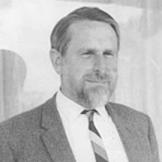
Herbert Sydney Green 1920-1999
Bert Green's influence on the development of theoretical science in Australia during the nearly fifty years he lived here cannot be overestimated. From the time he arrived in Adelaide in July 1951, until his death on 16 February 1999, he produced articles and books covering topics as diverse as particle physics, environmental science and neurophysiology. In each of the areas in which he worked, his contributions were always marked by erudition and originality.
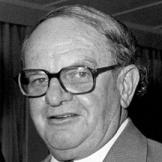
Ian Clunies Ross 1899-1959
When the Australian fifty-dollar note was issued in 1972, it bore the heads of two scientists. On one side was Howard Florey, co-discoverer of penicillin. On the other side was Ian Clunies Ross. His reputation was due in part to concrete achievements, but also to the fact that, with a distinctive appearance, personality and style, he caught the imagination of many of those who met him or heard him speak.
Ian Walter Boothroyd Thornton 1926-2002
Ian Thornton was a fine zoologist, an accomplished academic acknowledged internationally as an authority in his field, and an admired leader and mentor to his colleagues and to generations of students. He came to Australia in early 1968 as Foundation Professor of Zoology at La Trobe University, Melbourne, and remained associated with that department, latterly as Emeritus Professor, for the rest of his life.
James Meadows Rendel 1915-2001
James Meadows Rendel was born on 16 May 1915 in England. He moved to Australia in 1951 to join CSIRO and was appointed Chief of the Division of Animal Genetics in 1959. He was elected to the Australian Academy of Science in 1960, retired from CSIRO in 1980 and died on 4 February 2001. His influence on genetics and the development of the theory and practice of animal breeding in Australia was profound.