


David Craig Medal and Lecture

Award highlights
- The Medal recognises contributions of a high order to any branch of chemistry by active researchers.
- The awardee is expected to present several public lectures in cities across Australia.
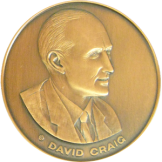
- This is a career award made in honour of the outstanding contribution to chemical research of the late Emeritus Professor David Craig AO FAA FRS.
The David Craig Medal and Lecture is a career award made in honour of the outstanding contribution to chemical research of the late Emeritus Professor David Craig AO FAA FRS. Its purpose is to recognise contributions of a high order to any branch of chemistry by active researchers. The awardee is expected to present several public lectures in cities across Australia. The award is made annually and is given to candidates who are normally resident in Australia, with the majority of the relevant research having been conducted in Australia.
Career awards recognise achievement over a career of whatever length.
This award is open to nominations for candidates from all genders. The Australian Academy of Science encourages nominations of female candidates and of candidates from a broad geographical distribution.
Candidates may be put forward for more than one award. If a proposed candidate is already the recipient of an Academy award, the second award must be for a distinct, additional, body of work undertaken since the first award, and/or work in a different field.
Key dates
Below are the key dates for the nomination process. While we aim to keep to this schedule, some dates may change depending on circumstances.
GUIDELINES
The following guidelines and FAQs provide important information about eligibility, submission requirements, and assessment processes. Please review them carefully before submitting a nomination.
How to nominate a scientist for the Academy’s honorific awards
The following guidelines contain detailed information for nominators.
These guidelines contain information for honorific award nominators.
The following guidelines contain information for honorific award referees.
These guidelines contain information for honorific award referees.
Please submit your nominations using the Nominate button found on the top right of this webpage when nominations are open.
Please note the Academy uses a nomination platform that is external to the main Academy site. Nominators will be required to create an account on the platform. Even if you are familiar with the nomination process, please allow extra time to familiarise yourself with the platform.
Early-career, mid-career and career medals
Can I nominate myself?
- No – you must be nominated by someone else. Self-nominations are not accepted.
Can I submit a nomination on behalf of someone else?
- Yes – you can submit a nomination on behalf of someone else if you are not the nominator. An example would be a university grants office or personal/executive assistant completing the online nomination form on behalf of a nominator. Once the form is submitted, the nominator will be sent an email confirming that the nomination has been completed. If a nominee submits a nomination for themselves on behalf of a nominator it will not be considered a self-nomination.
Residency requirements
- Winners of all awards except the Haddon Forrester King Medal should be mainly resident in Australia and/or have a substantive position in Australia at the time of the nomination deadline. Unless explicitly stated in the awarding conditions, the research being put forward for the award should have been undertaken mainly in Australia. Some awards have more specific conditions that the relevant selection committee must apply and nominators are advised to read the conditions associated with each award very carefully.
Honorific career eligibility (more specific details found in the honorific awards nominator guidelines and the honorific award post PhD eligibility guidelines)
- Career eligibility is calculated by calendar year.
- Early career awards are open to researchers up to 10 years post-PhD.*
- Mid-career awards are open to researchers between eight and 15 years post-PhD.*
- * or equivalent first higher degree e.g. D.Phil., D.Psych., D.Sc.
- Please note that the Awards Committee may consider nominees with post PhD dates outside of these ranges if a career exemption request is being submitted with the nomination, further guidelines on career exemption requests can be found in the nomination guidelines.
- See the post-PhD eligibility guidelines document for relevant conferral dates.
Academy fellowship requirements in award nominations
- Fellows and non-Fellows of the Academy can provide nominations for either Fellows or non-Fellows for all awards.
Women only awards
- The Dorothy Hill, Nancy Millis and Ruby Payne-Scott Medals are for women only. These medals are open to nominees who self-identify as a woman in the award nomination form. The Academy does not require any statement beyond a nominee’s self-identification in the nomination form.
- This practice is consistent with the Sex Discrimination Act 1984, which has recognised the non-binary nature of gender identity since 2013, and gives effect to Australia’s international human rights obligations. The Academy remains committed to the fundamental human rights principles of equality, freedom from discrimination and harassment, and privacy, as well as the prevention of discrimination on the basis of sex and gender identity.
PREVIOUS AWARDEES
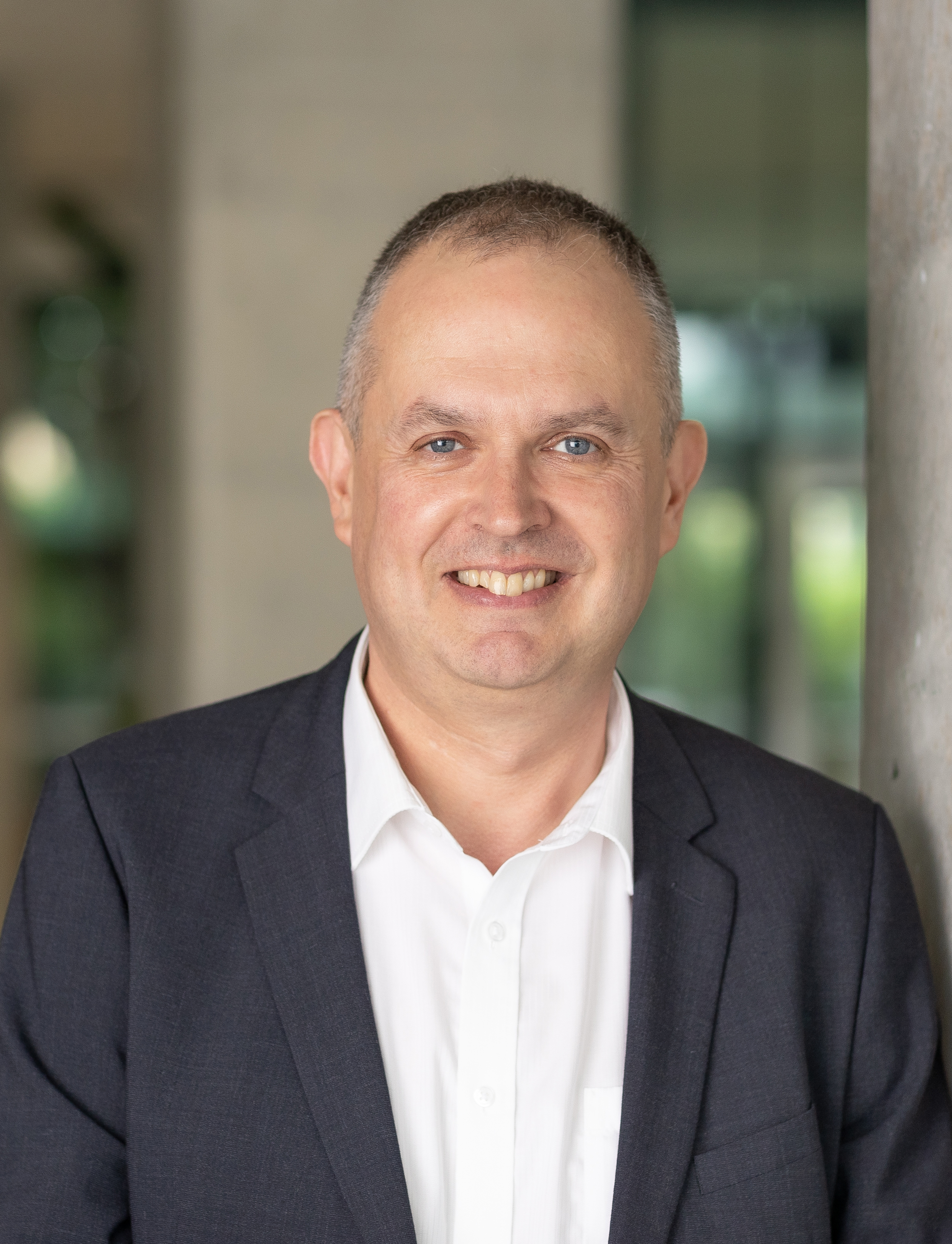
Professor Philip Gale, University of Technology Sydney
Membranes in cells consist of a bilayer formed from lipid molecules. The interior of this bilayer is ‘oily’ and ions and molecules that are charged including species with a negative charge (known as anions) are only able to pass through special channel molecules present in the membrane. Professor Philip Gale is developing small molecules that wrap around anions giving them an ‘oily’ coat and allowing them to pass through the membrane.
These molecules have potential future applications treating diseases where the channel molecules in the membrane are faulty (such as cystic fibrosis) or where perturbing the anion concentrations within the cell triggers cell death (useful in compounds designed to treat cancer). Professor Gale is developing ways to switch on the transport properties of these molecules in the environments found within cancer cells allowing them to be targeted to tissue requiring treatment so providing a potential new approach to the treatment of disease.
Professor Alison Rodger FAA, Australian National University
Scientific advances invariably depend on the quality and diversity of available techniques and instrumentation and on the ability of researchers to understand the data that are produced. Professor Alison Rodger has spent her career inventing new spectroscopic techniques to advance understanding of the molecular world. She uses polarised light to give data about helical structures and molecular assemblies. She complements the experimental work by developing the theoretical frameworks required to enable use of the data in applications such as characterising the structure of biopharmaceutical products and understanding the basic biology of cell division. Professor Rodger’s most recent invention is that of linearly polarised luminescence where the intensity of polarised light emitted is used to characterise biomolecular assemblies such as DNA-drug complexes. She is passionate about working to ensure equality of opportunity and has benefited from working with a wide range of people from all over the world.
Professor Justin Gooding FAA FTSE, University of New South Wales
Professor Justin Gooding is an international leader in the field of surface chemistry; in particular, he is renowned as a leading authority in the modification of surfaces for the development of better sensing devices. Characterised by using molecular to nanoscale control, his science systematically addresses fundamental questions in electrochemistry and biology, as well as general challenges facing many sensors and analytical devices. He has made outstanding contributions to fundamental and applied research using self-assembled monolayers to fabricate molecular scale constructs on surfaces that provided new measurement tools. Professor Gooding’s work has shown not only how to design and fabricate sophisticated surface architecture for sensing, but he has also changed thinking on both the level of control that is possible and the types of information that can be acquired using that control.
Professor David Craik FAA FRS, University of Queensland
Professor David Craik discovered a family of plant peptides called cyclotides and is a world leader in defining their structures, functions and applications as ecofriendly pesticides and molecular scaffolds in drug design. He has shown how their unique structure makes them exceptionally stable and resistant to enzymes that would normally degrade peptide-based drugs. The work is significant because peptides are widely regarded as exciting drug leads, potentially safer and more effective than existing classes of drugs. However, previous peptide-based drugs are prone to instability and need to be injected (like insulin) rather than orally ingested. Professor Craik’s work on cyclotides shows how peptides can be stabilised and made more drug-like, thereby unleashing their potential in drug design. The natural function of cyclotides is to protect plants from insects and Professor Craik’s work has led to companies exploring cyclotides as pesticides. A cyclotide-based product, Sero-X, is now an approved eco-friendly pesticide for cotton and vegetable crops.
Professor Christopher Barner-Kowollik FAA, Queensland University of Technology
Professor Christopher Barner-Kowollik’s work fuses the in-depth understanding of chemical processes that are induced by light with their use to prepare soft matter materials, with applications from 3D printing inks to photodynamic materials. His main body of work – based on an esteemed career in physical-organic chemistry – exploits light as a ‘molecular surgical tool’, where its colour and intensity are finely adjustable gates to ‘operate’ on the molecular structure of materials with unprecedented precision. This precision gives rise to materials whose mechanical strength and chemical composition can be readily adjusted without bringing them in contact with chemicals or heat. Professor Barner-Kowollik’s work has enabled new materials concepts, for example a material that is solely stabilised by light, so-called ‘light stabilised dynamic materials’.
Professor Thomas Maschmeyer FAA FTSE, University of Sydney
Professor Thomas Maschmeyer’s research vision is driven by a strong desire to help address the many urgent physical challenges we face due to climate change and global resource limitations in combination with a growing world population. In this context, he sees catalysis as a key science and technology and has made seminal contributions to catalytic research that have transformed how we design, interrogate (under operating conditions) and use catalysts in (petro) chemical processing as well as photo- and electrocatalysis.
His work has led to fundamental breakthroughs in catalytic materials, in-situ characterisation, green chemistry, hydrothermal processing, ionic liquids and energy materials.
He has translated many of his successes from his laboratory to scale, with his inventions adopted in various industry sectors globally, to enable a circular economy, including (petro) chemical re-processing of (plastic) waste, utilisation of renewable chemicals and energy storage through his emerging battery technology.
Dr Graeme Moad FAA, CSIRO
Dr Graeme Moad is recognised as a world leader in the field of polymer chemistry. His achievements range from fundamental chemistry, in the areas of polymer design and synthesis, and polymerisation kinetics and mechanism, to new materials for industrial uses, nanotechnology, organic electronics and bioapplications. His research has contributed substantially to the development of new synthetic methods for the controlled synthesis of polymers with defined architecture and composition that have revolutionised the field and resulted in highly cited publications and patent applications.
Professor Peter Gill FAA, Australian National University
Professor Gill has made both fundamental and applied contributions to the progress of quantum chemistry. His models for three-electron bonding and dication dissociation have been widely adopted by experimentalists. His developments in efficient two-electron integral algorithms, perturbation analysis, linear-scaling methodology, DFT functionals, the theory of excited states, and Coulomb-splitting techniques have all become mainstream tools in his community and, by implementing many of his ideas within his Q-Chem software package, he has ensured that his advances are rapidly translated to other areas of computational science, including pharmaceutical research and the design of new materials. His recent insights into electron correlation and the nature of the uniform electron gas are changing the underlying paradigms of density functional theory (DFT).
Professor Douglas MacFarlane FAA FTSE, Monash University
Professor Doug MacFarlane’s research has focused on the discovery and development of novel liquid salt compounds that offer unique properties as media and solvents for a wide range of applications. Research into these ‘ionic liquids’ has experienced major expansion over the last 25 years. The discoveries of Professor MacFarlane’s group have contributed to the study and use of ionic liquids, helping to establish the area as a major field of chemistry. His group has explored application of ionic liquids in sustainable energy technologies, producing major advances in energy storage in advanced batteries, as chemical energy storage as hydrogen and ammonia, and as thermal energy storage materials for domestic use. The intellectual property arising from some of these developments has been spun out into several start-up companies. His group has also pioneered the use of biocompatible families of these liquid salts as media for therapeutic proteins and as novel pharmaceuticals. These developments have opened up new treatment modalities, including as a topical treatment for skin cancer.
2017
Professor David St Clair Black AO FAA, UNSW Australia
Professor Black is recognised as one of the world's leading heterocyclic chemists, having made major contributions to organic chemistry in the general fields of heterocyclic chemistry, coordination chemistry and natural products. His research has focused on the deliberate design and synthesis of new structural types of organic molecules and the discovery of new synthetic methodologies, especially in heterocyclic chemistry, which is the field responsible for the generation of the overwhelming majority of pharmaceutical agents and drugs in use today. While many of these new structures have a link to important natural products, especially in the area of indole chemistry, they are designed to display deliberate reactivity variations that are not found in nature.
2016
Professor Jeffrey Reimers FAA, University of Technology, Sydney and International Centre for Quantum and Molecular Structure Shanghai University
Professor Reimers pioneered the application of the chemical quantum theory of coupled electronic and nuclear motions to large systems of biochemical and technological relevance. His work explains how during photosynthesis the protein structure manipulates the complex light-matter interaction around the ‘special-pair’ solar-to-electrical conversion apparatus to control energy harvesting. He has also developed ways of interpreting the chemical signatures manifested when single organic molecules conduct electricity, and he has evaluated the role of chemical quantum effects in manifesting consciousness.
2015
Professor Denis J Evans FAA, Australian National University
Professor Evans has made outstanding contributions to extending classical statistical mechanics to modern systems. He is regarded internationally as the originator of the Fluctuation Theorems, which extend our understanding of the thermodynamics of small systems observed over short time. His work resolves unsettled foundations in thermodynamics that persisted over 100 years, unifies the field of thermodynamics, and provides rigorous simulation methods that are widely used today.
2014
Emeritus Professor Curt Wentrup FAA, The University of Queensland
Numerous chemical reactions take place via so-called ‘reactive intermediates’, i.e. short-lived molecules that are undetectable under ordinary reaction conditions. In order to understand chemical reactions, it is necessary to understand the role of these reactive intermediates. Curt Wentrup has pioneered methods to study them and observe them directly by combining the technique of flash vacuum thermolysis with low temperature spectroscopy. The resulting knowledge is of fundamental importance for theoretical chemistry as well as practical applications in the synthesis of new types of compounds.
2013
Professor Peter Andrew Lay FAA, The University of Sydney
Professor Lay uses various chemical, spectroscopic, biochemical and cell biology techniques to understand the mode of action and toxicities of metal-containing anti-cancer, anti-inflammatory, and anti-diabetic drugs and supplements; and to provide fundamental insights into understanding the biochemistry of cardiovascular diseases, cerebral malaria, and meningitis.
2012
Professor Maxwell J Crossley FAA, University of Sydney
Professor Maxwell Crossley is a world leader in research on porphyrins, a class of compounds of great importance to life and for which many new uses are emerging in nanosciences. Haem, the red coloured oxygen carrier in blood, and chlorophylls, green pigments responsible for photosynthesis in plants, are important porphyrins. Professor Crossley designs and constructs new functional porphyrin systems for use in solar energy devices, in mimicry of photosynthesis and also in the burgeoning field of molecular-scale electronics. He has been responsible for many seminal advances in the field.
2011
Professor Ian Dance FAA, The University of New South Wales
Ian Dance has led international research in four areas of fundamental chemistry. He pioneered the preparation and understanding of compounds containing metals and sulphur, he revealed the existence of a large number of basic inorganic compounds in gaseous form, he developed an understanding of the ways in which many molecules recognise and organise their surroundings, and he developed a chemical understanding of the long-elusive mechanism by which plants chemically convert unreactive nitrogen in the atmosphere to the forms required for life.
2010
Professor Robert Gilbert FAA, University of Queensland
Robert Gilbert’s research covers three fields not normally considered to be related: the dynamics of chemical reactions, mechanisms of polymerisation, and the relationship between structure and property of biopolymers. This has led to new types of experiments on complex chemical systems, such as emulsions and paints. His work on starch polymer provides the basis of research to develop plants with improved nutritional characteristics, which is important for people with diabetes and obesity.
2009
Emeritus Professor Leonard Lindoy FAA, The University of Sydney
Leonard Lindoy has made significant contributions to the area of macrocyclic chemistry, molecular and ionic recognition, and metallo-supramolecular chemistry. He has had a long and successful interaction with industry, especially with the design of ligands for the selective extraction of metal ions from mixtures. His work has been acknowledged by many national and international awards, and by invitations to lecture at major conferences. Lindoy has also been an exceptional educator and promoter of science in general, and chemistry in particular.
2008
Professor Leo Radom, University of Sydney
Leo Radom has made major contributions to the use of theory in areas of chemistry. His research covers the application of computational quantum chemistry to the study of chemical structures and reactions. He has contributed to areas such as gas-phase ion chemistry, substituent effects in cations, radicals and anions, free radical chemistry, 'designer chemistry', and transition-metal-free hydrogenation. His early papers provided a template for benchmarking and applying theoretical methods to chemistry.
2007
Professor Hans Freeman, University of Sydney
Hans Freeman has made distinguished contributions to science through the study of the crystal structures of biological coordination compounds including metal-peptide complexes and metalloproteins. He introduced the use of computers for crystallographic calculations to Australia, and his laboratory was the first in the southern hemisphere to determine the crystal structure of a protein, plastocyanin. He has been a selfless advocate for macromolecular crystallography; a recent example is his membership of the Policy and Review Board of the Australian Synchrotron Research Program. He was the Foundation President of the Society of Crystallographers in Australia.
2006
Professor Barry Ninham, Australian National University
Barry Ninham is a talented theoretical physical chemist and one of the world’s leading theoreticians in colloid science. He has specific expertise in molecular self-assembly and non-electrostatic interactions between atoms and molecules. He has pioneered the measurement of surface forces and introduced the ground-breaking concept of well-defined microstructures in substances such as emulsions. He completed his undergraduate and Masters at the University of Western Australia and a PhD at the University of Maryland. He is Founder and Head of the Applied Mathematics Department.
2005—JW. White
2004—AM. Bond
2003—MI. Bruce
2002—LN. Mander
2001—MN. Paddon-Row
2000—NS. Hush