



Gustav Nossal Medal

Award highlights
- The award recognises research of the highest standing in the field of global health and is open to researchers 8 to 15 years post PhD in the calendar year of nomination.
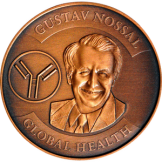
- This award honors the contributions made to fields of cellular immunology, antibody formation and tolerance and vaccine research science by Professor Sir Gustav Nossal AC CBE FAA FRS FTSE.
The Gustav Nossal Medal for Global Health has been established to honour the contributions made to fields of cellular immunology, antibody formation and tolerance and vaccine research science by Professor Sir Gustav Nossal AC CBE FAA FRS FTSE.
The award recognises research of the highest standing in the field of global health and is open to mid-career researchers 8 to 15 years post PhD in the calendar year of nomination, except in the case of significant interruptions to a research career, and may include areas such as, but not limited to, infectious diseases, nutrition and vaccine development.
Funds were donated by Lady Tania Feldmann and Professor Sir Marc Feldmann AC FMedSci FAA FRS to establish this award over a 20 year period. It will be presented annually from 2015 and biennially from 2018 and is restricted to candidates who are normally resident in Australia.
The Australian Academy of Science encourages nominations of female candidates and of candidates from a broad geographical distribution.
Candidates may be put forward for more than one award. If a proposed candidate is already the recipient of an Academy early-career honorific award, they will not be eligible for nomination for another early-career or a mid-career honorific award. A mid-career honorific award recipient will also not be eligible for nomination for another mid-career honorific award. Fellows of the Academy are ineligible to be nominated for early and mid-career awards.
Key dates
Below are the key dates for the nomination process. While we aim to keep to this schedule, some dates may change depending on circumstances.
GUIDELINES
The following guidelines and FAQs provide important information about eligibility, submission requirements, and assessment processes. Please review them carefully before submitting a nomination.
How to nominate a scientist for the Academy’s honorific awards
The following guidelines contain detailed information for nominators.
These guidelines contain information for honorific award nominators.
The following guidelines contain information for honorific award referees.
These guidelines contain information for honorific award referees.
See below for specific relevant conferral dates for the current award round.
This document contains specific PhD conferral dates for early and mid-career honorific awards in the current award round.
Please submit your nominations using the Nominate button found on the top right of this webpage when nominations are open.
Please note the Academy uses a nomination platform that is external to the main Academy site. Nominators will be required to create an account on the platform. Even if you are familiar with the nomination process, please allow extra time to familiarise yourself with the platform.
Early-career, mid-career and career medals
Can I nominate myself?
- No – you must be nominated by someone else. Self-nominations are not accepted.
Can I submit a nomination on behalf of someone else?
- Yes – you can submit a nomination on behalf of someone else if you are not the nominator. An example would be a university grants office or personal/executive assistant completing the online nomination form on behalf of a nominator. Once the form is submitted, the nominator will be sent an email confirming that the nomination has been completed. If a nominee submits a nomination for themselves on behalf of a nominator it will not be considered a self-nomination.
Residency requirements
- Winners of all awards except the Haddon Forrester King Medal should be mainly resident in Australia and/or have a substantive position in Australia at the time of the nomination deadline. Unless explicitly stated in the awarding conditions, the research being put forward for the award should have been undertaken mainly in Australia. Some awards have more specific conditions that the relevant selection committee must apply and nominators are advised to read the conditions associated with each award very carefully.
Honorific career eligibility (more specific details found in the honorific awards nominator guidelines and the honorific award post PhD eligibility guidelines)
- Career eligibility is calculated by calendar year.
- Early career awards are open to researchers up to 10 years post-PhD.*
- Mid-career awards are open to researchers between eight and 15 years post-PhD.*
- Please note that the Awards Committee may consider nominees with post PhD dates outside of these ranges if a career exemption request is being submitted with the nomination, further guidelines on career exemption requests can be found in the nomination guidelines.
- See the post-PhD eligibility guidelines document for relevant conferral dates.
- * or equivalent first higher degree e.g. D.Phil., D.Psych., D.Sc.
Academy fellowship requirements in award nominations
- Fellows and non-Fellows of the Academy can provide nominations for either Fellows or non-Fellows for all awards.
Women only awards
- The Dorothy Hill, Nancy Millis and Ruby Payne-Scott Medals are for women only. These medals are open to nominees who self-identify as a woman in the award nomination form. The Academy does not require any statement beyond a nominee’s self-identification in the nomination form.
- This practice is consistent with the Sex Discrimination Act 1984, which has recognised the non-binary nature of gender identity since 2013, and gives effect to Australia’s international human rights obligations. The Academy remains committed to the fundamental human rights principles of equality, freedom from discrimination and harassment, and privacy, as well as the prevention of discrimination on the basis of sex and gender identity.
PREVIOUS AWARDEES
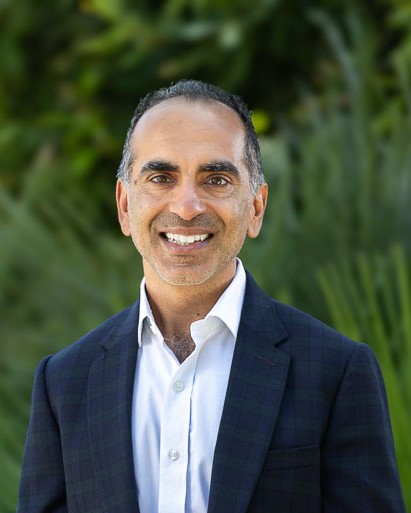
Professor Sant-Rayn Pasricha, Walter and Eliza Hall Institute of Medical Research (WEHI)
Professor Sant-Rayn Pasricha leads a research program that aims to reduce the burden of anaemia and undernutrition in mothers and children in low-income countries, who has made transformative discoveries, resolved key evidence gaps, and directly translated knowledge into policy at the highest international level. His work has influenced World Health Organization (WHO) iron intervention policies for every woman and child in a low-income country, and more recently, directly informed WHO criteria for diagnosis of anaemia for every child, adolescent, woman and man worldwide.
His investigator-initiated trials have recruited more than 8,000 women and children in Malawi and Bangladesh. He has published more than 130 papers including lead author papers in the New England Journal of Medicine, Nature Medicine and The Lancet. Professor Pasricha has chaired WHO committees and the American Society of Hematology Scientific Program, led the Lancet Haematology Commission in Anaemia, and leads the WHO Collaborating Centre for Anaemia Control, ensuring his discoveries are translated quickly into practice.
Professor Andrew Steer, Murdoch Children’s Research Institute
Professor Andrew Steer is a paediatric infectious diseases physician and Director of the Infection and Immunity Theme at the Murdoch Children’s Research Institute. He is an international authority on tropical infectious diseases. His research has established global community-based treatment programs for tropical skin infections, influenced vaccine development for Strep A disease, and introduced diagnostic technologies and control programs for rheumatic heart disease. Professor Steer is a global and national leader in these fields, evidenced by scientific leadership roles, including as Co-Chair of the Strep A Global Vaccine Consortium, Co-Director of the Australian Strep A Vaccine Initiative and Director of the World Health Organization’s Collaborating Centre for Scabies Control.
Professor Rebecca Guy FAHMS, UNSW Sydney
Professor Rebecca Guy is a renowned international authority in the implementation and evaluation of public health interventions related to HIV and sexually transmissible infections (STIs), particularly among vulnerable populations. Among her many achievements to date, she has introduced STI and COVID-19 point-of-care testing in remote Aboriginal communities and led the evaluation of HIV point-of-care tests that can be conducted by people in their own home (HIV self-tests). Serving as Head of the Surveillance Evaluation and Research Program at The Kirby Institute, as well as leader of both the NHMRC Centre of Research Excellence in the Accelerated Implementation of New Point-of-Care Technology for Infectious Diseases and the ARC Industrial Transformation Research Hub to Combat Antimicrobial Resistance, Professor Guy’s research has been highly influential on policy and practice, both in Australia and internationally.
Adjunct Professor Alexandra Martiniuk, University of Sydney
Professor Alexandra Martiniuk is a leader in global research in health systems in low- and middle-income countries (LMIC) and remote Indigenous communities in Australia and Canada. Alexandra uses her pioneering research to identify and deliver solutions to enable better access to primary health care for disadvantaged populations. She has shed light on inequalities and inefficiencies in models of funding between high-income countries and LMICs, enabling greater transparency and informed decision making to build stronger health systems. Her innovative approach to solving global health problems, and her ability to partner with a wide spectrum of key stakeholders and work with the people on the ground have led to policy change for lay health workers in Malawi, revised referral practices in the Solomon Islands, a new educational approach to HIV prevention in all high schools in Belize, and co-development of a large primary care program for LMICs.
Professor Anushka Patel
Professor Anushka Patel, Chief Scientist at The George Institute for Global Health,is an international leader in our understanding of cardiovascular disease management in global populations. With her focus on low‐ and middle‐income countries, she has not only made ground‐breaking research discoveries that have overturned conventional thinking about cardiovascular disease risk factor management, she has also made a significant impact on disruptive low‐cost strategies to deliver effective care. As one of the few clinician scientists globally working in this area, Professor Patel’s work is inspired by the epidemic of chronic non‐communicable diseases affecting populations around the world, but particularly disadvantaged groups in Asia.
2017
Professor Barend Marais, University of Sydney
Professor Marais’ research has helped to measure and characterise the Tuberculosis (TB) disease burden suffered by children, and to highlight the absence of care in places where it is needed most. His work has been acknowledged by the WHO and UNICEF, through renewed commitments to find pragmatic solutions to prevent and treat TB in children. He has also raised awareness that multidrug-resistant (MDR)-TB is actively transmitted within communities, which puts children at risk and requires urgent containment strategies. He wrote the first “survival guide” for paediatricians caring for children with MDR-TB, and contributed to global and regional initiatives to limit its spread.
2016
Professor David Wilson, Burnet Institute
Professor Wilson is recognised internationally for his work in mathematical modelling, impact evaluation, surveillance and public health strategy development by developing innovative approaches to HIV epidemiology, including monitoring and reporting HIV, viral hepatitis and sexually transmitted infections. Professor Wilson has translated his research into high impact, real‐world outcomes, providing the essential evidence base, including cost-effectiveness, to make decisions that affect global health: the epidemiological equivalent of ‘bench-to-bedside’.
2015 inaugural awardee
Professor Nicholas Anstey, Menzies School of Health Research
Professor Anstey has undertaken clinical research on malaria and tuberculosis with partners in the Asia–Pacific. He has identified new ways that the malarial parasite causes severe infections, translating these findings to clinical trials of agents that improve blood supply to vital organs. He has also undertaken clinical trials of drugs to treat all three major species causing malaria in the Asia–Pacific region. He is using his results to contribute to policy change nationally, regionally and globally.