


John Booker Medal

Award highlights
- The award recognises outstanding research in engineering mechanics that addresses problems in the static and dynamic response of physical systems within engineering and applied mathematics disciplines.
- This award honours the memory of Professor John Robert Booker AO, FAA, DEng, FIEAust who worked in the area of theoretical geomechanics.
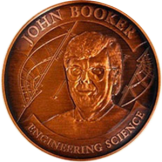
The John Booker Medal in Engineering Science recognises outstanding research in engineering mechanics that addresses problems in the static and dynamic response of physical systems within engineering and applied mathematics disciplines. It honours the memory of Professor John Robert Booker AO, FAA, DEng, FIEAust who worked in the area of theoretical geomechanics and was Professor in the Department of Civil and Mining Engineering at The University of Sydney 1970‒98, and held a personal chair in engineering mechanics at The University of Sydney.
The prize of up to $3,000 is awarded annually to researchers up to 10 years post-PhD in the calendar year of nomination, except in the case of significant interruptions to a research career. The award is restricted to candidates who are normally resident in Australia. Relevant research undertaken outside Australia may be considered, provided the researcher has conducted the majority of their research career—defined as periods of employment or study primarily involving research activities or research training—in Australia, and has been resident in Australia for at least the past two years.
The Academy acknowledges the financial support of the Group of Eight (Go8) Deans of Engineering and Associates.
This award is open to nominations for candidates from all genders. The Australian Academy of Science encourages nominations of female candidates and of candidates from a broad geographical distribution.
Candidates may be put forward for more than one award. If a proposed candidate is already the recipient of an Academy early-career honorific award, they will not be eligible for nomination for another early-career or mid-career honorific award. A mid-career honorific award recipient will also not be eligible for nomination for another mid-career honorific award. Fellows of the Academy are ineligible to be nominated for early and mid-career awards.
Key dates
Below are the key dates for the nomination process. While we aim to keep to this schedule, some dates may change depending on circumstances.
GUIDELINES
The following guidelines and FAQs provide important information about eligibility, submission requirements, and assessment processes. Please review them carefully before submitting a nomination.
How to nominate a scientist for the Academy’s honorific awards
The following guidelines contain detailed information for nominators.
These guidelines contain information for honorific award nominators.
The following guidelines contain information for honorific award referees.
These guidelines contain information for honorific award referees.
See below for specific relevant conferral dates for the current award round.
This document contains specific PhD conferral dates for early and mid-career honorific awards in the current award round.
Please submit your nominations using the Nominate button found on the top right of this webpage when nominations are open.
Please note the Academy uses a nomination platform that is external to the main Academy site. Nominators will be required to create an account on the platform. Even if you are familiar with the nomination process, please allow extra time to familiarise yourself with the platform.
Early-career, mid-career and career medals
Can I nominate myself?
- No – you must be nominated by someone else. Self-nominations are not accepted.
Can I submit a nomination on behalf of someone else?
- Yes – you can submit a nomination on behalf of someone else if you are not the nominator. An example would be a university grants office or personal/executive assistant completing the online nomination form on behalf of a nominator. Once the form is submitted, the nominator will be sent an email confirming that the nomination has been completed. If a nominee submits a nomination for themselves on behalf of a nominator it will not be considered a self-nomination.
Residency requirements
- Winners of all awards except the Haddon Forrester King Medal should be mainly resident in Australia and/or have a substantive position in Australia at the time of the nomination deadline. Unless explicitly stated in the awarding conditions, the research being put forward for the award should have been undertaken mainly in Australia. Some awards have more specific conditions that the relevant selection committee must apply and nominators are advised to read the conditions associated with each award very carefully.
Honorific career eligibility (more specific details found in the honorific awards nominator guidelines and the honorific award post PhD eligibility guidelines)
- Career eligibility is calculated by calendar year.
- Early career awards are open to researchers up to 10 years post-PhD.*
- Mid-career awards are open to researchers between eight and 15 years post-PhD.*
- Please note that the Awards Committee may consider nominees with post PhD dates outside of these ranges if a career exemption request is being submitted with the nomination, further guidelines on career exemption requests can be found in the nomination guidelines.
- See the post-PhD eligibility guidelines document for relevant conferral dates.
- *Or equivalent first higher degree e.g. D.Phil., D.Psych., D.Sc.
Academy fellowship requirements in award nominations
- Fellows and non-Fellows of the Academy can provide nominations for either Fellows or non-Fellows for all awards.
Women only awards
- The Dorothy Hill, Nancy Millis and Ruby Payne-Scott Medals are for women only. These medals are open to nominees who self-identify as a woman in the award nomination form. The Academy does not require any statement beyond a nominee’s self-identification in the nomination form.
- This practice is consistent with the Sex Discrimination Act 1984, which has recognised the non-binary nature of gender identity since 2013, and gives effect to Australia’s international human rights obligations. The Academy remains committed to the fundamental human rights principles of equality, freedom from discrimination and harassment, and privacy, as well as the prevention of discrimination on the basis of sex and gender identity.
PREVIOUS AWARDEES
Associate Professor Jianguang Fang, University of Technology Sydney
Associate Professor Jianguang Fang is a globally recognised research leader for his studies on computational algorithms that aim to design safer, lighter, and more sustainable materials and structures. His work helps engineers better understand how and when materials such as concrete or 3D-printed structures may crack or fail under extreme conditions, including high-speed impacts. By modelling these failure processes in detail, his research contributes to improving the safety and resilience of critical engineering structures – from buildings and bridges to vehicles and aerospace components.
Dr Fang also develops optimisation methods to guide the design of structures that use less material while remaining strong and crashworthy, supporting both human safety and potential reductions in carbon emissions. His research is shaping the next generation of resilient infrastructure and high-performance structures, with broad impact across automotive, transportation, civil, and mechanical engineering.
Associate Professor Qianbing Zhang, Monash University
Assessing lifecycle performance is essential for the sustainability and resilience of infrastructure. It facilitates identification and mitigation of risks throughout all project stages, thereby ensuring infrastructure durability against various hazards. Associate Professor Qianbing Zhang has pioneered a systematic modelling platform for assessing infrastructure risks due to environmental changes, enhancing sustainability and resilience. His innovative framework integrates digitalisation, carbon assessment standards, numerical modelling and optimisation techniques to evaluate carbon emissions and establish benchmarks for construction practices. Additionally, he has developed technologies that improve safety and energy efficiency in mining operations. This platform utilises advanced data inputs and digital technologies to monitor infrastructure throughout its lifecycle. This allows managers to access real-time data for informed decision-making, ensuring safety and preventing failures. His platform is employed in significant projects such as Snowy 2.0 and Victoria’s North East Link, demonstrating its effectiveness in practical applications. His contributions are pivotal in advancing infrastructure safety and environmental management standards.
Associate Professor Lining Arnold Ju, University of Sydney
Associate Professor Lining (Arnold) Ju’s revolutionary research in biomechanics and mechanobiology has led to crucial discoveries, including how cells use single receptors to ‘sense’, ‘read’ and ‘respond’ to mechanical cues by converting them into biological messages. This process helps us understand the mechanical way cells interact with their environment and communicate with each other. As the first engineer and first University of Sydney recipient of the prestigious Snow Fellowship, he has demonstrated his unwavering commitment to advancing biomechanical engineering. His vision involves creating a tiny device that predicts blood clotting tendency and warns people at risk of heart attacks or strokes, potentially saving numerous lives in Australia and around the world. Associate Professor Ju’s innovative contributions to biomechanical engineering have the potential to revolutionise diagnostics and surgical tools, ultimately improving countless lives by applying state-of-the-art engineering principles to critical healthcare challenges.
Dr Amelia Liu, Monash University
Humans have had glass technology since ancient Egyptian times, yet understanding the nature and structure of glass remains a grand scientific challenge. Glasses are materials that retain the disordered structure of liquid when they solidify during fast quenching from the melt. Fundamentally, it is not known why glasses are solid. When crystals solidify from the melt, their rigidity is linked to the symmetry of their atomic arrangements. In contrast, for a glass, the transition to a solid phase is not signalled by any obvious new order. Dr Amelia Liu’s research addresses the central conundrum of the ‘glass problem’ with the development of new experimental tools to measure the structure of glass. In her most recent work, she demonstrated that even in globally disordered glass structures, there is a strong link between local structural symmetry and rigidity. This work illuminates the atomic-scale causes of ageing and brittle failure in glasses. Dr Liu’s new characterisation methods are a step towards engineering the properties of glasses from the atomic level.
Associate Professor Annan Zhou, RMIT University
Associate Professor Annan Zhou has made seminal contributions to the understanding and modelling of the fundamental hydromechanical behaviour of unsaturated soils. Any soil can be unsaturated with water due to either evaporation or engineering processes like excavation. Unsaturated soils have been widely blamed for many geotechnical problems like slope failures, dam collapses, pavement cracking and foundation failures since they may produce large deformation and even suddenly lose their strength in wetting events. Associate Professor Zhou has established a new modelling framework to tackle the most fundamental issues in unsaturated soil mechanics. Within this framework, many unanswered questions and seemingly conflicting behaviours related to strength, deformation, soil-water interaction of unsaturated soils can be reasonably explained and effectively modelled. Based on the novel constitutive modelling framework and robust numerical techniques, he has developed advanced numerical tools for better design and assessment of infrastructure involving unsaturated soils in Australia and worldwide.
Dr Bishakhdatta Gayen, University of Melbourne
Dr Gayen is highly recognised internationally for his cross-disciplinary research across fluid dynamics, environmental engineering and climate processes by addressing the basic physical mechanisms. His ground-breaking computer simulations of turbulent flow over ocean bottom topography have improved knowledge of the energy cascade from tidal motion to internal gravity waves and subsequent dissipation. He has provided the first turbulence-resolving simulations of the complex ice-ocean boundary layer and ablation of icesheets, leading to a new understanding of the mechanism controlling the submarine melting rates and accurate predictions for the dependence of melting rates on ocean conditions. His research also includes development of the first-ever ocean models with fully resolved turbulent convection and boundary layer processes, which provides important new insights to the role played in global ocean circulation by convection below the sea surface in polar seas.
Associate Professor Britta Bienen, University of Western Australia
Associate Professor Britta Bienen’s world-leading research delivers innovative foundation solutions for the complex challenges associated with offshore oil and gas and renewable energy infrastructure. Through the development of practical predictive methods for soil-structure interaction problems, grounded in sound geotechnical science, her internationally recognised expertise translates scientific findings to significant impact in industry. Her major achievements include developing models that encapsulate foundation response in a way that is compatible with structural engineering and can be integrated into analysis software used by the majority of offshore engineers. This is critical for robust, reliable and cost-effective design of infrastructure one which the global energy supply depends. Her award-winning research on jack-up footing extraction has had marked impact in industry, enhancing safety of personnel and assets. Her contributions to this field are of major significance, have been incorporated in international industry guidelines and are of direct benefit to geotechnical practice in Australia and worldwide.
Associate Professor Anna Giacomini, University of Newcastle
Associate Professor Anna Giacomini has pioneered research in rock mechanics and rockfall analysis as applied to civil and mining engineering. She is committed to innovating, promoting and improving the safety in mining environments, and along our major transport corridors, by reducing rockfall hazards. Her nationally and internationally renowned work has significantly improved safety within the Australian mining industry, where rockfalls threaten human lives, the portal structures for underground entry, and damage to machinery. Her research is also essential for the safety and stability of Australia’s major highways and railways, and in stabilising cliff faces along our highly populated coastline. Based on excellent scientific engineering methodologies, Associate Professor Giacomini has translated her findings into innovative workplace interventions to provide safer working environments in Australian mining operations, across our coastline and in major civil transport infrastructure projects.
Professor Changbin Yu, Curtin University
Professor Yu is the leader of a new generation of Australian researchers in applied/engineering mathematics whose research has yielded remarkable applications in networked autonomous systems and sensors. Theories and algorithms he developed for Defence Science and Technology (DST) have enabled unmanned aerial vehicles (UAVs, or drones) to fly in formations to better safeguard our borders. His co-invention with DST scientists has led to development of a direction finder that improves multiple radio signal localisation and rejection of spurious signals within a complex electromagnetic environment, which have been cited as improving the effectiveness of the ADF’s direction finding systems. His Australia-originated research now enjoys a global impact. For example in China, his UAV allows a regulatory authority to monitor pollution levels associated with factory chimneys by hovering over a chimney to sample the exhaust; this means that falsification of data from chimney-mounted sensors can be detected.
Associate Professor Shanyong Wang, University of Newcastle
Associate Professor Shanyong Wang’s research focuses on the development of novel computer codes and advanced engineering testing, and his expertise actively bridges the gap between academia and industrial practice. His major achievements include developing an innovative, flexible, cost-effective and environmentally friendly technique of dynamic compaction grouting (DCG), and an efficient soil nailing system for enhancing its pull-out resistance for soil improvement. He also developed a new 3D finite element code which features advanced methods to model the failure mechanism of geomaterials. These achievements have been used to tackle numerous coupled multi-physics problems in untreated fill slopes, tunnels, retaining walls and other civil infrastructure. His contributions to his field are of major significance and of direct benefit to geotechnical practice in Australia and worldwide.
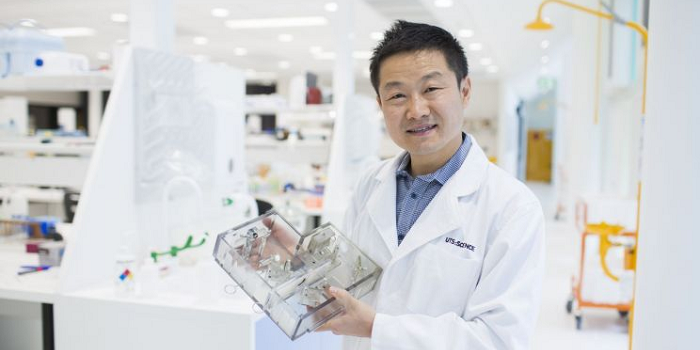
Distinguished Professor Dayong Jin, University of Technology Sydney
Professor Jin is a world leader in engineering time-resolved photonics devices, and luminescent nanoprobes which can up-convert low-energy infrared photons into more useful visible light for high-contrast detection. While his research opens up many opportunities in biomedical devices, early diagnosis, and light triggered nanomedicine, his nanodots can also be made into an ‘invisible ink’ to protect pharmaceuticals, medical courier supplies, passports, banknotes and more.
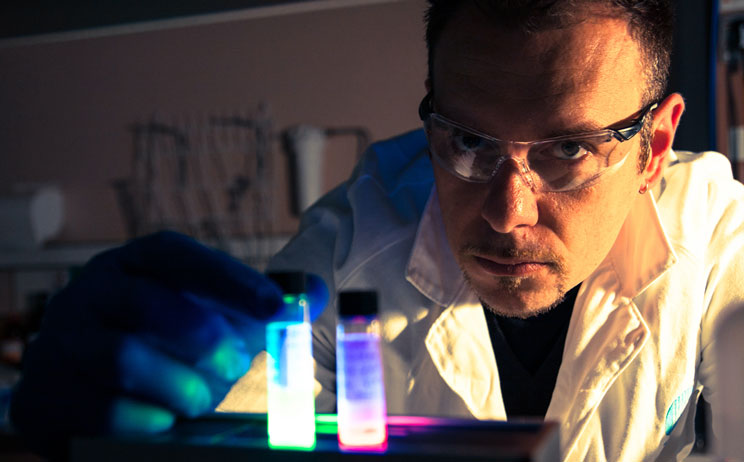
Professor Paolo Falcaro, Graz University of Technology
Professor Paolo Falcaro engineers nano-materials to bring materials with exceptional functional properties to our everyday life. He makes nano-particles and ultra-porous crystals for medicine and the environment, targeting applications where other materials fail. His research team engineer these materials down to the molecular level, which allows for fine-tuned control over the functional properties. By tailoring the characteristics of these materials, specific applications can be met. For example, Professor Falcaro has developed magnetic materials for the decontamination of water from carcinogens and heavy metals. He has pioneered new carriers for the encapsulation, preservation and release of pharmaceuticals, addressing a major problem facing biotechnology, especially for treatment in developing countries. He is also developing miniaturized portable chips for the detection of deadly pathogens, useful for preventing viral outbreaks.
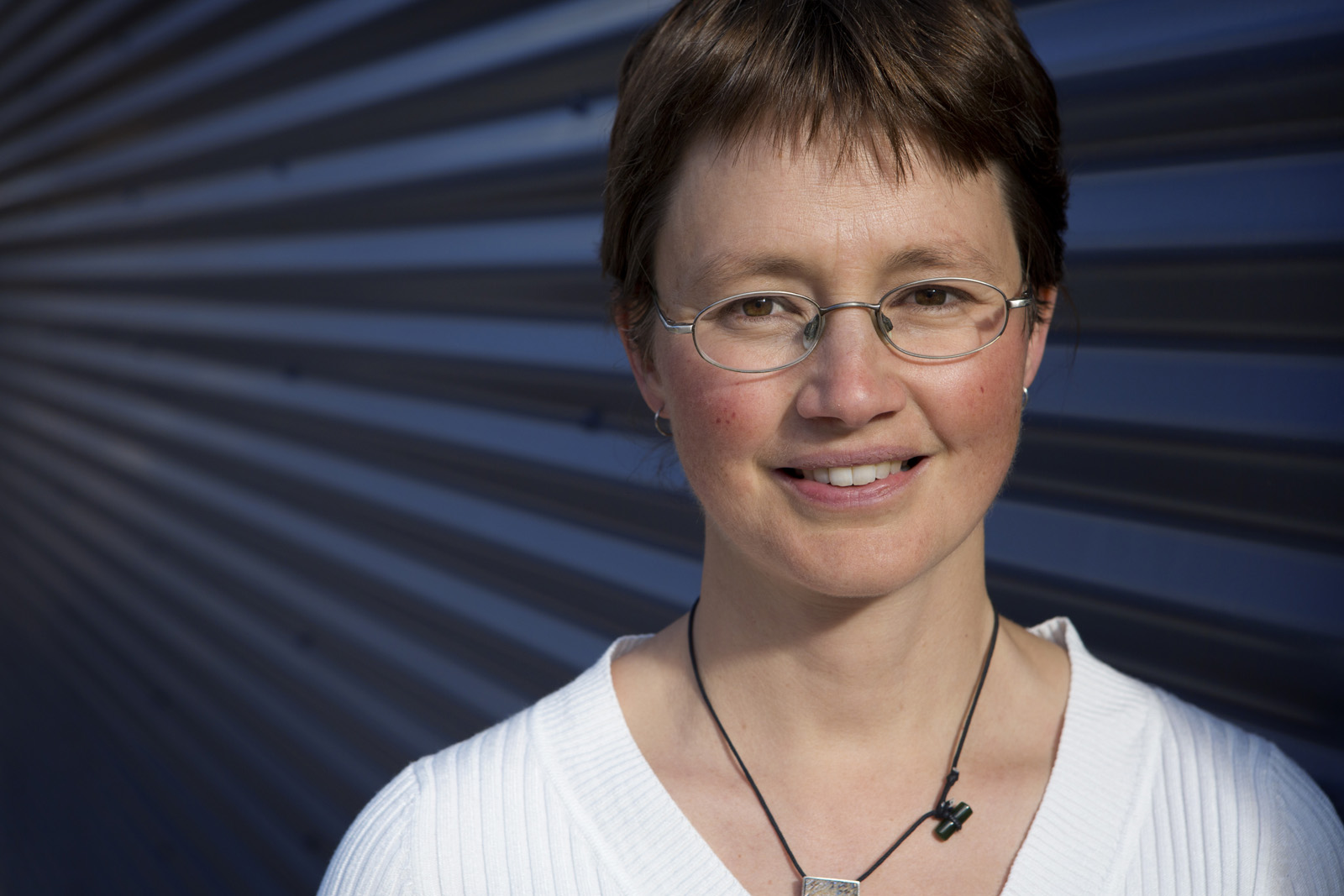
Associate Professor Kylie R Catchpole, The Australian National University
Associate Professor Catchpole's research focuses on using nanotechnology to make solar cells cheaper and more efficient. Associate Professor Catchpole’s major achievements include showing that the efficiency of thin solar cells can be improved using tiny metal particles, which act like antennas to direct light into the solar cell. This has opened up a range of new possibilities for reducing the cost of solar electricity.
Sponsors
This award has been made available through generous contributions from the following university faculties.