


Le Fèvre Medal

Award highlights
- The award recognises outstanding basic research in chemistry by researchers up to 10 years post-PhD in the calendar year of nomination.
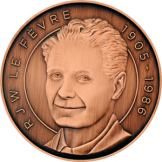
- This award commemorates the work of the late Professor Raymond James Wood Le Fèvre FAA FRS.
The Le Fèvre Medal for research in chemistry commemorates the work of the late Professor Raymond James Wood Le Fèvre FAA FRS. Its purpose is to recognise outstanding basic research in chemistry by researchers up to 10 years post-PhD in the calendar year of nomination, except in the case of significant interruptions to a research career. The award may be made annually, with a prize of $4,000, and is restricted to candidates who are normally resident in Australia and for research conducted mainly in Australia.
This award is open to nominations for candidates from all genders. The Australian Academy of Science encourages nominations of female candidates and of candidates from a broad geographical distribution.
Candidates may be put forward for more than one award. If a proposed candidate is already the recipient of an Academy early-career honorific award, they will not be eligible for nomination for another early-career or mid-career honorific award. A mid-career honorific award recipient will also not be eligible for nomination for another mid-career honorific award. Fellows of the Academy are ineligible to be nominated for early and mid-career awards.
Key dates
These are the important dates for the nomination process. While we expect to keep to this timeline, changes may occur if circumstances require.
GUIDELINES
The following guidelines and FAQs provide important information about eligibility, submission requirements, and assessment processes. Please review them carefully before submitting a nomination.
How to nominate a scientist for the Academy’s honorific awards
The following guidelines contain detailed information for nominators.
These guidelines contain information for honorific award nominators.
The following guidelines contain information for honorific award referees.
These guidelines contain information for honorific award referees.
See below for specific relevant conferral dates for the current award round.
This document contains specific PhD conferral dates for early and mid-career honorific awards in the current award round.
Please submit your nominations using the Nominate button found on the top right of this webpage when nominations are open.
Please note the Academy uses a nomination platform that is external to the main Academy site. Nominators will be required to create an account on the platform. Even if you are familiar with the nomination process, please allow extra time to familiarise yourself with the platform.
Early-career, mid-career and career medals
Can I nominate myself?
- No – you must be nominated by someone else. Self-nominations are not accepted.
Can I submit a nomination on behalf of someone else?
- Yes – you can submit a nomination on behalf of someone else if you are not the nominator. An example would be a university grants office or personal/executive assistant completing the online nomination form on behalf of a nominator. Once the form is submitted, the nominator will be sent an email confirming that the nomination has been completed. If a nominee submits a nomination for themselves on behalf of a nominator it will not be considered a self-nomination.
Residency requirements
- Winners of all awards except the Haddon Forrester King Medal should be mainly resident in Australia and/or have a substantive position in Australia at the time of the nomination deadline. Unless explicitly stated in the awarding conditions, the research being put forward for the award should have been undertaken mainly in Australia. Some awards have more specific conditions that the relevant selection committee must apply and nominators are advised to read the conditions associated with each award very carefully.
Honorific career eligibility (more specific details found in the honorific awards nominator guidelines and the honorific award post PhD eligibility guidelines)
- Career eligibility is calculated by calendar year.
- Early career awards are open to researchers up to 10 years post-PhD.*
- Mid-career awards are open to researchers between eight and 15 years post-PhD.*
- Please note that the Awards Committee may consider nominees with post PhD dates outside of these ranges if a career exemption request is being submitted with the nomination, further guidelines on career exemption requests can be found in the nomination guidelines.
- See the post-PhD eligibility guidelines document for relevant conferral dates.
- * or equivalent first higher degree e.g. D.Phil., D.Psych., D.Sc.
Academy fellowship requirements in award nominations
- Fellows and non-Fellows of the Academy can provide nominations for either Fellows or non-Fellows for all awards.
Women only awards
- The Dorothy Hill, Nancy Millis and Ruby Payne-Scott Medals are for women only. These medals are open to nominees who self-identify as a woman in the award nomination form. The Academy does not require any statement beyond a nominee’s self-identification in the nomination form.
- This practice is consistent with the Sex Discrimination Act 1984, which has recognised the non-binary nature of gender identity since 2013, and gives effect to Australia’s international human rights obligations. The Academy remains committed to the fundamental human rights principles of equality, freedom from discrimination and harassment, and privacy, as well as the prevention of discrimination on the basis of sex and gender identity.
PREVIOUS AWARDEES
Dr Karolina Matuszek, Monash University
Dr Karolina Matuszek’s research focuses on designing novel materials that represent breakthroughs in emerging energy-storage technologies based on thermal and chemical mechanisms of storage. These innovations aim to address the current energy crisis by unlocking the full potential of renewables such as solar and wind power. Her significant contributions to the development of thermal energy storage include designing new materials and revealing the origins of their high performance using advanced characterisation techniques. This knowledge, led to her discovery of a ‘trimodal' material that synergistically combine several thermal storage modes.
Achieving exceptionally high thermal energy capacity, this technology is currently being commercialised with strong investor interest. In the field of green ammonia synthesis, Dr Matuszek contributed to breakthroughs in electrolyte design, performance, and characterisation, resulting in ammonia formation at record high rates and efficiency. Her pioneering developments have led to successful commercialisation efforts to scale up production of sustainable ammonia.
Associate Professor Yu Heng Lau, The University of Sydney
Peptides and proteins are naturally occurring molecules that govern the most important processes in life, from DNA replication in cells to photosynthesis in plants. As a chemical biologist, Associate Professor Yu Heng Lau has discovered how to manipulate the shape and structure of these molecules using synthetic techniques, unlocking their potential for treating disease and improving sustainability.
Associate Professor Lau’s team has developed the first peptide-based therapeutic candidates for treating childhood bone cancers by targeting a novel pathway known as the Alternative Lengthening of Telomeres (ALT). His team has also made fundamental discoveries on the structure and assembly of cage-forming proteins known as encapsulins, which are now being developed as tools for increasing the photosynthetic efficiency of crops.
Dr Fengwang Li, University of Sydney
Dr Fengwang Li is a Senior Lecturer at the University of Sydney and a Flagship Program Lead at the ARC Centre of Excellence for Green Electrochemical Transformation of Carbon Dioxide, celebrated for his innovative contributions to sustainable chemistry. His pioneering work in CO2 electrolysis harnesses renewable energy to convert CO2 into ethylene, a key component in plastics, offering a groundbreaking solution to reduce greenhouse gas emissions. Dr Li’s research is particularly relevant as Australia grapples with the harsh realities of climate change. His discovery not only supports a circular economy by recycling carbon but also contributes to a net-zero emission future. His leadership in this field earned him the 2023 Eureka Prize for Outstanding Early Career Researcher. His work is a testament to the potential of electrochemistry to create valuable products from CO2, transforming the way we address climate change and supporting a sustainable economy and everyday life in Australia.
Professor Yao Zheng, University of Adelaide
Professor Yao Zheng is an internationally recognised chemical engineer focused on the principles of catalysis and energy materials chemistry for green hydrogen production – a vital component for both environmental and economic sustainability and key to achieving net-zero emissions by 2050. By harnessing renewable energy sources, green hydrogen can be utilised in fuel cells for electricity generation and electrochemical processes to synthesise various commodity chemicals, such as ammonia, methanol and oxygenates, as alternatives to fossil fuels. Professor Zheng and his team discovered they could directly produce ultrapure hydrogen from raw and untreated seawater by electrolysis, instead of requiring rare highly purified deionised water. This groundbreaking technology can be scaled up to industry-level applications and pilot plants. These processes hold significant potential to drive towards greener industries and reduce pressure on freshwater availability in Australia, and in turn, revolutionise Australia’s green hydrogen industry. His cutting-edge work is part of the essential wave of disruptive and transformative innovation and research aimed at building more sustainable societies.
Associate Professor Rona Chandrawati, University of New South Wales
Associate Professor Rona Chandrawati is internationally recognised as an emerging leader in the fields of nanosensors and nanoparticle-based drug delivery. She has achieved world-class – and frequently first in world – research results in the synthesis and development of colourimetric nanosensors and nanozymes for nitric oxide delivery. As the country’s leading researcher in colourimetric polymer sensor technology, her patent-pending nanosensors have enabled the detection of target analytes without the need for specialised equipment; indeed, her colourimetric nanosensors are highly sensitive, with quantitative and qualitative results able to be determined based on colour changes visible to the naked eye. These have been used to monitor food spoilage and contamination, contributing to reducing the nation’s $10 billion worth of edible food waste each year. Furthermore, her synthesis of nanoparticles and nanozymes for nitric oxide delivery have significant therapeutic implications, particularly for the treatment of glaucoma – a condition affecting 1-in-10 Australians.
Professor Tianyi Ma, RMIT University
Green solutions are urgently needed to harvest, store and utilise renewable energy sources. The effects of climate change and energy shortages have become an urgent issue for our society. Non-sustainable human activities, such as the overuse of fossil fuels, have affected the environment in an irrecoverable way. Professor Tianyi Ma’s research addresses these issues using a function-directed materials fabrication involving rich surface chemistry and delicate nano-architecture; the materials are used for key energy-related catalytic reactions leading to efficient renewable solar energy, electricity, and chemical energy conversion. Lab-scale catalytic reactions of kilogram-scale hydrogen, methane, ethanol and other value-added chemical production have successfully been driven by pure renewable energy; this can be up-scaled to industry-level demonstrations and pilot plants. Professor Ma’s numerous novel initiatives have led to scientific breakthroughs positively impacting society by enabling alternatives for industry to move towards renewable energy sources.
Associate Professor Yuning Hong, La Trobe University
Associate Professor Yuning Hong develops chemical probes to detect dysfunctional cells. Proteins are the major component of cells in the human body and are essential for the maintenance of many of its functions. When the protein quality control process in the cell factory fails, the ensuing proteins that are not folded properly can not only lose their original functions, but also damage the cells. At worst this can lead to conditions such as Parkinson’s, Alzheimer’s and Huntington’s diseases. With the aid of her chemical probes, Associate Professor Hong studies how these proteins are generated and how they damage healthy cells. Her goal is to develop tests for the early diagnosis of, and treatments for, dementia and other neurodegenerative diseases.
Associate Professor Debbie Silvester-Dean, Curtin University
Associate Professor Debbie Silvester-Dean is a global leader in the field of room temperature ionic liquids (RTILs), a new class of salt-like materials that are liquid at unusually low temperatures. Her research is focussed on their application as superior electrolytes in electrochemical reactions. Specifically, she has developed robust gelled sensor materials containing ionic liquids to detect toxic gases and explosives. These overcome the drawbacks of liquid-based electrolytes and will soon be tested in vehicles used in the WA mining industry. The sensors make people safer at home and work and can be used in various applications, including fumigation, refuelling, exhaust monitoring, and entering confined spaces. Associate Professor Silvester-Dean studies the fundamental behaviour of dissolved materials in RTILs. The results are used worldwide to understand electrochemical reactions, mechanisms, kinetics, and gas behaviour. They inform designs for batteries, capacitors, and transistors, as well providing smart materials for miniaturised, low-cost, high-performing sensors.
Associate Professor Ivan Kassal, University of Sydney
Associate Professor Ivan Kassal develops new theoretical and computational tools for simulating the dynamics of complex chemical systems, especially those where quantum effects make conventional calculations difficult and time consuming. He has designed algorithms that would allow future quantum computers to dramatically accelerate the simulation of chemical processes, as well as designing quantum simulators, purpose-built devices for solving particular difficult problems. His methods have been widely used and implemented experimentally, contributing to chemistry and materials science being recognised as the likely first applications of quantum computers. He has also studied the transport of energy and charge in disordered materials that lie at the boundary between quantum and classical behaviour, making them difficult to describe. Associate Professor Kassal’s contributions have included explaining quantum effects in light harvesting (and how to engineer them to improve performance), discovering significant quantum effects in photosynthesis, and clarifying fundamental mechanisms of how organic solar cells operate.
Associate Professor Elizabeth New, University of Sydney
An understanding of the fundamental chemistry of the body offers new insights into many of the key questions in medical research, including the location of disease-causing chemicals or drug molecules, the perturbation of chemical environments in disease, and the role of chemical signalling molecules in health. Associate Professor New's research focusses on developing chemical tools that advance the understanding of the chemistry within cells. She prepares fluorescent sensors that emit light to visualise biochemical changes in the body caused by disease, lighting up where and how the body is experiencing oxidative stress. Her principal focus is on the diseases of ageing, where she explores the action of antioxidants in countering oxidative stress, but her sensors have found application across many fields of medical research. Associate Professor New has reported ten new sensors, one that is capable of indicating the effect of copper levels in Alzheimer's disease and another shows how oxidative stress is essential in fat breakdown and even in embryonic development. She has also developed sensors that observe how cancer treatments such as cisplatin have effect within the cell.
Dr Lars Goerigk, University of Melbourne
Dr Goerigk works in the field of Density Functional Theory (DFT), a major computational chemistry technique used routinely by chemists to support experiments and predict their outcomes. Currently, DFT suffers from the large dilemma that hundreds of methods with varying accuracy exist, which makes their reliable application difficult. Dr Goerigk's work helped solving this dilemma by providing new guidelines that enabled easier and more robust computational strategies. His methods now belong to the most accurate in the field. He used them to provide chemists with new insights into the role of how interactions between molecules affect the outcome of chemical reactions. His other contributions include the development of an improved way to determine biomolecular structures, more reliable analyses of reaction mechanisms, and predictions leading to the development of novel smart technologies. Dr Goerigk's work has had substantial international impact and will influence how chemists will use DFT in the future.
Associate Professor Amir Karton, University of Western Australia
Due to major advances in theory and high-performance supercomputer technology computational quantum chemistry has become one of the most powerful means for examining chemical processes at the molecular and atomic levels. Today computational chemistry is working hand-in-hand with experimental techniques to tackle challenging chemical problems. Associate Professor Amir Karton has played a leading role in the development of quantum chemical methods for highly accurate calculations of chemical properties such as reaction barrier heights. These methods have been thoroughly tested and demonstrate a high level of applicability over a wide range of chemical systems and their properties. Due to their unprecedented predictive capabilities, these methods have been widely used over the past decade to understand and predict chemical processes. He has applied these methods in his own research for explaining the mechanisms of challenging reactions, predicting molecular properties, and designing new molecules.
2017
Associate Professor Deanna M. D'Alessandro, The University of Sydney
Associate Professor D'Alessandro's research is delivering new insights into an exciting area in nanoporous molecular materials, namely, their electronic and conducting properties. These fundamental advances have enormous potential as the basis of new technologies for a diverse range of applications including electrocatalysis, sensing and solar energy conversion. In addition to her work in the area of theoretical and experimental aspects of electron transfer, for which she has gained international recognition, she has played a major role in the development of new nanoporous materials for the capture and conversion of greenhouse gases, particularly carbon dioxide. A common theme of her research has been a desire to tackle significant scientific challenges by probing fundamental chemical questions.
2016
Associate Professor Cyrille Boyer, UNSW
Associate Professor Boyer has established himself as an authority in the field of polymer science, responsible for the development of innovative new methods of polymerisation as well as new materials for therapeutic and diagnostic application. Amongst his many research achievements in polymer chemistry, he demonstrated that chlorophyll and light could mediate and control the polymerisation of functional macromolecules. This is an important step-forward for the synthesis of macromolecules using bio-resources. He has also developed multimodal nanoparticles capable of delivering therapeutic molecules (such as chemotherapy drugs) that could be tracked using magnetic resonance imaging.
2015
Professor Chengzhong Yu, The University of Queensland
Professor Yu is an internationally recognised materials scientist who has made significant contributions in the innovation, design, preparation and application of novel nanomaterials.
He has developed new strategies to design functional nanostructured composites and is working on a diverse range of applications for these materials including novel platforms for the delivery of vaccines, genes and drugs for human and animal healthcare, innovative approaches for biomolecule enrichment and the synthesis of functional materials for water treatment and lithium ion batteries.
2014
Associate Professor Richard James Payne, The University of Sydney
Associate Professor Richard Payne is internationally recognised for his contributions to peptide chemistry and drug discovery for neglected diseases. He has pioneered the development of important new synthetic methodologies that have enabled access to modified peptides and proteins of considerable complexity. He is also recognised for his contributions to medicinal chemistry where he has discovered, through innovative research advances, a number of lead compounds for the treatment of tuberculosis, malaria and cancer.
2013
Professor Sébastien Perrier, The University of Sydney
Professor Perrier is at the forefront of the design of a wide range of state-of-the-art functional polymeric materials by careful manipulation of their molecular structure. These materials have a wealth of applications, from commercial products in the personal-care industry to health and medicine. His research considers the environmental and social impacts of both the materials and the chemical processes by which they are prepared, including sustainable processes for the synthesis of polymers and 'green' materials with a low impact on the environment.
2012
Dr Pall Thordarson, University of New South Wales
Dr Pall Thordarson has made outstanding contributions to molecular devices and materials using supramolecular and bioconjugate chemistry. He uses nanotechnology inspired by or ‘mimicking’ biological systems to create smart gels and bio-devices driven by sunlight. His smart gels, formed by self-assembly, are designed to help anti-cancer drugs kill tumorous cells, reducing the side effects of chemotherapy. His light-driven bio-devices are targeted to the creation of better biosensors for medical applications, as well as combining waste treatment with renewable energy production.
2011
Associate Professor Martina Stenzel, University of New South Wales
Martina Stenzel designs and fabricates nanoparticles based on specialised polymers in order to deliver drugs to their targets. Using innovative combinations of polymer synthesis techniques, she creates new nanoparticle architectures with attributes which avoid the pitfalls of targeted drug delivery, thereby enhancing chemotherapeutic effectiveness. These achievements in developing the materials of nanomedicine have been widely recognised internationally.
2010
Associate Professor Michelle Coote., Australian National University
Michelle Coote has played a leading role in adapting computational quantum chemistry as a research tool for the field of free-radical polymerisation, and has developed a robust and accurate methodology for this purpose. The predictive capacities of these techniques seem particularly powerful and are already having a major impact on the field. She has exploited this methodology in her own research to explain the mechanism of several important polymerisation processes, to develop better kinetic models, provide user-friendly guidelines for catalyst selection, and design new control agents and new types of polymerisation reactions. In just a few years, she has established herself at the forefront of this new and rapidly developing field of chemistry, helping to transform computational polymer chemistry from a qualitative tool into a respected and reliable technique that is capable of generating accurate results. Along the way she has advanced our knowledge of fundamental radical chemistry, with implications well beyond the polymer field, and helped to make practical improvements to polymer synthesis and design.
2009
Dr Stephen Blanksby, University of Wollongong
Stephen Blanksby has made significant contributions to the field of gas phase ion chemistry and mass spectrometry. He demonstrated the stability of previously uncharacterised molecules and elucidated the fundamental thermochemistry and reactivity of transient neutral and ionic species in the absence of solvent and counter-ion effects. Stephen has applied discoveries in gas phase ion chemistry to develop new tools for analysis, particularly in the rapidly emerging field of lipidomics.
2008
Dr Stuart Batten, Monash University
Stuart Batten has made significant and original contributions in the area of crystal engineering. He was a member of the group that pioneered the design of coordination polymers, focusing on the use of trigonal three-connecting ligands. He helped to discover a new class of magnetic materials based on the dicyanamide ligand. He has also developed a naming system to describe the ways networks interpenetrate, which has been adopted by researchers worldwide. His latest research includes the design of 'nanoballs' that have magnetic and photomagnetic features.
2007
Professor Thomas Maschmeyer, University of Sydney
Thomas Maschmeyer is renowned for his ground-breaking research in materials and catalysis which led to his meteoric rise in stature within the international chemical community. His guiding principle of ‘selectivity tuning by active site design’ underlies his discoveries from pharmaceutical synthesis to process intensification and biofuels. Thomas’ leading role in the establishment of the combinatorial catalysis company Avantium was instrumental in the listing of the Australian Biodiesel Group on the Australian Stock Exchange.
2006
Associate Professor Michael Sherburn, Australian National University
Michael Sherburn is a talented synthetic chemist, developing powerful new methods to achieve efficient chemical synthesis. These new methods have been applied to the synthesis of natural products and designed structures, that are potentially important in medical treatments. His research group has created superbowl container molecules to capture and release drugs and chemicals. These molecules have potential in drug delivery, for removing environmental toxins, catalysing chemical reactions and allowing new chemical purification. His group has developed ingenious methods to synthesise polycyclic natural products, including the anti-cancer agent, podophyllotoxin.
2005—F. Caruso
2004—C.J. Kepert
2002—G.Q.M. Lu
1998—S.C. Smith
1995—S.H. Kable
1992—W.D. Lawrance
1989—C.J. Drummond