


Mawson Medal and Lecture

Award highlights
- The award recognises outstanding research in the Earth sciences.
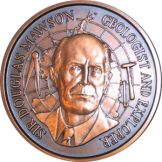
- This award honours the contribution to science in Australia by Sir Douglas Mawson FAA FRS, geologist and Antarctic explorer.
The Mawson Medal and Lecture recognises research in the Earth sciences and honours the contribution to science in Australia by Sir Douglas Mawson FAA FRS, geologist and Antarctic explorer.
The award is normally made every two years, and is restricted to candidates who are normally resident in Australia, with the majority of the relevant research having been conducted in Australia. The lecture is delivered at the time of each convention of the Geological Society of Australia.
Candidates may be put forward for more than one award. If a proposed candidate is already the recipient of an Academy award, the second award must be for a distinct, additional, body of work undertaken since the first award, and/or work in a different field.
The Australian Academy of Science encourages nominations of female candidates and of candidates from a broad geographical distribution.
Key dates
Below are the key dates for the nomination process. While we aim to keep to this schedule, some dates may change depending on circumstances.
GUIDELINES
The following guidelines and FAQs provide important information about eligibility, submission requirements, and assessment processes. Please review them carefully before submitting a nomination.
How to nominate a scientist for the Academy’s honorific awards
The following guidelines contain detailed information for nominators.
These guidelines contain information for honorific award nominators.
The following guidelines contain information for honorific award referees.
These guidelines contain information for honorific award referees.
Please submit your nominations using the Nominate button found on the top right of this webpage when nominations are open.
Please note the Academy uses a nomination platform that is external to the main Academy site. Nominators will be required to create an account on the platform. Even if you are familiar with the nomination process, please allow extra time to familiarise yourself with the platform.
Early-career, mid-career and career medals
Can I nominate myself?
- No – you must be nominated by someone else. Self-nominations are not accepted.
Can I submit a nomination on behalf of someone else?
- Yes – you can submit a nomination on behalf of someone else if you are not the nominator. An example would be a university grants office or personal/executive assistant completing the online nomination form on behalf of a nominator. Once the form is submitted, the nominator will be sent an email confirming that the nomination has been completed. If a nominee submits a nomination for themselves on behalf of a nominator it will not be considered a self-nomination.
Residency requirements
- Winners of all awards except the Haddon Forrester King Medal should be mainly resident in Australia and/or have a substantive position in Australia at the time of the nomination deadline. Unless explicitly stated in the awarding conditions, the research being put forward for the award should have been undertaken mainly in Australia. Some awards have more specific conditions that the relevant selection committee must apply and nominators are advised to read the conditions associated with each award very carefully.
Honorific career eligibility (more specific details found in the honorific awards nominator guidelines and the honorific award post PhD eligibility guidelines)
- Career eligibility is calculated by calendar year.
- Early career awards are open to researchers up to 10 years post-PhD.*
- Mid-career awards are open to researchers between eight and 15 years post-PhD.*
- Please note that the Awards Committee may consider nominees with post PhD dates outside of these ranges if a career exemption request is being submitted with the nomination, further guidelines on career exemption requests can be found in the nomination guidelines.
- See the post-PhD eligibility guidelines document for relevant conferral dates.
- *Or equivalent first higher degree e.g. D.Phil., D.Psych., D.Sc.
Academy fellowship requirements in award nominations
- Fellows and non-Fellows of the Academy can provide nominations for either Fellows or non-Fellows for all awards.
Women only awards
- The Dorothy Hill, Nancy Millis and Ruby Payne-Scott Medals are for women only. These medals are open to nominees who self-identify as a woman in the award nomination form. The Academy does not require any statement beyond a nominee’s self-identification in the nomination form.
- This practice is consistent with the Sex Discrimination Act 1984, which has recognised the non-binary nature of gender identity since 2013, and gives effect to Australia’s international human rights obligations. The Academy remains committed to the fundamental human rights principles of equality, freedom from discrimination and harassment, and privacy, as well as the prevention of discrimination on the basis of sex and gender identity.
PREVIOUS AWARDEES
Professor Neil Saintilan, Macquarie University
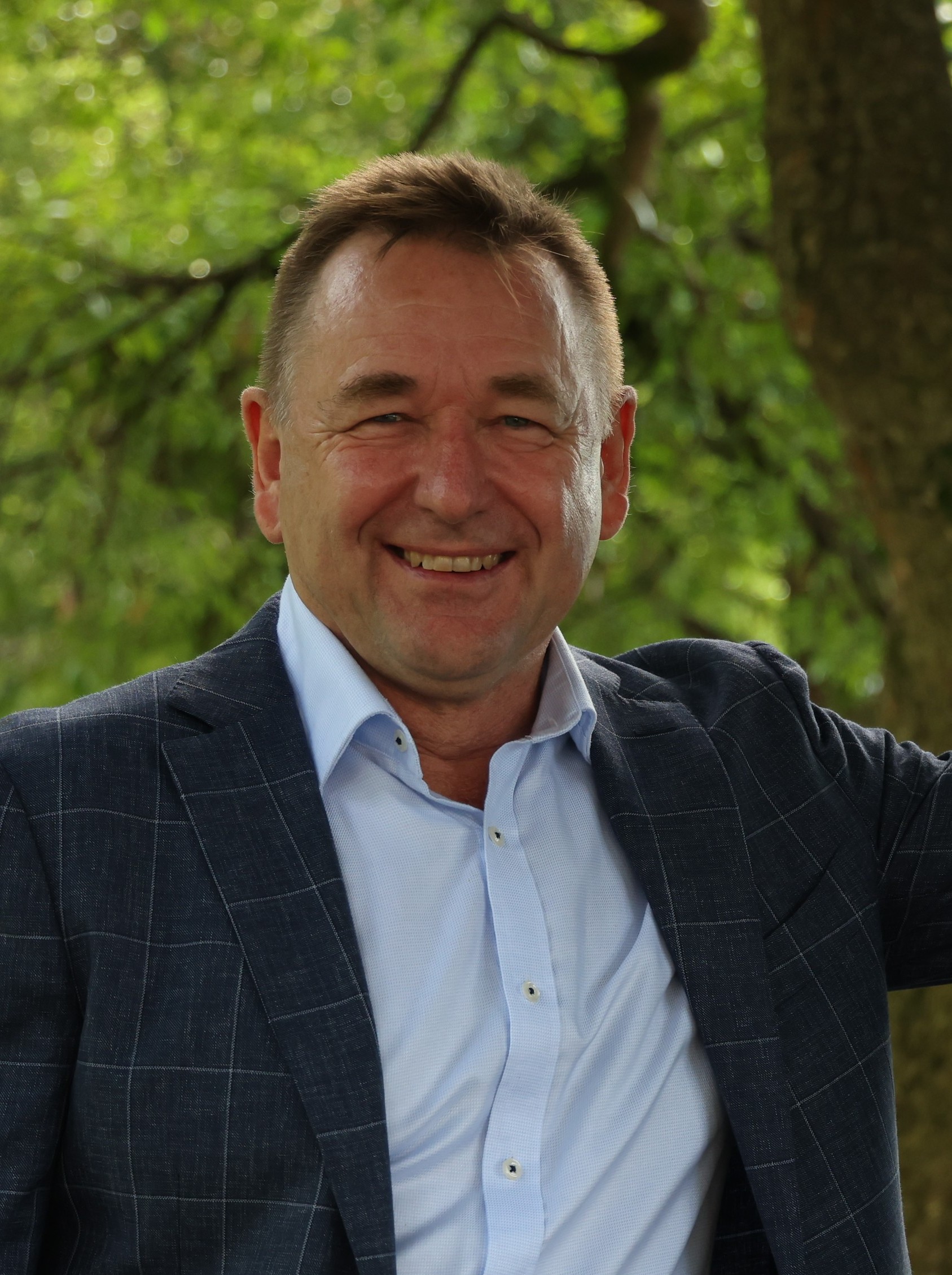
Professor Neil Saintilan is a world-leading Earth scientist whose research has revolutionised our understanding of coastal wetlands and their response to sea-level rise. His groundbreaking studies have revealed how wetlands store carbon, how mangroves adapt to rising seas, and the role of sediment movement in wetland survival. His work has been pivotal in shaping global climate policies, helping governments include coastal wetlands in carbon accounting frameworks.
Additionally, he played a key role in Australia's $8 billion Murray–Darling Basin water reform, ensuring that science guided environmental water management. Professor Saintilan’s research has influenced climate resilience strategies worldwide and has been featured in major media outlets like The New York Times and BBC. His contributions continue to advance the field of Earth science, with a lasting impact on both policy and public understanding of coastal and wetland ecosystems in the face of climate change.
Dr Adriana Dutkiewicz, University of Sydney
Dr Adriana Dutkiewicz is an innovative geologist who has pioneered the use of vast amounts of deep-sea drilling data collected over the last 50 years to advance our understanding of deep-sea sedimentation and the long-term carbon cycle. Her digital global map of deep-sea sediments is the first of its kind. The detailed tapestry of sediments it portrays represents a quantum leap from hand-drawn maps, enabling new and quantitative research directions. In other advances, she and her team linked deep-sea sediments and plate tectonics to compute fluctuations in marine carbon storage, provided insights into the formation of manganese nodules, and linked discontinuities in the geological record to bottom current intensity. Dr Dutkiewicz’s research connects traditional sedimentology with big data analysis and emerging machine learning methods, playing a transformative role in this field. In addition, she was the first to discover Archaean and early Proterozoic oil preserved within fluid inclusions, challenging long-held ideas about the temperature limits of hydrocarbon survival and the composition of the early biosphere.
Professor Andrew Roberts, Australian National University
Professor Andrew Roberts has made fundamentally important contributions to understanding the magnetisation of sediments, which provides the basis for use of paleomagnetism to reconstruct global plate tectonic movements and to understand variations in Earth’s magnetic field through its history. His work influences all aspects of understanding sedimentary magnetisation acquisition, and has particularly contributed to recognising that the previously poorly-known magnetic mineral greigite, and magnetic minerals produced by magnetotactic bacteria, make important contributions to the magnetisation of globally distributed sedimentary rocks. He is an international leader in the field of environmental magnetic analyses of climate change, and has developed new methods in rock magnetism that are used widely in solid state physics, materials science, the magnetic recording industry, and Earth science. His work in environmental magnetism has made significant contributions to understanding African monsoon dynamics, sea level variations, and Arctic and Antarctic glacial history.
Professor Allen Nutman, University of Wollongong
Professor Allen Nutman has made some fundamental discoveries concerning the evolution of early Earth, through numerous field campaigns in arduous conditions. He has revolutionised our understanding of Greenland geology by applying necessary, detailed geological mapping and applying necessary geochronological dating obtained through state-of-the-art geochronological techniques which he personally obtained. He is considered to be one of the leaders in the understanding of early history of Earth. Professor Nutman also made significant contributions to ancient rocks through successful international collaboration.
Professor Matt King, University of Tasmania
Professor Matt King has made seminal contributions to the understanding of the function and threat posed by the two great ice sheets, Greenland and Antarctica. With a commitment to meticulous field measurements, his research has opened new arenas of research and changed thinking on the timescales over which ice sheets and solid Earth beneath them are responding to external forces. He has made international contributions to at least three major areas of polar research: demonstration of the great sensitivity of the ice sheets to small changes in forces acting upon them; the first agreed estimate of the contribution of the Antarctic Ice Sheet to sea level change; and a dramatic revision to the understanding of the timescale of interactions between the Antarctic Ice Sheet and solid Earth beneath it. His work has had substantial influence on international practice, conventions and climate change assessments.
2016
Professor Colin Vincent Murray-Wallace, University of Wollongong
Professor Murray-Wallace has conducted outstanding, multidisciplinary research in the field of coastal science. He investigated past sea level changes using a variety of dating techniques, including the progressive changes in the amino-acid composition of marine mollusc shells to date past environmental changes. This work is particularly relevant today to understand coastal evolution under a progressive sea level rise. His coastal research in southern Australia has revealed evidence for neotectonism during the Quaternary in a continent traditionally regarded as tectonically highly stable.
2014
Dr Gavin C Young, Australian National University
Dr Young is an international leader in the field of early fossil vertebrates and the application of paleontology to solving problems in biostratigraphy, biogeography and historical geology. His field work in Antarctica in the 1971 Victoria University of Wellington Antarctic Expeditions resulted in a new biostratigraphy and age determination for much of the central Transantarctic Mountains, with robust correlations to strata on the Australian mainland. His field work and mapping in central Australia (Amadeus Basin) resulted in the discovery of the oldest known vertebrate fossils on the planet, and many new sites rich in vertebrates that enabled detailed correlations throughout Australia and Gondwana.
2012
Professor Gordon Lister, Australian National University
Professor Gordon Lister examines tectonic processes that lead to the building and destruction of mountain belts. His PhD involved modelling and simulation using the primitive computers of the day, and led to the first of many software packages that have stemmed from his research. He taught for a decade in Leiden and Utrecht in the Netherlands, where he developed an ongoing fascination for the evolution of the Alpine-Himalayan orogen. This mountain belt once stretched from Spain to New Zealand, but has now been largely destroyed by the processes of lithospheric extension. His return to Australia enabled a renewed interest in ancient mountain belts, and comparison with modern orogens. Professor Lister was one of the first to demonstrate the importance of extensional tectonics in orgenic processes. His research has greatly influenced this field.
2010
Professor Patrick De Deckker, Australian National University
Patrick de Decker’s work is multidisciplinary in nature, with the aim being to reconstruct past marine and continental environments to understand global and regional climatic variability. His pioneering work on the trace elements within the shells of small crustaceans has provided quantitative and accurate estimates of past changes in water temperature and salinity on land and in the oceans. He is currently analysing the origin and composition of Australian dust, which has implications for the environment, the oceans and human health.
2008
Professor Peter Cawood, University of Western Australia
Peter Cawood is an international leader in the application of structural geology, tectonic processes and geochronology, and has contributed greatly to our understanding of the development of the continental lithosphere throughout geological time. His research is concerned with the integration of field-based studies of mountain belts and their bounding cratons with the development and application of tectonic models.
2006
Professor Kenneth McNamara, Curtin University of Technology
Kenneth McNamara is internationally renowned for outstanding academic contributions in palaeontology and biology relating to studies of developmental change, rates of growth and phylogeny. He is a well-recognised expert on trilobites and their evolutionary patterns. He graduated from the University of Aberdeen, and obtained his PhD from the University of Cambridge. His taxonomic research has resulted in the description of at least 69 new species and 13 new genera of invertebrates.
2004—M. Sandiford
2002—A.J.R. White
2000—C. McA. Powell
1998—B.W. Chappell
1996—G. Seddon
1994—O.H. Warin
1991—P.J. Davies
1989—J.M. Bowler
1988—W. Compston
1986—K.S.W. Campbell
1984—R. Woodall
1983—M.W. McElhinny
1982—D.H. Green
1981—B. Runnegar