



Ruby Payne-Scott Medal and Lecture for women in science


Award highlights
- This award is a career medal that recognises researchers of the highest standing in the physical and/or biological sciences.
- The award is one of the most prestigious career awards of the Academy and honours Ruby Payne-Scott’s pioneering contribution to radiophysics and radio astronomy.
The Ruby Payne-Scott Medal and Lecture is a career medal that recognises researchers of the highest standing in the physical and/or biological sciences. Along with the Macfarlane Burnet and Matthew Flinders Medals, it is one of the most prestigious career awards of the Academy and honours Ruby Payne-Scott’s pioneering contribution to radiophysics and radio astronomy. The Lecture is given at the Academy's flagship event, Science at the Shine Dome, and complements that of the other prestigious awards.
The award is made annually and is restricted to women researchers who are normally resident in Australia, with the majority of the relevant research having been conducted in Australia.
Candidates and nominators may be non Fellows.
Referee reports are not required as part of the nomination process for this award.
As a Premier Award, this award is one of the Academy’s most prestigious awards recognising researchers of the highest standing over a career of whatever length.
To be eligible for nomination an appropriate period of time should elapse following the receipt of any other Academy award.
Key dates
Below are the key dates for the nomination process. While we aim to keep to this schedule, some dates may change depending on circumstances.
GUIDELINES
The following guidelines provide important information about eligibility, submission requirements, and assessment processes. Please review them carefully before submitting a nomination.
How to nominate a scientist for the Academy’s honorific awards
The following guidelines contain detailed information for honorific award nominators.
These guidelines contain information for honorific award nominators.
Please submit your nominations using the Nominate button found on the top right of this webpage when nominations are open.
Please note the Academy uses a nomination platform that is external to the main Academy site. Nominators will be required to create an account on the platform. Even if you are familiar with the nomination process, please allow extra time to familiarise yourself with the platform.
Can I nominate myself?
- No – you must be nominated by someone else. Self-nominations are not accepted.
Can I submit a nomination on behalf of someone else?
- Yes – you can submit a nomination on behalf of someone else if you are not the nominator. An example would be a university grants office or personal/executive assistant completing the online nomination form on behalf of a nominator. Once the form is submitted, the nominator will be sent an email confirming that the nomination has been completed. If a nominee submits a nomination for themselves on behalf of a nominator it will not be considered a self-nomination.
Residency requirements
- Winners of all awards except the Haddon Forrester King Medal should be mainly resident in Australia and/or have a substantive position in Australia at the time of the nomination deadline. Unless explicitly stated in the awarding conditions, the research being put forward for the award should have been undertaken mainly in Australia. Some awards have more specific conditions that the relevant selection committee must apply and nominators are advised to read the conditions associated with each award very carefully.
Honorific career eligibility (more specific details found in the honorific awards nominator guidelines and the honorific award post PhD eligibility guidelines)
- Career eligibility is calculated by calendar year.
- Early career awards are open to researchers up to 10 years post-PhD.*
- Mid-career awards are open to researchers between eight and 15 years post-PhD.*
- * or equivalent first higher degree e.g. D.Phil., D.Psych., D.Sc.
- Please note that the Awards Committee may consider nominees with post PhD dates outside of these ranges if a career exemption request is being submitted with the nomination, further guidelines on career exemption requests can be found in the nomination guidelines.
- See the post-PhD eligibility guidelines document for relevant conferral dates.
Academy fellowship requirements in award nominations
- Fellows and non-Fellows of the Academy can provide nominations for either Fellows or non-Fellows for all awards.
Women only awards
- The Dorothy Hill, Nancy Millis and Ruby Payne-Scott Medals are for women only. These medals are open to nominees who self-identify as a woman in the award nomination form. The Academy does not require any statement beyond a nominee’s self-identification in the nomination form.
- This practice is consistent with the Sex Discrimination Act 1984, which has recognised the non-binary nature of gender identity since 2013, and gives effect to Australia’s international human rights obligations. The Academy remains committed to the fundamental human rights principles of equality, freedom from discrimination and harassment, and privacy, as well as the prevention of discrimination on the basis of sex and gender identity.
PREVIOUS AWARDEES
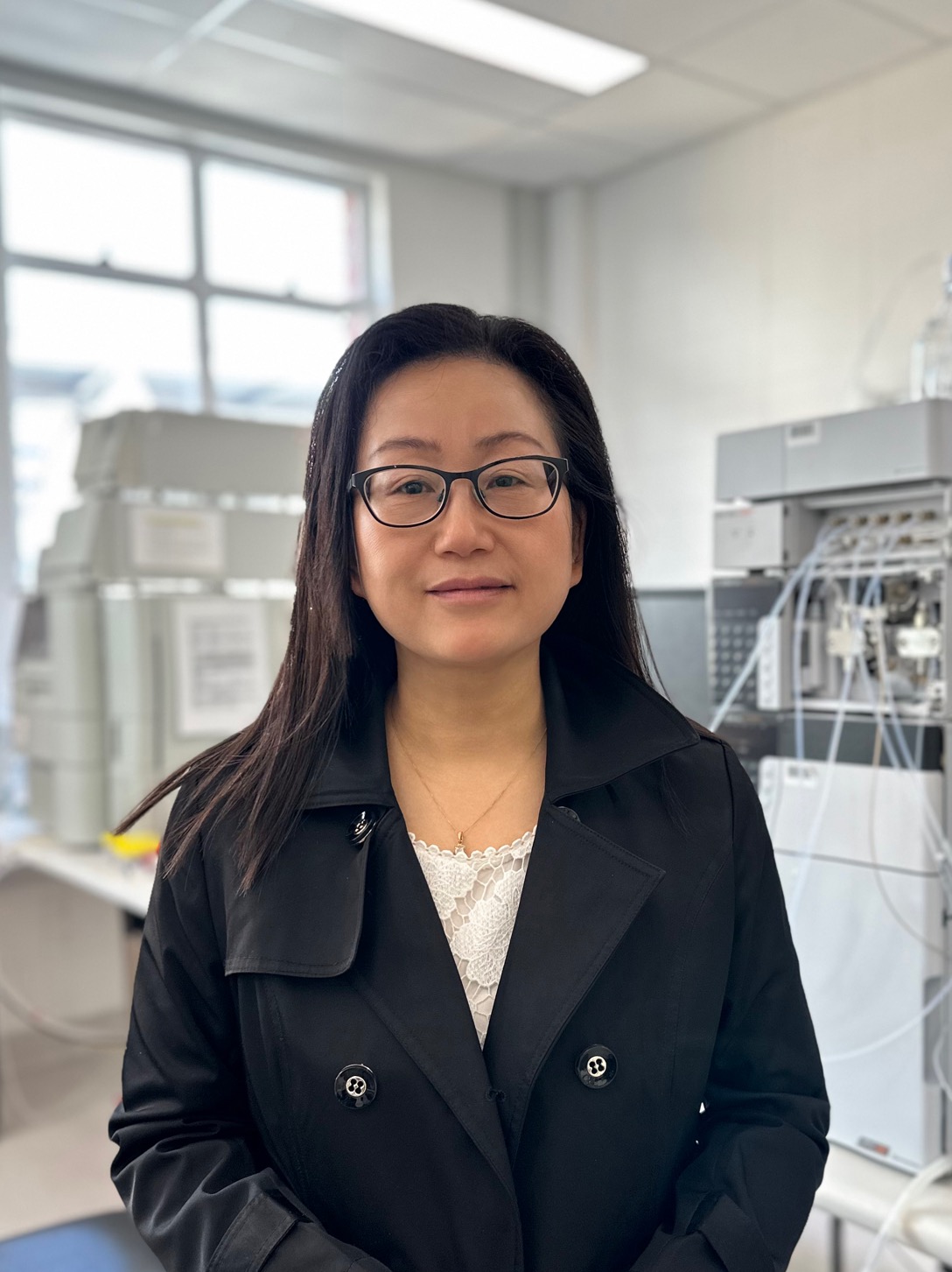
Professor Zaiping Guo FAA FTSE, Adelaide University
Professor Zaiping Guo is a renowned researcher with an exceptional track record in energy storage and conversion. Her research is devoted to identifying the physical and chemical properties of functional materials that can be employed to improve the performance of energy storage devices, particularly batteries. Professor Guo has pioneered the use of various synchrotron and neutron radiation techniques that feature unparalleled spatial and temporal resolution to understand the underlying fundamentals of energy materials during operation, pushing the frontier of understanding of energy storage.
Importantly, she has innovatively applied the findings from her in-depth mechanistic studies to resolve significant issues of electrodes in existing battery systems. She has also developed a series of novel battery materials and energy storage systems to meet continual need for cheaper and clean energy. Her transformative research offers enormous potential for future green energy applications that will reduce greenhouse effects and facilitate a sustainable world.
Professor Jane Visvader FAA FAHMS FRS, Walter and Eliza Hall Institute of Medical Research
Professor Jane Visvader is an esteemed scientific researcher in the field of breast stem cell biology, having made seminal discoveries that continue to define how the breast develops, how errors in that development lead to breast cancer, and how we might prevent or treat that cancer. Her outstanding contributions encompass fundamental research, translational discoveries, and an inspiring commitment to teaching and mentorship. Professor Visvader’s research leadership has provided a series of important discoveries that underpin our current understanding of breast stem cell biology, including the isolation of mouse breast stem cell, which provided methodologies now used in research laboratories worldwide; defining the sensitivity of breast stem cells to ovarian hormones and their impact on the development of breast cancer; discovery of the cellular origin of BRCA1-associated breast cancer; and validation of a specific cell signalling pathway as a therapeutic target to prevent breast cancer in people carrying a BRCA1 mutation.
Professor Kerrie Mengersen FAA, Queensland University of Technology
Distinguished Professor Kerrie Mengersen’s 35 year post-PhD research career has focused on the development of new statistical methodology motivated by challenging real-world applications. As a pioneer and leader of Bayesian statistics in Australia, her first 25 years focused substantively on research and translation of Bayesian methods and computational algorithms. In the last decade, her research has expanded further to embrace new types of data and data science, with the former including digital and citizen science data, and the latter focused on the intersection between statistics, machine learning and artificial intelligence. Professor Mengersen’s work is explicitly multidisciplinary and all of her contributions have been jointly developed with collaborators. She has maintained a career-long focus on engaging with and mentoring women in mathematical and applied sciences, and has more recently had the pleasure and honour of working with Indigenous Australian researchers.
Professor Jennifer Graves AC FAA, La Trobe University
Professor Jenny Graves is an international leader in comparative genomics of vertebrates, arguing that Australian animals are particularly valuable as “independent experiments in evolution”. She exploits the biology of Australian marsupials, monotremes and reptiles to dissect conserved genetic structures and processes, pioneering a comparative approach that has led to many fundamental discoveries. She produced unique data that successfully challenged accepted ideas, leading to new hypotheses about the origin and evolution of human sex chromosomes and sex determining genes. She showed that human sex gene and sex chromosomes evolved quite recently, and the Y chromosome is degrading rapidly and will disappear in a few million years. She made fundamental discoveries about how the X chromosome is genetically silenced in female mammals, showing that genes on the inactive X are not copied into RNA, and that DNA methylation suppresses transcription. She initiated and guided collaborative research on the epigenetic control of environmental sex determination in Australian reptiles.
Dr Liz Dennis AC FAA FTSE, CSIRO
Dr Liz Dennis is a distinguished plant molecular biology researcher. She has addressed important basic questions in plant development, vernalisation-induced flowering and the increased yield of hybrid varieties. A feature of her research is that she has worked with Arabidopsis, a plant favoured in laboratory research, and then transferred her discoveries to crop plants. This has been a powerful strategy. Her analysis of the basis of hybrid vigour has been outstanding in Arabidopsis and subsequently in rice. The development of hybrid mimics in rice has removed the first-generation limit for hybrids and facilitates a continuity of high food grain production. The development of high yielding mimic varieties can be expected in many other crops.
Emeritus Professor Cheryl Praeger AC FAA, University of Western Australia
Professor Cheryl Praeger’s work on the mathematics of symmetry has been in the vanguard of a mathematical revolution caused by the classification of the finite simple groups, the atoms of symmetry from which all finite groups are built. She has elucidated the internal structure of these simple groups, and driven research on applying their immensely powerful classification to study symmetric structures.
Professor Praeger has developed a theory of quasiprimitive groups which, via her innovative ‘normal quotient method’, established a new paradigm for working with symmetric graphs and exploited the simple group classification.
Professor Praeger demonstrates an extraordinary ability to foster and inspire others, supporting women, advocating for mathematics in schools, and promoting mathematics in emerging economies.