




EMCR Forum Executive Committee
The EMCR Forum Executive Committee is a dedicated group of volunteers who work in close collaboration with the Secretariat of the Australian Academy of Science to amplify the voice of Australia’s EMCRs in STEM.

The Executive Committee advocates on behalf of all EMCRs to decision-makers in government and relevant agencies, while also facilitating national initiatives that support the EMCR community. Serving as a direct link between the EMCR Forum and the Academy’s Council, the Executive Committee strives to be as inclusive, diverse and equitable as possible.
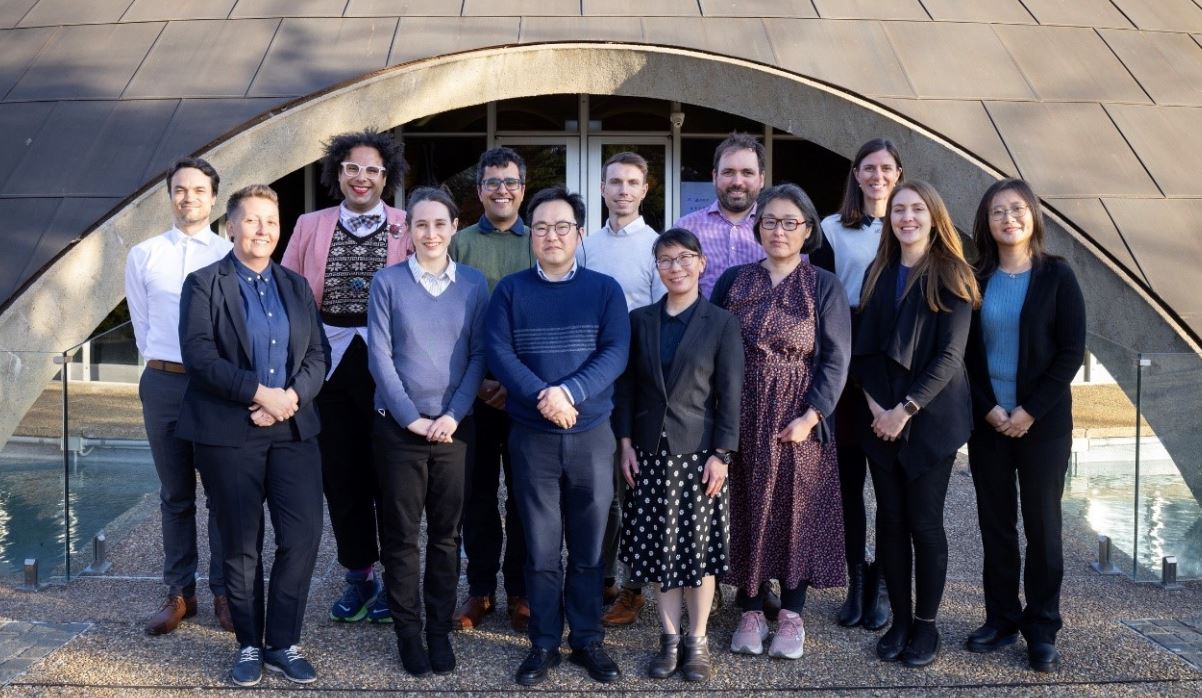
The 2024–25 EMCR Forum Executive Committee members at the Australian Academy of Science’s Shine Dome in Canberra.
Current Executive Committee members
Dr Clément Duvert
Charles Darwin University, Larrakia Country | He/Him
Clem is a Senior Research Fellow at Charles Darwin University, specialising in hydrology and biogeochemistry. He uses isotopic tracers to understand the dynamics of streams and rivers, focusing on how these aquatic ecosystems store and release water, carbon and nutrients. In 2022, he received a Discovery Early Career Researcher Award (DECRA) from the Australian Research Council, making him the first DECRA recipient in the Northern Territory. At Charles Darwin University, Clem leads a group that aims to quantify how much carbon is exported from rivers to oceans across Australia. This work involves both field observations and modelling and will be key to the development of a more accurate carbon budget for the nation.
Originally from rural France, Clem has a rich international background, having lived in Mexico, Laos and Sweden before pursuing his PhD studies at the Queensland University of Technology in Brisbane, where he earned his PhD in 2016.
Passionate about supporting early and mid-career researchers (EMCRs) in small regional universities, Clem advocates for improved resources and connections for researchers in smaller institutions. He understands the unique challenges faced by EMCRs in these settings and would like to help enhance their research opportunities and career development.
Dr Li Gao
RMIT University & South East Water, Melbourne, traditional land of the Bunurong people | He/Him
Dr Li Gao is an industry-focused research leader with a unique joint appointment at South East Water and RMIT University. As Strategic Research Manager at South East Water, he oversees an extensive portfolio of industry-based strategic research initiatives, leading projects that deliver tangible benefits to the community while cultivating impactful research partnerships.
Li has a keen interest in connecting the ‘blue sky research’ from research organisations with the ‘real application’ in the industry sectors. As an EMCR with a strong industry background, he is really passionate about driving collaborations/interactions between EMCRs and the industry sectors. He believes this will support EMCRs to gain deeper insights into industry sectors and broaden their career pathways, which is in alignment with EMCR Forum objectives and Australian national research initiatives (e.g., ARC Industry Fellowship, industry PhD program, ARC Linkage schemes, etc.). At the personal level, Li has substantial volunteer experience, including the Chair for Victorian Water Panel (Engineers Australia) and Board Director at Membrane Society of Australasia.
Dr Stephanie Harrison
South Australian Health and Medical Research Institute, Adelaide, Kaurna Country | She/Her
Stephanie is a Senior Research Fellow at the Registry of Senior Australians, South Australian Health and Medical Research Institute (SAHMRI). Her research primarily uses routinely collected observational data to improve care and health outcomes for the older population, including people accessing aged care services, people with experience of stroke and people living with dementia. She completed her PhD at Newcastle University, UK in 2016 and has since held postdoctoral appointments in Australia and the UK. She has led five government-commissioned reports that directly informed policies and practices affecting older people, including for the Royal Commission into Aged Care, the Australian Government Department of Health and Aged Care and Public Health England.
Stephanie is passionate about science communication and engaging with the public as important collaborators who add valuable insight to research. She convened the 2019 ‘Redefining Healthy Ageing Together’ two-day conference with support from the Australian Academy of Science which was attended by 60 early-mid career researchers (EMCRs) and >100 members of the public. She has written articles for The Conversation (>127,000 readers), and delivered several radio, TV (ABC), and newspaper interviews.
Dr Marcus Korb
University of Western Australia, Perth, Noongar Country | He/Him
Dr. Marcus Korb is a passionate Molecular Chemist at the School of Molecular Sciences at the University of Western Australia (UWA) in Perth (Borloo). His research focuses on the design and synthesis of novel organometallic transition metal complexes. With a focus on iron, he aims to replace noble metals such as palladium and platinum, that are widely used as catalysts for the synthesis of drugs and small molecular building blocks, by cheaper and environmentally friendly alternatives. He supports his research with computational models and in situ spectro-electrochemical methods to identify intermediate species.
Marcus received his PhD in Inorganic Chemistry from the University of Technology in Chemnitz (TUC, Germany) supported by a Chemie-Fonds Scholarship (VCI), focusing on asymmetric catalysis using iron-based ligands. He continued his research on mixed valent complexes and silver-based joining materials through a joint postdoctoral position at TUC and the German Center of Excellence MERGE. In 2019 he received a Fellowship from the Forrest Research Foundation and moved to Perth, where he started to explore the field of small molecule activation through low-valent transition metal complexes. He founded his own research group at UWA in 2023, supported by a Discovery Early Career Researcher Award (DECRA) from the Australian Research Council (ARC). His current research interests remain focused on organometallic complexes, transition-metal catalysis, electron-transfer, and ferrocenyl-containing molecules.
Marcus is part of the WA Early Career Chemistry group of the Royal Australian Chemical Institute (RACI) where he aims to strengthen the network of Chemists in Western Australia and helps to maintain a strong relationship with local industries. As a board member of the WA division, he uses his voice to promote the interests of young Chemists.
Dr Anna Lintern
Monash University, Melbourne, traditional land of the Bunurong people | She/Her
Anna is a Senior Lecturer, and Head of the Water Group in the Department of Civil Engineering at Monash University. She is a co-lead of the Green Infrastructure and Water Quality Lab in the Department of Civil Engineering. With a passion for clean and healthy waterways, her research focuses on investigating the drivers of waterway pollution, predicting future pollution, and designing strategies to clean up waterways. She has worked closely with government partners to assess and model riverine water quality.
She trained in science communication and engagement through the Fresh Science Program (2021) and the STEM Ambassador Program (Science and Technology Australia). She has also acted as the Early Career Researcher Representative on the Future Earth Australia Steering Committee.
Anna believes that communication is a crucial part of science, underpinning science literacy and policy making. She is also concerned about the increasing job insecurity facing young researchers in STEM fields. She would like to see young scientists and academics empowered to make impact in their fields, whilst being true to their themselves and their values.
Anna has a Bachelor of Engineering (Civil), a Bachelor of Arts and a PhD in Civil Engineering from Monash University. She is also currently juggling her academic position alongside raising two young children and is grateful for the support of her network that enables this juggle to occur.
Dr Yang Liu
James Cook University, Townsville, Bindal and Wulgurukaba Land | She/Her
Yang is a Senior Lecturer in Chemistry at James Cook University, leading a research group of Electrochemistry and Sensors in the College of Science and Engineering. She received her PhD in Analytical Chemistry from the University of Chinese Academy of Sciences in 2011. Prior to her current position at James Cook University, she worked as a Research Fellow at Nanyang Technological University, Singapore (2011-2013), and Curtin University, Australia (2013-2016). From 2016-2018, she held a position as a Chemist and Research Officer at ChemCentre, Western Australian Government.
Yang has built extensive experience across her research interests of electrochemistry, nanomaterials and sensing technologies. Her current research areas include the development of high-performance and low-cost electrochemical sensors for agricultural, environmental and biological applications, as well as utilisation of plasma electrochemistry for green synthesis, water treatment, and renewable energy production. Yang’s dedication to these fields resulted in her being awarded the 2022 Paul Haddad Medal from the Royal Australian Chemical Institute, the 2023 EMCR Mobility Grant from Australian Academy of Science, and the 2023 Royal Australian Chemical Institute Fellowship in recognition of her research excellence in Chemistry.
Dr Nicola Straiton
Australian Catholic University, Sydney, Gadigal Country | She/Her
Nicola Straiton is a nurse and Senior Research Fellow at the Nursing Research Institute, a collaboration between St Vincent’s Hospital Sydney and the Australian Catholic University, her research interests include cardiovascular disease, implementation science and digital health. Nicola completed a Doctor of Philosophy (Nursing) at The University of Sydney in 2023 focused on the acceptability of heart valve replacement procedures, and patient-reported outcomes in adults with aortic stenosis.
Her role involves designing, leading, and conducting collaborative research to enhance the translation of evidence into practice and to build the research capacity and capabilities of clinician researchers. To further these efforts, Nicola currently co-leads the Maridulu Budyari Gumal SPHERE (Sydney Partnership in Health, Education, Research & Enterprise) Nursing and Midwifery Implementation Science Academy's early and mid-career researcher group. Additionally, Nicola serves as an advisory and scientific member of the Australian and New Zealand Alliance for Cardiovascular Trials.
Nicola is also a keen advocate for involving patients, carers and the public in research prioritisation, co-design and dissemination.
Dr Lisa Vincze
Griffith University, Gold Coast campus, Bundjalung Nation | She/Her
Lisa is a Lecturer in the School of Health Sciences and Social Work at Griffith University. She holds dual qualifications as an Accredited Practising Dietitian (Dietitians Australia) and Accredited Exercise Physiologist (Exercise & Sports Science Australia). She teaches undergraduate dietitians in the Bachelor of Nutrition and Dietetics and her research focuses on optimising nutrition and physical activity behaviours in women and children. Lisa is passionate about understanding end-user perspectives to help navigate complex challenges in healthcare and community settings.
She is working across a diverse range of projects including Early Childhood Education and Care Settings (i.e. long daycare, outside school hours care, family daycare) and workforce development, postpartum nutrition, and physical activity optimisation particularly with novel technology, utilising social eating to optimise nutrition in the Defence Force, nutrition care in endometriosis, First Nations paediatric nutrition care and understanding adult bitter-taste sensitivity. All of her projects have a focus on understanding system influences and stakeholder perspectives to optimise provision of nutrition care and/or settings-based approaches to enhance the nutrition and physical activity environment.
Lisa is mother to two super fun and active young boys. She adores sharing her love of cooking with her children and all the mess (and fun!) that creates. Bike riding, playgrounds, soccer, cricket, swimming, trampolines, and coffee make up all of her free time (hello playground era of parents to young children!!). Lisa’s commitment to her family, and her academic pursuits, have made her passionate about championing academics/researchers to pursue meaningful careers AND be supported to follow their family dreams. While ‘balance’ may be an ever-changing goal in parenthood, Lisa is an advocate for opening genuine and honest conversations about the challenges to taking career opportunities when trying to simultaneously meet family commitments. She would love to see a world where systems change supports women to stay in research, achieve their goals and enjoy their vision of parenthood.
Former Executive Committee members
Dr Mohammad Taha (Chair)
Naarm, Wurundjeri Land | They/Them
Mohammad is a multidisciplinary researcher exploring the frontiers of materials science, sustainability, and electronic engineering. With a passion for unravelling the mysteries of phase-changing materials, they strive to apply their findings in exciting fields like photonics and sustainable systems. Driven by the belief that a profound understanding of phenomena can unlock untapped potential, they are dedicated to delivering ground-breaking outcomes in their diverse areas of expertise.
Beyond their scientific pursuits, Mohammad is a staunch advocate for the LGBTQIA+ community, working tirelessly to support and empower their fellow members. Their commitment to inclusivity and diversity extends beyond the lab, creating a positive impact on both their academic environment and society as a whole.
As a true wordsmith, Mohammad expresses their creativity through various forms of writing. From thought-provoking poetry and captivating fiction to insightful nonfiction pieces, their written work showcases the depth of their intellect and imagination. Additionally, they have a keen interest in the world of film and contribute their exceptional writing and storytelling skills to the cinematic experience. Mohammad's diverse pursuits encompass scientific excellence, social progress, and artistic flair, making them an inspiring force for innovation and positive change.
Associate Professor Angela Laird (Co-Deputy Chair)
Dharug Country, Land of the Wallumedegal people | She/Her
Angela is an A/Prof within the Macquarie Medical School and Centre for Motor Neuron Disease Research at Macquarie University, Sydney. She leads a team of researchers working together to identify and test potential treatments for neurodegenerative movement disorders such as motor neuron disease and Machado Joseph disease. The team uses various disease models, including transgenic zebrafish, to gain insight into the potential efficacy and mechanisms of these treatments and has multiple ongoing industry collaborations to share this expertise.
Angela grew up on a farm in rural NSW and moved to Sydney to attend UNSW for her undergraduate and PhD degrees. After postdoctoral training at KU Leuven, Belgium, she returned to Australia and established her own research team. So far in her career Angela has enjoyed developing skills in team leadership, mentorship and science communication, with a particular focus on ensuring engagement with patients, caregivers and the general public, including those from rural and remote communities. She now has two young children and vividly remembers the difficulty of juggling workloads with childcare and sleepless nights. She enjoys supporting others going through similar situations, mindful that it can be an isolating time.
Dr Charlie Morgan (Co-Deputy Chair)
Ngambri and Ngunawal Country | He/Him
Charlie is a Research Strategist in the Research School of Biology at the Australian National University. He supports major research initiatives that are often interdisciplinary and multi-institutional. Working closely with academics, the research committee, and professional staff he contributes to the development of strategic research directions and activities to build research and translation capabilities.
Previously he served as postdoctoral researcher at the Laboratory of Molecular Biology, University of Cambridge (UK). There he led a Blue Skies collaboration with AstraZeneca and served on the executive committee of the Postdoc Society of Cambridge. He worked to highlight challenges faced by ECRs to university administrators and increase opportunities for ECRs to develop community, gain teaching experience and explore non-academic career pathways.
He is passionate about science education and can often be found volunteering at science festivals and classrooms, lecturing, and mentoring junior researchers. He was a Mirzayan Science Policy Fellow at the National Academy of Sciences (USA) where he worked on the Board of Science Education..
He earned his PhD in Chemistry and Chemical Biology from the University of California San Francisco, USA. There he developed his love of science education with the Science & Health Education Partnership. Charlie moved to Australia in 2021 to follow his partner, who is also an EMCR.
Associate Professor Raffaella Demichelis
Whadjuk region of the Noongar Nation | She/Her
Raffaella leads an emerging team doing research in computational materials chemistry and geochemistry at Curtin University. Her research spans from the study of materials structure to crystal growth and mineral surface reactivity via developing classical, quantum mechanical, and semi-empirical models. She led landmark research that proves a new and more comprehensive theory explaining how minerals form in aqueous solutions, and solved the problems related to understanding how atoms arrange into a number of mineral structures. Raffaella also contributes to develop software and models that are used in academic and non-academic laboratories conducting research in chemistry, materials science, and earth science worldwide.
Originally from Italy, Raffaella has made Western Australia her home for more than 10 years. Aside from her research, she spreads her enthusiasm for science through engaging with outreach and community building activities and is an active advocate for change in our national research system through leading local and national groups and initiatives. Since 2021 Raffaella has been an Executive member of the Australian Academy of Science's Early- and Mid-Career (EMCR) Forum, which she chaired in 2022. She co-founded networks in WA aimed to teach software skills to PhD students (through the Software Carpentry project, now under the leadership of the Curtin Institute for Computation) and to grow support and allyship in the chemistry community (the WA Women in Chemistry group, under the auspices of the Royal Australian Chemical Society). She also volunteers much of her time to visit schools and mentor kids to possible STEM career paths with the double purpose of also showcasing gender diversity in STEM.
As a culturally and linguistically diverse woman in STEM with caring responsibilities who has gone through significant and extended career breaks, she has faced numerous barriers to career progression and is using her experience to advocate for a mentally safe, flexible and inclusive research environment, allowing for sustainable and diverse career paths.
Raffaella has received national and international recognition for her research and community engagement through being a 2020 WA Young Tall Poppy awardee and the recipient of the 2015 Caglioti prize (Italian Academy of Science), the 2022 F.G. Houtermans Award (European Association of Geochemistry), and the 2023 Dorothy Hill Medal (Australian Academy of Science).
Dr Vanessa Moss
Dharug Country | She/Her
Vanessa is a radio astronomer based at CSIRO Astronomy and Space Science, working at the boundaries between astronomy, telescope operations and data science. She oversees science operations for the innovative new Australian Square Kilometre Array Pathfinder (ASKAP) telescope, coordinating astronomical observations from specification to the arrival of the data at the Pawsey Supercomputing Centre. Prior to her current position, she worked overseas at ASTRON Netherlands Institute for Radio Astronomy in research and telescope operations and at the University of Sydney as a CAASTRO postdoctoral fellow.
Vanessa has extensive experience in big data analysis/visualisation, automation of complex systems and science communication across numerous contexts. In 2020, she chaired a CSIRO-hosted symposium on "The Future of Meetings", which was an entirely virtual cross-disciplinary conference to explore best practice for professional and social interaction. She is a strong advocate of a digital-first approach and for the process of optimising all interactions by maximising accessibility, inclusivity and sustainability. Vanessa is also passionate about ensuring effective career structures for EMCRs, building stronger relationships and development opportunities between academia/industry, and providing equitable and flexible paths across academia.
Dr Timothy Lau
Kaurna Country | He/Him
Tim is a Lecturer of Sustainable Energy Engineering at the University of South Australia. Prior to this role, he was Senior Research Associate at The University of Adelaide, having completed his PhD in mechanical engineering in 2011 from the same university. His main expertise is in fluid mechanics, turbulence, combustion and renewable energy systems (solar, wind and wave), where he utilises a combination of state-of-the-art experimental techniques, laser diagnostics and computational modelling to advance fundamental understanding in these fields. He also has experience in designing green buildings, having worked both within the industry and academia to reduce the carbon footprint and improve indoor environment quality within the built environment.
He is particularly interested in applying scientific knowledge and engineering know-how to address practical challenges, both within the society and industry, such as reducing energy consumption and emissions from systems through improvements in efficiency or the development of new green technologies.
He was awarded an Endeavour Fellowship award from the Australian Government in 2015 to conduct research at Sandia National Laboratories in the US. He has also been featured in an episode of ABC’s Nexus program on the life of international students in Australia, which was broadcast within the Asia-Pacific region.
Tim is also keen in popularising STEM fields, particularly amongst the younger generation, as he thinks this is crucial for Australia to meet the needs of an increasingly automated society.
Dr Maithili Sashindranath
Wurundjeri region of the Kulin Nation | She/Her
Maithili is the State Project Manager for the Australian Centre for Excellence in Melanoma Imaging and Diagnosis (ACEMID) and Deputy Laboratory Head at Monash University’s Australian Centre for Blood Diseases (ACBD). A biomedical scientist who works across the fields of Neurobiology and Haematology, Maithili has recently transitioned into the field of clinical project management.
She has a keen interest in promoting gender equity and diversity in STEM and in advocating for better systems to ensure retention of women with carer responsibilities in the academic workforce. She is a member of the NHMRC Women in Health Sciences committee, which develops strategies to improve the participation, retention, and progression of women in health and medical research. She is a founding member and served as deputy chairperson of the Monash Central Clinical School Gender Equity, Diversity and Inclusion Committee from 2018-2020.
Maithili maintains a strong community focus, and actively promotes STEM to children, with a special emphasis on inspiring young girls as a ‘CSIRO STEM Professionals in Schools’ partner. She completed a PhD from the University of Melbourne and a BSc Hons degree from the University of Cape Town, South Africa (2003), prior to which she lived in India.
Dr Rowan Trebilco
Nipuluna Country in Lutruwita, traditional lands of the Muwineena people | He/Him
Rowan is a Team Leader in the Coasts & Ocean Research Program with CSIRO Oceans & Atmosphere, and he co-leads the Environmental Change and Adaptation research theme in the Centre for Marine Socioecology at the University of Tasmania. He has an interdisciplinary background and uses his expertise in marine systems ecology and natural resource management to support sustainable management of marine social-ecological systems, working at the interface between science, decision-making and environmental stewardship. The main focus of his work is currently assessing status, trends, risks and opportunities for marine social-ecological systems and on developing strategies for climate change adaptation.
Rowan has worked in Australia, Europe and America across ecosystem assessment, theoretical ecosystem ecology, statistical and mechanistic modelling, fisheries and natural resource management, including several years of fieldwork above and below temperate, tropical, and Southern oceans. He graduated with a BSc (Hons) in Zoology from the University of Tasmania in 2004, completed an MSc in Biodiversity Conservation and Management as a Rhodes Scholar at Oxford (2007-2008) and a PhD in Biology (Marine Ecology) as a Vanier Scholar at Simon Fraser University in Canada (2009-2014). He found his way back to his home state of Tasmania as Research Fellow with the Antarctic Climate and Ecosystems Cooperative Research Centre in 2014, where he was based until moving to CSIRO in 2019.
Rowan is passionate about supporting inclusive, equitable, sustainable and flexible STEM careers and work-life balance. He’s a dad to two rambunctious young daughters (and an equally rambunctious furry four legged adventure companion), bicycle nut, outdoor multi-dabbler, cook, reader of fiction and brewer/appreciator of fermented beverages.
Dr Li Gao
Land of the Bunurong people, Kulin Nation | He/him
Li is a Research Strategist at South East Water, focusing on industry-based strategic research and IP portfolio management. He is also an Australian Research Council inaugural Industry Fellow, where he studies resource recovery technology to transform Australian water utilities with the circular economy.
Li has a keen interest in connecting the ‘blue sky research’ from research organisations with the ‘real application’ in the industry sectors, bringing real benefits to the community. As an EMCR with a strong industry background, he is really passionate about driving collaborations/interactions between EMCRs and the industry sectors. He believes this will support EMCRs to gain deeper insights into industry sectors and broaden their career pathways, which is in alignment with EMCR Forum objectives and Australian national research initiatives (e.g., ARC Industry Fellowship, industry PhD program, ARC Linkage schemes, etc.). At the personal level, Li has substantial volunteer experience, including the Chair for Victorian Water Panel (Engineers Australia) and Board Director at Membrane Society of Australasia.
Associate Professor Tomoko Sugiura
Land of the Ngunnawal and Ngambri people | She/Her
Tomoko joined the ANU in 2022 to establish the Health Data Analytics team (HDAT), College of Health and Medicine (CHM). Earlier this year, Tomoko successfully delivered analyses contributing to the first stage of a Workforce Prioritisation Plan, in partnership with Capital Health Network, and Health Practitioners Profiles in partnership with the ACT Health Directorate. Prior to joining the ANU, Tomoko led teams at the Australian Institute of Health and Welfare and the Department of Health and Aged Care in executive roles. She has extensive experience in innovative use of data to inform public service decision making and leading teams from diverse professional and academic backgrounds. She has been a custodian of many Australian administrative datasets, championed data use, led the work on developing data strategies and data governance frameworks, and has supported many expert data advisory groups.
Through her work on the Closing the Gap program and in intergovernmental committees, Tomoko has well-developed relationships within the Australian Public Service, jurisdictional health departments, professional peak bodies such as NACCHO, and research and community organisations.
Tomoko has worked successfully in Asia and in Australia across the private sector, not-for-profit sector, the public service and academic institutions. As a management consultant, she led teams delivering geospatial market analysis for pharmaceutical companies entering Asia-Pacific markets. Tomoko’s teams identified market potential for different therapy areas in Japan, China, South Korea, Vietnam, Australia and New Zealand and assisted clients make critical decisions about optimal allocation of sales workforce resources.
Tomoko has a Bachelor of Sciences with honours in psychology and a PhD in Psychology from the University of New South Wales. Her PhD research explored ways in which adjustment to new environment affected work and academic performance of international managers and students, respectively. During her time at the National Institute of Mental Health in Japan, she contributed to epidemiological studies and published in peer reviewed journals. Tomoko has taught post-graduate courses in research methods and intercultural communication at UTS.
Ms Mibu Fischer
Quandamooka Country | She/Her
Mibu is a marine ethnoecologist in the Sustainable Marine Futures Research Program at CSIRO Environment. She looks for ways to integrate and respect Indigenous & Traditional Peoples’ knowledge and science specifically in fisheries, climate change and restoration practices. Educating STEM professionals on the importance of respecting, engaging and acknowledging the knowledge and science of Indigenous and Traditional Peoples is in addition to her work as a researcher.
Mibu is passionate about diversity in STEM, with a particular interest in increasing the representation of Indigenous voices (both nationally and internationally). She informally mentors young Indigenous women who are interested in marine/environmental science and always has time to provide a safe space to chat about the challenges that exist for Indigenous researchers who work within the Indigenous science space, by providing compassion and common ground that exists around cultural complexities and worldviews when working in a western focussed system.
She is equally as passionate about science communication. As a team member for That’s What I Call Science, Mibu works with a group of ECRs to produce STEMM podcasts and related events, like the Diversity in STEMM Gallery. She has participated in numerous panel discussions around the inclusion of Indigenous people in research and the importance of recognising Indigenous Knowledge. Mibu has appeared in Channel 10’s Scope television show and has written several articles including for CSIROBlog, Subak Australia and Australian Strategic Policy Institutes ‘The Strategist’.
Dr Jordan Pitt
Kaurna Country | He/Him
Jordan is descendant of the Birri Gubba people and Lecturer at the University of Adelaide in applied mathematics. Jordan completed his PhD at the Australian National University in 2019 developing numerical techniques used in modelling the impact of tsunamis and storm surges. His current research focuses on developing mathematical models of the interaction between ocean waves and sea ice, which influences the annual growth and melt of sea ice and thus the Earth’s climate. This research combines Jordan’s passion for mathematics and his love of water and the way it moves, which is at the heart of many issues facing society and some of the most complex problems in mathematics.
Jordan is deeply committed to improving inclusion of all peoples in Science and STEM more broadly. This deep commitment comes from his own experience as a First Nation’s person working in both academia and government. He also believes in the necessity of a diversity of voices at the table to make meaningful progress on society’s largest challenges, such as climate change. For this reason, he is currently sitting on the board of Australian Earth-System Simulator as their First Nations representative. Jordan also hopes to see more mob doing science, and better appreciation of the science that mob are already doing, such as their Traditional Knowledges.
Dr Isabella Bower
Kaurna Country | She/Her
Isabella is Postdoctoral Research Fellow at the University of South Australia working in the field of environmental cognitive neuroscience. Her research explores whether we can improve brain functioning and mental health through built environment design. During her doctoral thesis she investigated how building design impacts cognitive functions such as perception, attention, and emotion regulation.
Prior to her current position, Isabella has worked at Deakin University, The University of Melbourne and in the Victorian State Government. She joined the EMCR Forum Executive in 2023 and is also currently on the Steering Committee for the Australian Brain Alliance EMCR Brain Sciences Network and is a General Member of the Australasian Cognitive Neuroscience Society ECR Committee.
Isabella brings experience working across the life and social sciences, with the rather unique perspective of crossing disciplines and sectors during her career. She is an advocate for the importance of research communication, and has won awards for her public speaking, writing and visualisations. She has also previously served as President for Students of Brain Research and Chief of Staff for Pint of Science Australia.
Dr Raffaella Demichelis (Chair)
Whadjuk region of the Noongar Nation | She/Her
Raffaella is an ARC Future Fellow and holds a Senior Lecturer appointment at Curtin University. She leads an emerging team who does research in the fields of computational materials chemistry and geochemistry. Her research is focused on understanding how minerals form in systems as diverse as coral reefs and the human body. She led landmark research that proves a new and more comprehensive theory explaining how minerals form in aqueous solutions, and solves the problems related to understanding how atoms arrange into certain mineral structures. Raffaella also contributes to develop software and potential models that are used in laboratories conducting research in chemistry, materials science and earth science worldwide.
Originally from Italy, Raffaella has made Western Australia her home for more than 10 years. She spreads her enthusiasm for science through engaging with outreach and community building activities. She co-initiated networks in WA aimed to teach software skills to PhD students (through the Software Carpentry project) and the WA Women in Chemistry group (under the auspices of the Royal Australian Chemical Society), as well as volunteers much of her time to visit schools and mentor kids to possible STEM career paths with the double purpose of also showcasing gender diversity in STEM.
As a culturally and linguistically diverse woman in STEM with caring responsibilities who has gone through significant and extended career breaks due to maternity and part time work, she has faced numerous barriers to career progression and is using her experience to advocate for a mentally safe, flexible and inclusive research environment, allowing for more sustainable and diverse career paths. Indeed, she contributes much of her time to equity, diversity and inclusion initiatives both locally and nationally.
Raffaella has received national and international recognition for her research and community engagement through being the recipient of the 2015 Caglioti prize for Early Career Chemists (Italian Academy of Science) and a 2020 WA Young Tall Poppy awardee.
Dr Vanessa Moss (Co-Deputy Chair)
Dharug Country | She/Her
Vanessa is a radio astronomer based at CSIRO Astronomy and Space Science, working at the boundaries between astronomy, telescope operations and data science. She oversees science operations for the innovative new Australian Square Kilometre Array Pathfinder (ASKAP) telescope, coordinating astronomical observations from specification to the arrival of the data at the Pawsey Supercomputing Centre. Prior to her current position, she worked overseas at ASTRON Netherlands Institute for Radio Astronomy in research and telescope operations and at the University of Sydney as a CAASTRO postdoctoral fellow.
Vanessa has extensive experience in big data analysis/visualisation, automation of complex systems and science communication across numerous contexts. In 2020, she chaired a CSIRO-hosted symposium on "The Future of Meetings", which was an entirely virtual cross-disciplinary conference to explore best practice for professional and social interaction. She is a strong advocate of a digital-first approach and for the process of optimising all interactions by maximising accessibility, inclusivity and sustainability. Vanessa is also passionate about ensuring effective career structures for EMCRs, building stronger relationships and development opportunities between academia/industry, and providing equitable and flexible paths across academia.
Dr Mohammad Taha (Co-Deputy Chair)
Naarm, Wurundjeri Land | They/Them
Mohammad is a non-binary queer person of colour and researcher at the Faculty of Engineering and Information Technology at the University of Melbourne. They have experience in electrical engineering, flexible/wearable electronics, materials science/engineering, teaching and science communication.
Mohammad’s research interests centre around novel materials, their design and engineering for different purposes, and the developments of new applications that will better serve communities in Australia and abroad. Mohammad is passionate about pursuing a more holistic approach to problems such as climate change and believes in the importance of multidisciplinary scientific innovation in order to drive impactful future solutions to current and emerging challenges.
Mohammad is also a long-time champion of Diverse Genders, Sexes and Sexualities, having worked for queer inclusion in several institutions, and they strongly believe in the vital role of diversity in experience and opinion in order to bring fresh perspectives to long-standing challenges, both in the scientific community and the broader society. An important part of Mohammad’s promotion of diversity in STEMM is their work as the co-chair of the Victorian chapter of QueersInScience (QiS) advocating for intersectional and sophisticated inclusion models that can capture and enhance the experiences of people who belong to multiple minority groups. Outside of academia, Mohammad is a fitness instructor, an enthusiastic reader, a writer of fiction/non-fiction and poetry, and an aspiring film maker.
Dr Yee Lian Chew
Kaurna Country | She/Her
Yee Lian is an NHMRC Research Fellow (Mary Overton Senior Research Fellow) at the Flinders Health and Medical Research Institute (FHMRI) at Flinders University, trying to understand the chemical signals in the brain that trigger learning and experience-dependent behaviours. She leads a young team of researchers who use the small invertebrate model C. elegans (the nematode worm) to address fundamental questions in neuroscience. The lab uses a combination of genetic tools, advanced imaging and behavioural assays in order to dissect pathways of neuronal communication important not only for learning, but also relevant to human disorders such as pain and neurodegenerative disease.
She is an enthusiastic science communicator and has been involved in events at the Cambridge (UK) Science Festival, the Sydney Science Festival and Fresh Science (Science in Public). She has recorded podcasts for the University of Wollongong, an Elevator Pitch video with ABC Science, and stood on a soapbox at Sydney’s Circular Quay to talk science with members of the public as part of Soapbox Science 2019. She enjoys undergraduate teaching and always takes the opportunity to share microscopy images of fluorescing worms, or share the odd worm pun, during her lectures. Yee Lian is currently a Superstar of STEM (2021-2022), a program run by Science and Technology Australia (STA) aiming to highlight women experts in STEM.
Yee Lian always has time to mentor young researchers from underrepresented backgrounds who need help with job/grant/funding apps or just a little pep talk! She is part of the Flinders University College of Medicine and Public Health equity, diversity and inclusion committee and is passionate about creating a stronger, more diverse research community.
Dr Timothy Lau
Kaurna Country | He/Him
Tim is a Lecturer of Sustainable Energy Engineering at the University of South Australia. Prior to this role, he was Senior Research Associate at The University of Adelaide, having completed his PhD in mechanical engineering in 2011 from the same university. His main expertise is in fluid mechanics, turbulence, combustion and renewable energy systems (solar, wind and wave), where he utilises a combination of state-of-the-art experimental techniques, laser diagnostics and computational modelling to advance fundamental understanding in these fields. He also has experience in designing green buildings, having worked both within the industry and academia to reduce the carbon footprint and improve indoor environment quality within the built environment.
He is particularly interested in applying scientific knowledge and engineering know-how to address practical challenges, both within the society and industry, such as reducing energy consumption and emissions from systems through improvements in efficiency or the development of new green technologies.
He was awarded an Endeavour Fellowship award from the Australian Government in 2015 to conduct research at Sandia National Laboratories in the US. He has also been featured in an episode of ABC’s Nexus program on the life of international students in Australia, which was broadcast within the Asia-Pacific region.
Tim is also keen in popularising STEM fields, particularly amongst the younger generation, as he thinks this is crucial for Australia to meet the needs of an increasingly automated society.
Dr Vipul Agarwal
Eora Country | He/Him
Vipul is a NHMRC fellow at Cluster for Advanced Macromolecular Design (CAMD) at the University of New South Wales (UNSW). His research focuses on developing multifunctional polymer/2D material-based composites for application in biomedical engineering and materials science. His current research focuses on developing fundamental principles to control and manipulate the organisation of 2D materials in 2D and 3D polymeric nanocomposites, which in turn dictate the efficacy of these nanocomposites in specific applications.
Vipul Agarwal graduated with a BSc (Honours) in Chemistry from the University of Delhi (DU), India in 2005, MApplSc in Chemistry from University of Tasmania (UTAS) in 2010, and PhD in Nanobiotechnology and Bioengineering from The University of Western Australia (UWA) in 2015. After a considerable career break, he joined the Indian Institute of Science (IISc), India, in 2016 on the Science & Engineering Research Board – Department of Science and Technology Postdoctoral Fellowship.
Vipul has extensive training and ongoing research interest in conducting multidisciplinary research, working at the interface of materials science, (polymer) chemistry, nanotechnology, biomedical engineering and stem cell biology. He has recently developed a technology to fabricate electrically conducting 3D nanocomposite foams with ultrahigh porosity (>90%) using an ‘inverse emulsion templating’ method. He is also working towards the development of stimuli-responsive implants for spinal cord regeneration.
Dr Angela Laird
Dharug Country, Land of the Wallumedegal people | She/Her
Angela is a Senior Research Fellow within the Macquarie Medical School and Centre for Motor Neuron Disease Research at Macquarie University, Sydney. She leads a team of researchers working together to identify and test potential treatments for neurodegenerative movement disorders such as motor neuron disease and Machado Joseph disease. The team uses various disease models, including transgenic zebrafish, to gain insight into the potential efficacy and mechanisms of these treatments and has multiple ongoing industry collaborations to share this expertise.
Angela grew up on a farm in rural NSW and moved to Sydney to attend UNSW for her undergraduate and PhD degrees. After postdoctoral training at KU Leuven, Belgium, she returned to Australia and established her own research team. So far in her career Angela has enjoyed developing skills in team leadership, mentorship and science communication, with a particular focus on ensuring engagement with patients, caregivers and the general public, including those from rural and remote communities. She now has two young children and vividly remembers the difficulty of juggling workloads with childcare and sleepless nights. She enjoys supporting others going through similar situations, mindful that it can be an isolating time.
Dr Maithili Sashindranath
Wurundjeri region of the Kulin Nation | She/Her
Maithili is a Deputy Laboratory Head at Monash University’s Australian Centre for Blood Diseases (ACBD). She is biomedical scientist who works across the fields of Neurobiology and Haematology, with an interest in understanding how disturbances in blood flow affect the brain and other organs after injury. Maithili leads a team of six scientists who focus on developing therapies that target cells lining blood vessels, known as endothelial cells, with the aim of protecting organs after injury by improving function of these cells.
She has a keen interest in promoting gender equity and diversity in STEM and in advocating for better systems to ensure retention of women with carer responsibilities in the academic workforce. She is a founding member and served as deputy chairperson of the Monash Central Clinical School Gender Equity, Diversity and Inclusion Committee from 2018-2020. She is passionate about science communication and was recently admitted to the Australian Cardiovascular Alliance ‘Cardiovascular Champions’ Program. Maithili maintains a strong community focus, and actively promotes STEM to children, with a special emphasis on inspiring young girls as a ‘CSIRO STEM Professionals in Schools’ partner. She completed a PhD from the University of Melbourne and a BSc Hons degree from the University of Cape Town, South Africa (2003), prior to which she lived in India.
Dr Charlie Morgan
Dharug Country, Land of the Burramattagal people | He/Him
Charlie is a research scientist and program leader in the Translational Vectorology Research Unit at the Children’s Medical Research Institute (CMRI). His research seeks to develop transformative gene therapies to treat rare genetic diseases of the central nervous system. Together with the unit, he collaborates with academic, clinical, and industry partners across Australia, USA, and Europe.
As a postdoctoral researcher at the Laboratory of Molecular Biology, University of Cambridge (UK), he led a Blue Skies collaboration with AstraZeneca and served on the executive committee of the Postdoc Society of Cambridge. He worked to highlight challenges faced by ECRs to university administrators and increase opportunities for ECRs to develop community, teaching experience, and career development.
He is a passionate about science education and can often be found volunteering at science festival and classrooms, lecturing, and mentoring junior researchers. He was a Mirzayan Science Policy Fellow at the National Academy of Sciences (USA) where he worked on the Board of Science Education.
He earned his PhD in Chemical Biology from the University of California San Francisco, USA. There he developed his love of science education with the Science & Health Education Partnership. Charlie moved to Australia in 2021 to follow his partner, who is also a EMCR and lecturer.
Dr Emily Finch
Land of the Wurundjeri people of the Kulin Nation | She/Her
Dr Emily Finch shoots x-rays at stuff. Emily is a Beamline Scientist at the Australian Synchrotron and is part of a team building new machinery that will shoot a beam of x-rays at all kinds of samples to learn about their structure and chemistry. Once this beamline is built, Emily will work with scientists from around the world to solve scientific problems like toxins in soil and how drugs are absorbed by the body.
Emily is also a geologist, and researches ways to target critical minerals needed for technologies such as solar panels and electric cars, by studying how elements move around Earth’s crust. This work is becoming increasingly important as the known supply of minerals needed to make green technologies is shrinking and current methods of exploration cannot keep up with increasing demand. By understanding how elements move around the crust, researchers like Emily can better predict where to explore for them.
After completing her PhD in geosciences at Monash University, Emily worked in science policy at the Australian Council of Learned Academies and the Academy of Technology and Engineering, where she provided evidence-based policy advice to government. She was proud to work on the Women in STEM Decadal Plan: a project to attract more women into science, technology, engineering, and maths (STEM) careers, and to support women to have great STEM careers. This project ignited Emily’s passion for improving equity and inclusion for minority groups in STEM workplaces.
Emily is a 2021-2022 Science and Technology Australia Superstar of STEM.
Dr Emma Burrows
Land of the Wurundjeri people, Kulin Nation | She/Her
Emma is neuroscientist at The Florey Institute of Neuroscience and Mental Health. She leads a team of enthusiastic people to better understand the links between neurogenetics and behaviour to improve diagnosis, management and treatment of a range of brain conditions including autism and dementia. Emma is emerging world leader in the use of mouse touchscreen testing to assess cognition in mice expressing patient-associated gene variants. Her team use this sophisticated behavioral analysis to assess cognitive domains in mice in similar ways to clinical methods of assessment. Her recent work was the first reverse-translation of a clinical attention task for use in mice. Her team are also using suite of behavioural tools to dissect neural mechanisms underlying social and verbal communication. Emma hopes a greater understanding of brain differences will deliver awareness and better management, and ultimately improve the lives of people living with brain conditions.
Emma is passionate about advancing equity in science and leads local and national efforts to change the culture of academia to one where more people can thrive. Emma has held positions on the board of Women in STEMM Australia and as chair of her institution’s equity committee. She is a current and co-founding member of Women in Science Parkville Precinct and recently led a national conversation and Theo Murphey Thinktank to co-design a STEMM system where everyone’s talent is rewarded. Emma dedicates time and energy to mentoring, outreach and science communication. Her recent venture, promoting the benefits of physical activity on brain health, is a human-sized rainbow hamster wheel, part living lab, part installation and is one of the pieces exhibited at Science Gallery in Melbourne.
Dr Rowan Trebilco
Nipuluna Country in Lutruwita, traditional lands of the Muwineena people | He/Him
Rowan is a Team Leader in the Coasts & Ocean Research Program with CSIRO Oceans & Atmosphere, and he co-leads the Environmental Change and Adaptation research theme in the Centre for Marine Socioecology at the University of Tasmania. He has an interdisciplinary background and uses his expertise in marine systems ecology and natural resource management to support sustainable management of marine social-ecological systems, working at the interface between science, decision-making and environmental stewardship. The main focus of his work is currently assessing status, trends, risks and opportunities for marine social-ecological systems and on developing strategies for climate change adaptation.
Rowan has worked in Australia, Europe and America across ecosystem assessment, theoretical ecosystem ecology, statistical and mechanistic modelling, fisheries and natural resource management, including several years of fieldwork above and below temperate, tropical, and Southern oceans. He graduated with a BSc (Hons) in Zoology from the University of Tasmania in 2004, completed an MSc in Biodiversity Conservation and Management as a Rhodes Scholar at Oxford (2007-2008) and a PhD in Biology (Marine Ecology) as a Vanier Scholar at Simon Fraser University in Canada (2009-2014). He found his way back to his home state of Tasmania as Research Fellow with the Antarctic Climate and Ecosystems Cooperative Research Centre in 2014, where he was based until moving to CSIRO in 2019.
Rowan is passionate about supporting inclusive, equitable, sustainable and flexible STEM careers and work-life balance. He’s a dad to two rambunctious young daughters (and an equally rambunctious furry four legged adventure companion), bicycle nut, outdoor multi-dabbler, cook, reader of fiction and brewer/appreciator of fermented beverages.
Dr Yee Lian Chew (Chair)
Yee Lian is an NHMRC Research Fellow (Mary Overton Senior Research Fellow) at the Flinders Health and Medical Research Institute (FHMRI) at Flinders University, trying to understand the chemical signals in the brain that trigger learning and experience-dependent behaviours. She leads a young team of researchers who use the small invertebrate model C. elegans (the nematode worm) to address fundamental questions in neuroscience. The lab uses a combination of genetic tools, advanced imaging and behavioural assays in order to dissect pathways of neuronal communication important not only for learning, but also relevant to human disorders such as pain and neurodegenerative disease.
She is an enthusiastic science communicator and has been involved in events at the Cambridge (UK) Science Festival, the Sydney Science Festival and Fresh Science (Science in Public). She has recorded podcasts for the University of Wollongong, an Elevator Pitch video with ABC Science, and stood on a soapbox at Sydney’s Circular Quay to talk science with members of the public as part of Soapbox Science 2019. She enjoys undergraduate teaching and always takes the opportunity to share microscopy images of fluorescing worms, or share the odd worm pun, during her lectures. Yee Lian is currently a Superstar of STEM (2021-2022), a program run by Science and Technology Australia (STA) aiming to highlight women experts in STEM.
Yee Lian always has time to mentor young researchers from underrepresented backgrounds who need help with job/grant/funding apps or just a little pep talk! She is part of the Flinders University College of Medicine and Public Health equity, diversity and inclusion committee and is passionate about creating a stronger, more diverse research community.
Dr Zsuzsa Banhalmi-Zakar (Co-Deputy Chair)
Zsuzsa is an environmental scientist and lecturer in Corporate Environmental Management at James Cook University in Townsville. She was born and raised in Budapest, Hungary, then studied in Edmonton, Alberta, CA and obtained her PhD from Griffith University, in Brisbane.
Prior to moving to Australia, she worked for Deloitte as senior environmental consultant and this work sparked her interest in pursuing a PhD investigating how environmental issues manifest as financial risks and opportunities in organisations, and particularly in the financial sector. With her colleagues, she conducted the first study into financing climate change adaptation and resilience in Australia, defined this term and continues to work with stakeholders to find ways to tap into private sector funds. Her most recent, exciting endeavour is benchmarking climate change disclosure practices among the top financial institutions of the world.
Zsuzsa is an experienced public speaker and (has been told she is) a great networker, who is able to engage with multiple industry stakeholders. She has three children, and is passionate about supporting women, mothers, and daughters through their careers, PhD and ECR journeys.
Dr Timothy Lau (Co-Deputy Chair)
Tim is a Senior Research Associate at the Centre for Energy Technology at the University of Adelaide, having completed his PhD in mechanical engineering in 2011 from the same university. His main expertise is in fluid mechanics, turbulence, combustion and renewable energy systems (solar, wind and wave), where he utilises a combination of state-of-the-art experimental techniques, laser diagnostics and computational modelling to advance fundamental understanding in these fields. He also has experience in designing green buildings, having worked both within the industry and academia to reduce the carbon footprint and improve indoor environment quality within the built environment.
He is particularly interested in applying scientific knowledge and engineering know-how to address practical challenges, both within the society and industry, such as reducing energy consumption and emissions from systems through improvements in efficiency or the development of new green technologies.
He was awarded an Endeavour Fellowship award from the Australian Government in 2015 to conduct research at Sandia National Laboratories in the US. He has also been featured in an episode of ABC’s Nexus program on the life of international students in Australia, which was broadcast within the Asia-Pacific region.
Tim is also keen in popularising STEM fields, particularly amongst the younger generation, as he thinks this is crucial for Australia to meet the needs of an increasingly automated society.
Dr Vipul Agarwal
Vipul is a NHMRC fellow at Cluster for Advanced Macromolecular Design (CAMD) at the University of New South Wales (UNSW). His research focuses on developing multifunctional polymer/2D material-based composites for application in biomedical engineering and materials science. His current research focuses on developing fundamental principles to control and manipulate the organisation of 2D materials in 2D and 3D polymeric nanocomposites, which in turn dictate the efficacy of these nanocomposites in specific applications.
Vipul Agarwal graduated with a BSc (Honours) in Chemistry from the University of Delhi (DU), India in 2005, MApplSc in Chemistry from University of Tasmania (UTAS) in 2010, and PhD in Nanobiotechnology and Bioengineering from The University of Western Australia (UWA) in 2015. After a considerable career break, he joined the Indian Institute of Science (IISc), India, in 2016 on the Science & Engineering Research Board – Department of Science and Technology Postdoctoral Fellowship.
Vipul has extensive training and ongoing research interest in conducting multidisciplinary research, working at the interface of materials science, (polymer) chemistry, nanotechnology, biomedical engineering and stem cell biology. He has recently developed a technology to fabricate electrically conducting 3D nanocomposite foams with ultrahigh porosity (>90%) using an ‘inverse emulsion templating’ method. He is also working towards the development of stimuli-responsive implants for spinal cord regeneration.
Dr Michelle Christie
Michelle is a research fellow at the Department of Biochemistry, University of Melbourne. She is originally from Sri Lanka and undertook her PhD studies at the University of Queensland (2010). Following this she undertook postdoctoral research at the University of Queensland and St Vincent’s Institute for Medical Research.
Her research interests are in characterizing protein interactions to understand biology, design novel therapeutics and develop more effective drug and gene delivery systems. In her current research Michelle uses a combination of methods including x-ray crystallography, electron microscopy and protein interaction studies to determine how bacterial toxins punch holes in host membranes. Prior to this her work focused on studying protein interactions related to membrane fusion. She was also involved in developing and characterizing novel peptide-based carriers for gene therapy.
In addition to her research activities she is also passionate about increasing diversity within the STEM community as well as raising awareness about mental health among EMCRs.
Dr Raffaella Demichelis
Rafaella’s research how minerals form in systems as diverse as coral reefs and the human body. Her team uses Australia’s latest supercomputing facilities, huge computers as powerful as thousands of laptops all together, to predict properties and chemical reactivity of minerals. She led landmark research that proves a new and more comprehensive theory explaining how minerals form, and solves the problems related to understanding how atoms arrange into certain mineral structures.
Rafaella also contributes to develop software that is used in laboratories conducting research in chemistry and earth science worldwide. She spreads her enthusiasm for science through engaging with outreach and community building activities. She co-initiated networks in WA aimed to teach software skills to PhD students and volunteers much of her time to visit schools and mentor kids to possible STEM career paths.
Dr Jinzhe (James) Gong
Jinzhe (James) is passionate about solving pressing issues in the water industry through innovation. His key research interest and expertise include Smart Water Network design and data analytics, hydraulic analysis of pipeline systems, and condition assessment of civil infrastructure. James is currently a Lecturer in Water Engineering at Deakin University (Geelong Waurn Ponds Campus). Prior to joining Deakin University, James worked as a Data Analytics Engineer in South Australian Water Corporation (SA Water) for the Adelaide CBD Smart Water Network project, and a Senior Research Fellow at the University of Adelaide. His work in SA Water has contributed to a 50% reduction in the pipe break rate in the Adelaide CBD water network. One of his research outcomes – a hydraulic transient-based pipe wall condition screening tool – has been successfully commercialised through a business partner under the trademark of p-CATTM. James completed his PhD in Water Engineering at the University of Adelaide in 2014. He also holds a master's and a bachelor's degree in Applied Geophysics.
Dr Mary McMillan
Mary is a Senior Lecturer in Biomedical Science at the University of New England, in Armidale, NSW. Mary’s research expertise is in molecular and cellular biology and genetics, and she works with the UNE Brain Behaviour Research Group on research projects designed to better understand the biology behind mental health disorders, with a focus on depression.
Mary is an experienced science communicator and writes a regular science column for regional newspapers across Australia as well as making regular appearances on local radio. She has also been involved in a number of programs promoting gender equity in STEM, including the Homeward Bound Leadership program for women in STEM, Science and Technology Australia’s Superstars of STEM program, and the Australian Academy of Science STEM Changemakers initiative. Mary is particularly interested promoting STEM careers and working with EMCRs in regional communities.
Dr Vanessa Moss
Vanessa is a radio astronomer based at CSIRO Astronomy and Space Science, working at the boundaries between astronomy, telescope operations and data science. She oversees science operations for the innovative new Australian Square Kilometre Array Pathfinder (ASKAP) telescope, coordinating astronomical observations from specification to the arrival of the data at the Pawsey Supercomputing Centre. Prior to her current position, she worked overseas at ASTRON Netherlands Institute for Radio Astronomy in research and telescope operations and at the University of Sydney as a CAASTRO postdoctoral fellow.
Vanessa has extensive experience in big data analysis/visualisation, automation of complex systems and science communication across numerous contexts. In 2020, she chaired a CSIRO-hosted symposium on "The Future of Meetings", which was an entirely virtual cross-disciplinary conference to explore best practice for professional and social interaction. She is a strong advocate of a digital-first approach and for the process of optimising all interactions by maximising accessibility, inclusivity and sustainability. Vanessa is also passionate about ensuring effective career structures for EMCRs, building stronger relationships and development opportunities between academia/industry, and providing equitable and flexible paths across academia.
Dr Maithili Sashindranath
Maithili is a Deputy Laboratory Head at Monash University’s Australian Centre for Blood Diseases (ACBD). She is biomedical scientist who works across the fields of Neurobiology and Haematology, with an interest in understanding how disturbances in blood flow affect the brain and other organs after injury. Maithili leads a team of six scientists who focus on developing therapies that target cells lining blood vessels, known as endothelial cells, with the aim of protecting organs after injury by improving function of these cells.
She has a keen interest in promoting gender equity and diversity in STEM and in advocating for better systems to ensure retention of women with carer responsibilities in the academic workforce. She is a founding member and served as deputy chairperson of the Monash Central Clinical School Gender Equity, Diversity and Inclusion Committee from 2018-2020. She is passionate about science communication and was recently admitted to the Australian Cardiovascular Alliance ‘Cardiovascular Champions’ Program. Maithili maintains a strong community focus, and actively promotes STEM to children, with a special emphasis on inspiring young girls as a ‘CSIRO STEM Professionals in Schools’ partner. She completed a PhD from the University of Melbourne and a BSc Hons degree from the University of Cape Town, South Africa (2003), prior to which she lived in India.
Dr Patrick Taggart
Pat is a Research Officer within the Vertebrate Pest Research Unit (VPRU) for NSW Department of Primary Industries. He has broad interests within the fields of ecology and epidemiology as they relate to wildlife and conservation. In his current role, he leads a national rabbit biocontrol research program, focusing on rabbit calicivirus. Through this, he is working towards reducing the environmental and agricultural impacts of invasive rabbits across Australia.
Pat has worked within the field of environmental consulting conducting targeted and general fauna surveys for various government, private and not-for-profit organisations both within Australia and internationally. More recently Pat completed his PhD at the University of Adelaide identifying factors influencing the presence of cat-borne diseases (toxoplasmosis and sarcocystosis) in wildlife, livestock and people.
Pat is determined to demonstrate and showcase exceptional study design and research excellence within the government sector and identify sustainable and achievable career paths for his peers within the ecological and conservation fields.
Dr Mohammad Taha
Mohammad is a non-binary queer person of colour and researcher at the Faculty of Engineering and Information Technology at the University of Melbourne. They have experience in electrical engineering, flexible/wearable electronics, materials science/engineering, teaching and science communication.
Mohammad’s research interests centre around novel materials, their design and engineering for different purposes, and the developments of new applications that will better serve communities in Australia and abroad. Mohammad is passionate about pursuing a more holistic approach to problems such as climate change and believes in the importance of multidisciplinary scientific innovation in order to drive impactful future solutions to current and emerging challenges.
Mohammad is also a long-time champion of Diverse Genders, Sexes and Sexualities, having worked for queer inclusion in several institutions, and they strongly believe in the vital role of diversity in experience and opinion in order to bring fresh perspectives to long-standing challenges, both in the scientific community and the broader society. An important part of Mohammad’s promotion of diversity in STEMM is their work as the co-chair of the Victorian chapter of QueersInScience (QiS) advocating for intersectional and sophisticated inclusion models that can capture and enhance the experiences of people who belong to multiple minority groups. Outside of academia, Mohammad is a fitness instructor, an enthusiastic reader, a writer of fiction/non-fiction and poetry, and an aspiring film maker.
Associate Professor Michael Bowen (Chair)
Michael is an Associate Professor and team leader at the University of Sydney’s Brain and Mind Centre and School of Psychology. His team uses cutting-edge computational, cellular and preclinical research techniques to discover and develop novel pharmacotherapies for serious brain disorders that currently lack effective treatments. Some of their most important work involves the discovery and development of novel pharmacological treatments targeting the brain oxytocin system that are aimed at substance-use disorders and social disorders. Michael co-founded a spinout company, Kinoxis Therapeutics, to commercialise these treatments.
In other ongoing work, his team are exploring the utility of targeting extrasynaptic GABA-A receptors to treat a number of neurological and mental health disorders. Finally, in work with the Lambert Initiative for Cannabinoid Therapeutics, Michael’s team is exploring the therapeutical potential of cannabinoid-based therapeutics for a range of disorders, including substance use disorders, autism spectrum disorder and epilepsy.
Some of his career highlights include winning the 2016 Eureka Prize for Outstanding Early Career Researcher, the inaugural NSW Premier’s Prize for Early Career Researcher of the Year (2015), and the 2016 International Behavioural Neuroscience Society Early Career Award. In 2016 Michael was inducted into the World Economic Forum’s Young Scientists Community.
Dr Vanessa Wong (Co-Deputy Chair)
Vanessa is a soil scientist and Senior Lecturer in the School of Earth, Atmosphere and Environment at Monash University. She completed her PhD at the Australian National University and then worked as a research scientist at Geoscience Australia and Southern Cross University. Her research broadly focuses on soil chemistry, and looks at the interactions between soils, sediments and water. She works in both agricultural environments, assessing the effects of land degradation, and potential remediation options, and natural environments, seeking to understand biogeochemical cycling in wetland soils.
She is keen to communicate the importance of soils to society, and regularly organises outreach events and gives talks to the general public on this topic. She is a Certified Professional Soil Scientist (CPSS) and has been involved in the executive committees in Soil Science Australia and the Australian Regolith Geoscientists Association.
Dr Emma Beckett
Emma is an NHMRC Early Career Fellow at the University of Newcastle, working in the field of molecular nutrition, studying gene-nutrient-environment interactions. She a multi-faceted research background, with qualifications and experience in food science, nutrition, epidemiology, science management, biomedical sciences, immunology and microbiology.
Emma completed her PhD, in 2016, as a joint project between the University of Newcastle and the CSIRO. She attended the 65th Lindau Nobel Laureates Meeting in Germany in 2015, and the 8th HOPE Meeting with Nobel Laureates in Japan in 2016. In 2014 Emma was a Visiting Fellow at the USA National Institute of Environmental and Health Sciences (NIEHS).
Emma is also a passionate science communicator. She has written for newspapers and magazines, and appears regularly on local and national radio. Emma’s science communication work focuses on nutrition myth busting and empowering the public to interpret nutrition research. In 2017 she was named as a NSW Young Tall Poppy, in recognition of both her research and communication work.
Dr Zsuzsa Banhalmi-Zakar
Zsuzsa is an environmental scientist and lecturer in Corporate Environmental Management at James Cook University in Townsville. She was born and raised in Budapest, Hungary, then studied in Edmonton, Alberta, CA and obtained her PhD from Griffith University, in Brisbane.
Prior to moving to Australia, she worked for Deloitte as senior environmental consultant and this work sparked her interest in pursuing a PhD investigating how environmental issues manifest as financial risks and opportunities in organisations, and particularly in the financial sector. With her colleagues, she conducted the first study into financing climate change adaptation and resilience in Australia, defined this term and continues to work with stakeholders to find ways to tap into private sector funds. Her most recent, exciting endeavour is benchmarking climate change disclosure practices among the top financial institutions of the world.
Zsuzsa is an experienced public speaker and (has been told she is) a great networker, who is able to engage with multiple industry stakeholders. She has three children, and is passionate about supporting women, mothers, and daughters through their careers, PhD and ECR journeys.
Dr Yee Lian Chew
Yee Lian is an NHMRC Research Fellow at the University of Wollongong and Illawarra Health & Medical Research Institute (IHMRI), trying to understand the chemical signals in the brain that trigger learning and experience-dependent behaviours. She leads a young team of researchers who use the small invertebrate model C. elegans (the nematode worm) to address fundamental questions in neuroscience. The lab uses a combination of genetic tools, advanced imaging and behavioural assays in order to dissect pathways of neuronal communication important not only for learning, but also relevant to human disorders such as pain and neurodegenerative disease.
She is an enthusiastic science communicator and has been involved in events at the Cambridge (UK) Science Festival, the Sydney Science Festival and Fresh Science (Science in Public). She has recorded podcasts for the University of Wollongong, an Elevator Pitch video with ABC Science, and stood on a soapbox at Sydney’s Circular Quay to talk science with members of the public as part of Soapbox Science 2019. She enjoys undergraduate teaching and always takes the opportunity to share microscopy images of fluorescing worms, or share the odd worm pun, during her lectures.
Yee Lian always has time to mentor young researchers from underrepresented backgrounds who need help with job/grant/funding apps or just a little pep talk! She is part of IHMRI’s equity, diversity and inclusion committee and is passionate about creating a stronger, more diverse research community.
Dr Michelle Christie
Michelle is a research fellow at the Department of Biochemistry, University of Melbourne. She is originally from Sri Lanka and undertook her PhD studies at the University of Queensland (2010). Following this she undertook postdoctoral research at the University of Queensland and St Vincent’s Institute for Medical Research.
Her research interests are in characterizing protein interactions to understand biology, design novel therapeutics and develop more effective drug and gene delivery systems. In her current research Michelle uses a combination of methods including x-ray crystallography, electron microscopy and protein interaction studies to determine how bacterial toxins punch holes in host membranes. Prior to this her work focused on studying protein interactions related to membrane fusion. She was also involved in developing and characterizing novel peptide-based carriers for gene therapy.
In addition to her research activities she is also passionate about increasing diversity within the STEM community as well as raising awareness about mental health among EMCRs.
Dr Jinzhe (James) Gong
Jinzhe (James) is passionate about solving pressing issues in the water industry through innovation. His key research interest and expertise include Smart Water Network design and data analytics, hydraulic analysis of pipeline systems, and condition assessment of civil infrastructure. James is currently a Lecturer in Water Engineering at Deakin University (Geelong Waurn Ponds Campus). Prior to joining Deakin University, James worked as a Data Analytics Engineer in South Australian Water Corporation (SA Water) for the Adelaide CBD Smart Water Network project, and a Senior Research Fellow at the University of Adelaide. His work in SA Water has contributed to a 50% reduction in the pipe break rate in the Adelaide CBD water network. One of his research outcomes – a hydraulic transient-based pipe wall condition screening tool – has been successfully commercialised through a business partner under the trademark of p-CATTM. James completed his PhD in Water Engineering at the University of Adelaide in 2014. He also holds a master's and a bachelor's degree in Applied Geophysics.
Dr Timothy Lau
Tim is a Senior Research Associate at the Centre for Energy Technology at the University of Adelaide, having completed his PhD in mechanical engineering in 2011 from the same university. His main expertise is in fluid mechanics, turbulence, combustion and renewable energy systems (solar, wind and wave), where he utilises a combination of state-of-the-art experimental techniques, laser diagnostics and computational modelling to advance fundamental understanding in these fields. He also has experience in designing green buildings, having worked both within the industry and academia to reduce the carbon footprint and improve indoor environment quality within the built environment.
He is particularly interested in applying scientific knowledge and engineering know-how to address practical challenges, both within the society and industry, such as reducing energy consumption and emissions from systems through improvements in efficiency or the development of new green technologies.
He was awarded an Endeavour Fellowship award from the Australian Government in 2015 to conduct research at Sandia National Laboratories in the US. He has also been featured in an episode of ABC’s Nexus program on the life of international students in Australia, which was broadcast within the Asia-Pacific region.
Tim is also keen in popularising STEM fields, particularly amongst the younger generation, as he thinks this is crucial for Australia to meet the needs of an increasingly automated society.
Dr Adrian T Murdock
Adrian is an OCE Postdoctoral Research Fellow at CSIRO Manufacturing in Sydney. His research focuses on the synthesis of novel nanomaterials, such as graphene, and atomic-scale electron microscopy of these structures. Applications for these nanomaterials range from future energy storage devices to water membranes.
Adrian studied as a John Curtin Undergraduate Scholar at Curtin University and received a BSc in Nanotechnology with First Class Honours, before completing a DPhil in Materials at the University of Oxford through a Commonwealth Postgraduate Scholarship and a Clarendon Research Grant. In 2013 he completed an internship at the Samsung Advanced Institute of Technology in South Korea.
Adrian has broad interests around Australian scientific innovation and impact, science policy, and STEM education, with over 10 years’ experience in teaching and science communication. Amongst other positions he was an associate lecturer in physics; the director of the Curtin University Siemens Science Experience; a school liaison officer and tutor of materials science for St Anne's college at the University of Oxford; and a guest science presenter for BBC radio Oxford.
Dr Justine Shaw
Justine is a Research Fellow at the Centre for Biodiversity and Conservation Science, The University of Queensland. Her research focus is on the conservation of threatened species, island ecosystems and terrestrial Antarctica. Her current research investigates interactions between indigenous and non-native species, the risks posed by non-native species to Antarctic ecosystems.
Justine obtained her PhD on sub-Antarctic plant ecology from the University of Tasmania (2005). She undertook a postdoctoral fellowship (2007-2010) at the NRF-DST Centre for Excellence for Invasion Biology, Stellenbosch University (South Africa) researching invasion dynamics of sub-Antarctic islands. She has worked for state and federal government as conservation biologist. In 2012 she commenced a postdoctoral fellowship with the ARC Centre for Excellence in Environmental Decisions, UQ. Currently she leads a research project with the National Environmental Science Programme, Threatened Species Recovery Hub (UQ) on island conservation. She has been undertaking field work in the sub-Antarctic for 20 years. She is a mother of one and passionate about gender equity is science. Justine is a co-founder of Women in Polar Science and Homeward Bound - a global women scientists leadership program.
Dr Irene Suarez-Martinez
Irene is a Senior Research Fellow at the Physics Department in Curtin University. Originally from Spain, Irene completed her PhD from University of Sussex (UK) in 2007. After a post-doc at the Institute of Materials of Nantes (France), she moved to Curtin University for her second post-doc in 2009. The year after, she obtained an ARC Australian Postdoctoral Fellowship (2010-2014). Her first daughter and her current ARC Future Fellowship award arrived almost at the same time in 2014. Her research career has been mainly dedicated to the atomistic modelling of carbon materials. In collaboration with experimental chemists, physicists and engineers, she has investigated graphite, diamond, amorphous carbons and a range of carbon nanomaterials. She has won multiple prizes for her scientific outreach projects and particularly enjoys creating scientific artistic images.
Dr Vanessa Wong (Chair)
Vanessa is a soil scientist and Senior Lecturer in the School of Earth, Atmosphere and Environment at Monash University. She completed her PhD at the Australian National University and then worked as a research scientist at Geoscience Australia and Southern Cross University. Her research broadly focuses on soil chemistry, and looks at the interactions between soils, sediments and water. She works in both agricultural environments, assessing the effects of land degradation, and potential remediation options, and natural environments, seeking to understand biogeochemical cycling in wetland soils.
She is keen to communicate the importance of soils to society, and regularly organises outreach events and gives talks to the general public on this topic. She is a Certified Professional Soil Scientist (CPSS) and has been involved in the executive committees in Soil Science Australia and the Australian Regolith Geoscientists Association.
Associate Professor Drew Evans (Co-Deputy Chair)
Associate Professor Drew Evans is a passionate advocate for high-tech manufacturing in Australia. After completing his PhD at the Australian National University, he worked for a private R&D company on new digital print technology before returning to academia. His team at the University of South Australia’s Future Industries Institute researches thin film materials science and translates it into commercial reality with industry partners—such as the world’s first plastic automotive mirror, of which more than three million have been exported to the US. Associate Professor Evans holds a Future Fellowship from the Australian Research Council to research plastic that conducts electricity. In parallel with this are commercial projects to integrate these polymers into new agriculture and biomedical devices. He has published many scientific papers, holds several patents, and is partnered with industry exploring scale-up manufacturing in commercial products. He is a member of the SA Science Council, and was awarded the SA Tall Poppy of the Year award in 2013 and the BioSA Young Achiever Award in 2016.
Dr Emma Beckett (Co-Deputy Chair)
Emma is an NHMRC Early Career Fellow at the University of Newcastle, working in the field of molecular nutrition, studying gene-nutrient-environment interactions. She a multi-faceted research background, with qualifications and experience in food science, nutrition, epidemiology, science management, biomedical sciences, immunology and microbiology.
Emma completed her PhD, in 2016, as a joint project between the University of Newcastle and the CSIRO. She attended the 65th Lindau Nobel Laureates Meeting in Germany in 2015, and the 8th HOPE Meeting with Nobel Laureates in Japan in 2016. In 2014 Emma was a Visiting Fellow at the USA National Institute of Environmental and Health Sciences (NIEHS).
Emma is also a passionate science communicator. She has written for newspapers and magazines, and appears regularly on local and national radio. Emma’s science communication work focuses on nutrition myth busting and empowering the public to interpret nutrition research. In 2017 she was named as a NSW Young Tall Poppy, in recognition of both her research and communication work.
Dr Zsuzsa Banhalmi-Zakar
Zsuzsa is an environmental scientist and lecturer in Corporate Environmental Management at James Cook University in Townsville. She was born and raised in Budapest, Hungary, then studied in Edmonton, Alberta, CA and obtained her PhD from Griffith University, in Brisbane.
Prior to moving to Australia, she worked for Deloitte as senior environmental consultant and this work sparked her interest in pursuing a PhD investigating how environmental issues manifest as financial risks and opportunities in organisations, and particularly in the financial sector. With her colleagues, she conducted the first study into financing climate change adaptation and resilience in Australia, defined this term and continues to work with stakeholders to find ways to tap into private sector funds. Her most recent, exciting endeavour is benchmarking climate change disclosure practices among the top financial institutions of the world.
Zsuzsa is an experienced public speaker and (has been told she is) a great networker, who is able to engage with multiple industry stakeholders. She has three children, and is passionate about supporting women, mothers, and daughters through their careers, PhD and ECR journeys.
Dr Michael Bowen
Michael is a NHMRC Doherty Biomedical Fellow and Senior Lecturer at the University of Sydney’s Brain and Mind Centre and School of Psychology. He uses cellular and preclinical techniques to discover and develop novel pharmacotherapies for brain disorders that currently lack effective treatments. Some of his most important work to date is the discovery and development of novel pharmacological treatments targeting the brain oxytocin system that have the potential to treat a range of disorders, from addiction to autism. More recently, he has joined the leadership team of the Lambert Initiative for Cannabinoid Therapeutics.
Some of his recent career highlights include winning the 2016 Eureka Prize for Outstanding Early Career Researcher, the inaugural NSW Premier’s Prize for Early Career Researcher of the Year (2015), and the 2016 International Behavioural Neuroscience Society Early Career Award. In 2016 Michael was inducted into the World Economic Forum’s Young Scientists Community of 50 of the top scientists under the age of 40 from around the world.
Dr Michelle Christie
Michelle is a research fellow at the Department of Biochemistry, University of Melbourne. She is originally from Sri Lanka and undertook her PhD studies at the University of Queensland (2010). Following this she undertook postdoctoral research at the University of Queensland and St Vincent’s Institute for Medical Research.
Her research interests are in characterizing protein interactions to understand biology, design novel therapeutics and develop more effective drug and gene delivery systems. In her current research Michelle uses a combination of methods including x-ray crystallography, electron microscopy and protein interaction studies to determine how bacterial toxins punch holes in host membranes. Prior to this her work focused on studying protein interactions related to membrane fusion. She was also involved in developing and characterizing novel peptide-based carriers for gene therapy.
In addition to her research activities she is also passionate about increasing diversity within the STEM community as well as raising awareness about mental health among EMCRs.
Dr Jinze (James) Gong
Jinzhe (James) is passionate about solving pressing issues in the water industry through innovation. His key research interest and expertise include Smart Water Network design and data analytics, hydraulic analysis of pipeline systems, and condition assessment of civil infrastructure. James is currently a Lecturer in Water Engineering at Deakin University (Geelong Waurn Ponds Campus). Prior to joining Deakin University, James worked as a Data Analytics Engineer in South Australian Water Corporation (SA Water) for the Adelaide CBD Smart Water Network project, and a Senior Research Fellow at the University of Adelaide. His work in SA Water has contributed to a 50% reduction in the pipe break rate in the Adelaide CBD water network. One of his research outcomes – a hydraulic transient-based pipe wall condition screening tool – has been successfully commercialised through a business partner under the trademark of p-CATTM. James completed his PhD in Water Engineering at the University of Adelaide in 2014. He also holds a master's and a bachelor's degree in Applied Geophysics.
Dr Adrian T Murdock
Adrian is an OCE Postdoctoral Research Fellow at CSIRO Manufacturing in Sydney. His research focuses on the synthesis of novel nanomaterials, such as graphene, and atomic-scale electron microscopy of these structures. Applications for these nanomaterials range from future energy storage devices to water membranes.
Adrian studied as a John Curtin Undergraduate Scholar at Curtin University and received a BSc in Nanotechnology with First Class Honours, before completing a DPhil in Materials at the University of Oxford through a Commonwealth Postgraduate Scholarship and a Clarendon Research Grant. In 2013 he completed an internship at the Samsung Advanced Institute of Technology in South Korea.
Adrian has broad interests around Australian scientific innovation and impact, science policy, and STEM education, with over 10 years’ experience in teaching and science communication. Amongst other positions he was an associate lecturer in physics; the director of the Curtin University Siemens Science Experience; a school liaison officer and tutor of materials science for St Anne's college at the University of Oxford; and a guest science presenter for BBC radio Oxford.
Dr Alexie Papanicolaou
Alexie (originally from Greece) is a Senior Lecturer in Bioinformatics at the Hawkesbury Institute for the Environment (Western Sydney University). A science nomad, he has worked at the University of Edinburgh in Scotland, the Max Planck Institute for Chemical Ecology in Germany, the Academy of Sciences of the Czech Republic, the University of Exeter in England, and the CSIRO in Australia.
His research focuses on using genome bioinformatics to decode the blueprint of life (mainly insects but also Australian native grasses, anemones, oysters, and pathogenic fungi). He is interested in understanding how this blueprint drives the evolution of molecular mechanisms such as those underpinning butterfly colour patterns, pesticide and chemical detoxification, chemical reception in insects, and increasingly, the responses to environmental stresses such as climate and pollution.
His teaching is focused on Data Science for post-graduates, and he runs an international workshop for Agricultural Genomics in Bangkok. He is interested in public education and as such he produced the Science in A Cup podcast and is a co-director of an Australian non-profit called The Gene School.
He is part of the ALLY network and analysed gender equity data as part of his university’s Athena Swan application team. After joining the Australian Academia in 2015, he is interested in finding methods to help early career scientists develop soft skills and increase awareness around mental health issues for researchers.
Dr Gina Ravenscroft
Gina is an NHMRC Career Development Fellow at the Harry Perkins Institute of Medical Research and the University of Western Australia. Her research interests including identifying the underlying genetic causes and disease mechanisms in patients with rare diseases, in particular severe neuromuscular diseases. She finds her research particularly rewarding as the findings are of immediate clinical utility as an accurate genetic diagnosis enables families to access options to avoid having further affected children. She also enjoys working closely with clinical and diagnostic colleagues around the country and internationally. Her research has attracted a number of awards including the World Muscle Society “Young Myologist of the Year” (2016), a WA Young Tall Poppy Award (2016) and the Vice Chancellor’s Research Award for Early Career Researchers (2014). As a mother to two young children she is passionate about issues surrounding retention of women in the workplace and greater flexibility, in particular greater flexibility for people of all genders. She is also passionate about mentoring and career stability for fellows, as such she is a member of the Harry Perkins Institute’s Student and EMCR Committees, a committee member of the UWA Researchers’ Association and the WA representative to the National Association of Research Fellows.
Dr Justine Shaw
Justine is a Research Fellow at the Centre for Biodiversity and Conservation Science, The University of Queensland. Her research focus is on the conservation of threatened species, island ecosystems and terrestrial Antarctica. Her current research investigates interactions between indigenous and non-native species, the risks posed by non-native species to Antarctic ecosystems.
Justine obtained her PhD on sub-Antarctic plant ecology from the University of Tasmania (2005). She undertook a postdoctoral fellowship (2007-2010) at the NRF-DST Centre for Excellence for Invasion Biology, Stellenbosch University (South Africa) researching invasion dynamics of sub-Antarctic islands. She has worked for state and federal government as conservation biologist. In 2012 she commenced a postdoctoral fellowship with the ARC Centre for Excellence in Environmental Decisions, UQ. Currently she leads a research project with the National Environmental Science Programme, Threatened Species Recovery Hub (UQ) on island conservation. She has been undertaking field work in the sub-Antarctic for 20 years. She is a mother of one and passionate about gender equity is science. Justine is a co-founder of Women in Polar Science and Homeward Bound - a global women scientists leadership program.
Dr Irene Suarez-Martinez
Irene is a Senior Research Fellow at the Physics Department in Curtin University. Originally from Spain, Irene completed her PhD from University of Sussex (UK) in 2007. After a post-doc at the Institute of Materials of Nantes (France), she moved to Curtin University for her second post-doc in 2009. The year after, she obtained an ARC Australian Postdoctoral Fellowship (2010-2014). Her first daughter and her current ARC Future Fellowship award arrived almost at the same time in 2014. Her research career has been mainly dedicated to the atomistic modelling of carbon materials. In collaboration with experimental chemists, physicists and engineers, she has investigated graphite, diamond, amorphous carbons and a range of carbon nanomaterials. She has won multiple prizes for her scientific outreach projects and particularly enjoys creating scientific artistic images.
Associate Professor Drew Evans (Chair)
Associate Professor Drew Evans is a passionate advocate for high-tech manufacturing in Australia. After completing his PhD at the Australian National University, he worked for a private R&D company on new digital print technology before returning to academia. His team at the University of South Australia’s Future Industries Institute researches thin film materials science and translates it into commercial reality with industry partners—such as the world’s first plastic automotive mirror, of which more than three million have been exported to the US. Associate Professor Evans holds a Future Fellowship from the Australian Research Council to research plastic that conducts electricity. In parallel with this are commercial projects to integrate these polymers into new agriculture and biomedical devices. He has published many scientific papers, holds several patents, and is partnered with industry exploring scale-up manufacturing in commercial products. He is a member of the SA Science Council, and was awarded the SA Tall Poppy of the Year award in 2013 and the BioSA Young Achiever Award in 2016.
Dr Hamish Clarke (Deputy Chair)
Hamish is currently a Research Fellow in a joint position with the Centre for Environmental Risk Management of Bushfires at the University of Wollongong and the Hawkesbury Institute for the Environment at Western Sydney University. He is presently investigating how effective prescribed burning is at reducing bushfire risk to a range of human and natural values across southern Australia.
Prior to entering academia Hamish worked at the NSW Office of Environment and Heritage for 9 years, conducting and coordinating research and working with decision makers on regional climate change impacts. In 2015 Hamish completed a PhD at UNSW on the impacts of climate change on bushfire risk. Hamish's previous qualifications include German, Spanish, marketing, accounting, biochemistry and neuroscience. His motto is 'If in doubt, change careers'.
Hamish is convinced that good things come from bringing science and society closer together. He runs Science at the Local, a regular pub science event in the Blue Mountains, that also includes a podcast. Hamish is a proud father of three and husband of one.
Dr Róisín McMahon (Deputy Chair)
Hailing from Northern Ireland, Róisín is a postdoctoral researcher at the Griffith Institute for Drug Discovery at Griffith University. Prior to this appointment, she was at the Institute for Molecular Bioscience at the University of Queensland. Róisín read Natural Sciences at the University of Cambridge before training at the University of Oxford in protein crystallography receiving a DPhil in 2010 for structural investigations of how immune proteins malfunction in autoimmune disease. Her research interests are in structural biology, particularly protein crystallography as applied to drug discovery. She investigates and targets the virulence proteins that bacteria use to cause disease as part of a larger goal to develop new antimicrobials drugs for life-threatening infections. Her primary research interest is the search for new treatments for melioidosis, a tropical bacterial disease in northern Australia and south east Asia caused by the bacterium Burkholderia pseudomallei. She also has a keen interest in One Health approaches to tacking antimicrobial resistance. Róisín’s particular areas of policy interest are gender equity, and skill development and career structure support for junior researchers.
Dr Emma Beckett
Emma is an NHMRC Early Career Fellow at the University of Newcastle, working in the field of molecular nutrition, studying gene-nutrient-environment interactions. She a multi-faceted research background, with qualifications and experience in food science, nutrition, epidemiology, science management, biomedical sciences, immunology and microbiology.
Emma completed her PhD, in 2016, as a joint project between the University of Newcastle and the CSIRO. She attended the 65th Lindau Nobel Laureates Meeting in Germany in 2015, and the 8th HOPE Meeting with Nobel Laureates in Japan in 2016. In 2014 Emma was a Visiting Fellow at the USA National Institute of Environmental and Health Sciences (NIEHS).
Emma is also a passionate science communicator. She has written for newspapers and magazines, and appears regularly on local and national radio. Emma’s science communication work focuses on nutrition myth busting and empowering the public to interpret nutrition research. In 2017 she was named as a NSW Young Tall Poppy, in recognition of both her research and communication work.
Dr Michael Bowen
Michael is a NHMRC Doherty Biomedical Fellow and Senior Lecturer at the University of Sydney’s Brain and Mind Centre and School of Psychology. He uses cellular and preclinical techniques to discover and develop novel pharmacotherapies for brain disorders that currently lack effective treatments. Some of his most important work to date is the discovery and development of novel pharmacological treatments targeting the brain oxytocin system that have the potential to treat a range of disorders, from addiction to autism. More recently, he has joined the leadership team of the Lambert Initiative for Cannabinoid Therapeutics.
Some of his recent career highlights include winning the 2016 Eureka Prize for Outstanding Early Career Researcher, the inaugural NSW Premier’s Prize for Early Career Researcher of the Year (2015), and the 2016 International Behavioural Neuroscience Society Early Career Award. In 2016 Michael was inducted into the World Economic Forum’s Young Scientists Community of 50 of the top scientists under the age of 40 from around the world.
Dr Adrian T Murdock
Adrian is an OCE Postdoctoral Research Fellow at CSIRO Manufacturing in Sydney. His research focuses on the synthesis of novel nanomaterials, such as graphene, and atomic-scale electron microscopy of these structures. Applications for these nanomaterials range from future energy storage devices to water membranes.
Adrian studied as a John Curtin Undergraduate Scholar at Curtin University and received a BSc in Nanotechnology with First Class Honours, before completing a DPhil in Materials at the University of Oxford through a Commonwealth Postgraduate Scholarship and a Clarendon Research Grant. In 2013 he completed an internship at the Samsung Advanced Institute of Technology in South Korea.
Adrian has broad interests around Australian scientific innovation and impact, science policy, and STEM education, with over 10 years’ experience in teaching and science communication. Amongst other positions he was an associate lecturer in physics; the director of the Curtin University Siemens Science Experience; a school liaison officer and tutor of materials science for St Anne's college at the University of Oxford; and a guest science presenter for BBC radio Oxford.
Dr Gina Ravenscroft
Gina is an NHMRC Career Development Fellow at the Harry Perkins Institute of Medical Research and the University of Western Australia. Her research interests including identifying the underlying genetic causes and disease mechanisms in patients with rare diseases, in particular severe neuromuscular diseases. She finds her research particularly rewarding as the findings are of immediate clinical utility as an accurate genetic diagnosis enables families to access options to avoid having further affected children. She also enjoys working closely with clinical and diagnostic colleagues around the country and internationally. Her research has attracted a number of awards including the World Muscle Society “Young Myologist of the Year” (2016), a WA Young Tall Poppy Award (2016) and the Vice Chancellor’s Research Award for Early Career Researchers (2014). As a mother to two young children she is passionate about issues surrounding retention of women in the workplace and greater flexibility, in particular greater flexibility for people of all genders. She is also passionate about mentoring and career stability for fellows, as such she is a member of the Harry Perkins Institute’s Student and EMCR Committees, a committee member of the UWA Researchers’ Association and the WA representative to the National Association of Research Fellows.
Dr Carly Rosewarne
Carly is a Grant Developer in the Division of Information Technology, Engineering and the Environment at the University of South Australia. In this role she provides strategic and proactive advice to a broad range of stakeholders to capitalise on funding opportunities and builds tailored support around researchers to connect them with a range of external funding and award opportunities. Prior to starting in this role, Carly was a research scientist at CSIRO, where she used molecular biology and bioinformatics to “study the unseen majority” commonly known as microbes. Her work on methane-producing microbes allowed her to spend time in the United States as a Fulbright Professional Scholar in Climate Change and Clean Energy in 2015. A passionate advocate for EMCRs and inclusion in STEM, Carly was the convenor of the EMCR Forum national symposium Science Pathways – Diversify your Thinking in April 2018. She encourages all EMCRs to join the conversation on Twitter, where she tweets as @MicrobialMe
Dr Justine Shaw
Justine is a Research Fellow at the Centre for Biodiversity and Conservation Science, The University of Queensland. Her research focus is on the conservation of threatened species, island ecosystems and terrestrial Antarctica. Her current research investigates interactions between indigenous and non-native species, the risks posed by non-native species to Antarctic ecosystems.
Justine obtained her PhD on sub-Antarctic plant ecology from the University of Tasmania (2005). She undertook a postdoctoral fellowship (2007-2010) at the NRF-DST Centre for Excellence for Invasion Biology, Stellenbosch University (South Africa) researching invasion dynamics of sub-Antarctic islands. She has worked for state and federal government as conservation biologist. In 2012 she commenced a postdoctoral fellowship with the ARC Centre for Excellence in Environmental Decisions, UQ. Currently she leads a research project with the National Environmental Science Programme, Threatened Species Recovery Hub (UQ) on island conservation. She has been undertaking field work in the sub-Antarctic for 20 years. She is a mother of one and passionate about gender equity is science. Justine is a co-founder of Women in Polar Science and Homeward Bound - a global women scientists leadership program.
Dr Vanessa Wong
Vanessa is a soil scientist and Senior Lecturer in the School of Earth, Atmosphere and Environment at Monash University. She completed her PhD at the Australian National University and then worked as a research scientist at Geoscience Australia and Southern Cross University. Her research broadly focuses on soil chemistry, and looks at the interactions between soils, sediments and water. She works in both agricultural environments, assessing the effects of land degradation, and potential remediation options, and natural environments, seeking to understand biogeochemical cycling in wetland soils.
She is keen to communicate the importance of soils to society, and regularly organises outreach events and gives talks to the general public on this topic. She is a Certified Professional Soil Scientist (CPSS) and has been involved in the executive committees in Soil Science Australia and the Australian Regolith Geoscientists Association.
Dr Irene Suarez-Martinez
Irene is a Senior Research Fellow at the Physics Department in Curtin University. Originally from Spain, Irene completed her PhD from University of Sussex (UK) in 2007. After a post-doc at the Institute of Materials of Nantes (France), she moved to Curtin University for her second post-doc in 2009. The year after, she obtained an ARC Australian Postdoctoral Fellowship (2010-2014). Her first daughter and her current ARC Future Fellowship award arrived almost at the same time in 2014. Her research career has been mainly dedicated to the atomistic modelling of carbon materials. In collaboration with experimental chemists, physicists and engineers, she has investigated graphite, diamond, amorphous carbons and a range of carbon nanomaterials. She has won multiple prizes for her scientific outreach projects and particularly enjoys creating scientific artistic images.
Dr Carly Rosewarne (Chair)
Carly is a Research Scientist at CSIRO Food and Nutrition in Adelaide. She is a geneticist who uses molecular biology and bioinformatics to “study the unseen majority” commonly known as microbes. Her current research is focused on characterising the role of microbes in promoting human gut health. Another area of interest is the study of methane-producing microbes, which allowed her to spend time in the United States as a Fulbright Professional Scholar in Climate Change and Clean Energy in 2015. Carly is a passionate advocate for gender diversity in science and is seeking to encourage more female EMCRs to acts as mentors, with the aim of enabling younger women coming through the system to reach their full potential.
Dr Nikola Bowden (Deputy Chair)
Nikola is a Senior Research Fellow at the University of Newcastle and Hunter Medical Research Institute (HMRI) in Newcastle, NSW. After being awarded a PhD in schizophrenia genomics in 2006 she received an NHMRC training (postdoctoral) Fellowship in 2009 and changed her research focus to DNA repair and cancer. In 2010, she was an invited Visiting Fellow at the National Cancer Institute, National Institutes of Health, in the US. In 2015 she was awarded a Cancer Institute NSW Career Development Fellowship.
Nikola leads a team of researchers investigating DNA repair triggered by sunlight and chemotherapy in melanoma. She is also investigating the same process in ovarian cancers that are resistant to chemotherapy. Her overall goal is to rapidly develop new combination therapies and diagnostic tests for both melanoma and ovarian cancer.
Nikola is a proud Mum of three and an advocate for women in science and scientific communication. She regularly speaks at major community events and with cancer patient support/advocacy groups.
Dr Adrian Carter (Deputy Chair)
Adrian is a Senior Research Fellow at the Monash Clinical and Imaging Neuroscience, School of Psychological Sciences, Monash University. His research examines the impact that neuroscience has on understanding and treatment of addiction and other compulsive behaviours. This includes the impact of neuroscience on: our notions of agency, identity and moral responsibility; the use of coercion and the capacity for voluntary control of addictive or compulsive behaviours; and the use of emerging technologies, such as deep brain stimulation and brain imaging, to treat addiction.
After completing his PhD at the Queensland Brain Institute (2009), Adrian was awarded an NHMRC Postdoctoral Fellowship (2010-2014). He is currently funded by an ARC Discovery Early Career Award (2014-2017). He received the Australasian Professional Society of Alcohol and Other Drugs “Early Career Award for Excellence in Research and Science” (2012), the Australian National Drug and Alcohol Award for Excellence in Research (2010) and The University of Queensland Dean’s Award for Outstanding Research Higher Degree Theses (2010). Adrian has published two books, including ‘Addiction Neuroethics: The Promises and Perils of Addiction Neuroscience’ (Cambridge University Press, 2012). He has over 80 publications, including reports for the World Health Organization (WHO), the European Monitoring Centre for Drugs and Drug Addiction, and the Australian Ministerial Council on Drugs Strategy. He has been an advisor to the WHO and United Nations Office on Drugs and Crime (UNODC) on the use of coercion in drug treatment and the ethical treatment of opioid dependence.
Dr Amber Beavis
Dr Amber Beavis is a Senior Researcher in the Office of Australia’s Chief Scientist and a visiting fellow at The Australian National Centre for the Public Awareness of Science (CPAS). Originally a taxonomist and arachnologist working within the museum sector, she has a background in evolutionary genetics and molecular systematics. Concurrently with her scientific research, Dr Beavis has developed a parallel career as a science communicator. Over the past two decades she has conducted extensive science outreach activities across regional and remote areas of Australia and the Pacific
Having obtained her PhD on Australian funnel web spiders from the Australian National University (2009), Dr Beavis undertook a postdoctoral fellowship at the University of California, Berkeley, an Endeavour Research Fellowship in Samoa, and a Churchill Fellowship at iconic museums in the UK and USA. In 2012 she joined the Western Australian Museum as a research scientist, working to identify and describe new arachnid species. In 2015 Dr Beavis was named as one of the inaugural ABC Radio National-UNSW ‘Top 5 Under 40’ Scientists in Residence.
Dr Beavis joined the Office of Australia’s Chief Scientist in 2016, where she undertakes high-level science policy advice and science communication, together with having a strategic role in managing the Commonwealth Science Council and the Forum of Australian Chief Scientists.
Dr Hamish Clarke
Hamish is currently a Research Fellow in a joint position with the Centre for Environmental Risk Management of Bushfires at the University of Wollongong and the Hawkesbury Institute for the Environment at Western Sydney University. He is presently investigating how effective prescribed burning is at reducing bushfire risk to a range of human and natural values across southern Australia.
Prior to entering academia Hamish worked at the NSW Office of Environment and Heritage for 9 years, conducting and coordinating research and working with decision makers on regional climate change impacts. In 2015 Hamish completed a PhD at UNSW on the impacts of climate change on bushfire risk. Hamish's previous qualifications include German, Spanish, marketing, accounting, biochemistry and neuroscience. His motto is 'If in doubt, change careers'.
Hamish is convinced that good things come from bringing science and society closer together. He runs Science at the Local, a regular pub science event in the Blue Mountains, that also includes a podcast. Hamish is a proud father of three and husband of one.
Associate Professor Drew Evans
Associate Professor Drew Evans is a passionate advocate for high-tech manufacturing in Australia. After completing his PhD at the Australian National University, he worked for a private R&D company on new digital print technology before returning to academia. His team at the University of South Australia’s Future Industries Institute researches thin film materials science and translates it into commercial reality with industry partners—such as the world’s first plastic automotive mirror, of which more than three million have been exported to the US. Associate Professor Evans holds a Future Fellowship from the Australian Research Council to research plastic that conducts electricity. In parallel with this are commercial projects to integrate these polymers into new agriculture and biomedical devices. He has published many scientific papers, holds several patents, and is partnered with industry exploring scale-up manufacturing in commercial products. He is a member of the SA Science Council, and was awarded the SA Tall Poppy of the Year award in 2013 and the BioSA Young Achiever Award in 2016.
Dr Róisín McMahon
Hailing from Northern Ireland, Róisín is a postdoctoral researcher at the Griffith Institute for Drug Discovery at Griffith University. Prior to this appointment, she was at the Institute for Molecular Bioscience at the University of Queensland. Róisín read Natural Sciences at the University of Cambridge before training at the University of Oxford in protein crystallography receiving a DPhil in 2010 for structural investigations of how immune proteins malfunction in autoimmune disease. Her research interests are in structural biology, particularly protein crystallography as applied to drug discovery. She investigates and targets the virulence proteins that bacteria use to cause disease as part of a larger goal to develop new antimicrobials drugs for life-threatening infections. Her primary research interest is the search for new treatments for melioidosis, a tropical bacterial disease in northern Australia and south east Asia caused by the bacterium Burkholderia pseudomallei. She also has a keen interest in One Health approaches to tacking antimicrobial resistance. Róisín’s particular areas of policy interest are gender equity, and skill development and career structure support for junior researchers.
Dr Elizabeth New
Liz is a Westpac Research Fellow and senior lecturer in the School of Chemistry at the University of Sydney. She studied at the University of Sydney and Durham University, UK, and undertook postdoctoral research at as a Royal Commission for the Exhibition of 1851 Postdoctoral Fellow at the University of California (Berkeley). Liz returned to the University of Sydney in 2012, taking up a Discovery Early Career Researcher Award from the Australian Research Council. Her research is focussed on the development of small molecule fluorescent and magnetic resonance probes for the study of biological systems. Liz’s prizes for research and teaching include a NSW Young Tall Poppy Award (2015), OLT National Teaching Award (2015) and NSW Early Career Researcher of the Year (2016). She was the Royal Australian Chemical Institute NSW Nyholm Youth Lecturer in 2014-2015, giving outreach talks in high schools throughout the state.
Dr Irene Suarez-Martinez
Irene is a Senior Research Fellow at the Physics Department in Curtin University. Originally from Spain, Irene completed her PhD from University of Sussex (UK) in 2007. After a post-doc at the Institute of Materials of Nantes (France), she moved to Curtin University for her second post-doc in 2009. The year after, she obtained an ARC Australian Postdoctoral Fellowship (2010-2014). Her first daughter and her current ARC Future Fellowship award arrived almost at the same time in 2014. Her research career has been mainly dedicated to the atomistic modelling of carbon materials. In collaboration with experimental chemists, physicists and engineers, she has investigated graphite, diamond, amorphous carbons and a range of carbon nanomaterials. She has won multiple prizes for her scientific outreach projects and particularly enjoys creating scientific artistic images.
Dr Jackson Thomas
Jackson (BPharm, MPharmSc, PhD) is a pharmacist and an early career academic scientist at the University of Canberra (UC, position: Senior Lecturer/ Assistant Professor). Jackson completed his PhD in Pharmaceutics at the University of Tasmania in 2010. He then commenced a teaching-focused position in the Northern Territory at Charles Darwin University developing a new pharmacy curriculum (2009–2012) before joining UC in 2013. Jackson convenes the BPharm Hons program at UC and has served in various roles in the University Committees (e.g. Academic Council, Faculty Board, Outside Studies Program Committee [University of Canberra], and Human Ethics Committee [Charles Darwin University]) and professional societies (e.g. Australasian Research Management Society, The Australian Society for Medical Research). Jackson also serves as an editor for Medicine® (Wolters Kluwer), and a reviewer for numerous scholarly journal and funding bodies (e.g. the British Skin Foundation). Jackson is a consultant for pharmaceutical manufacturers and biotech companies, and in 2017 has been appointed as a specialist advisor to the Therapeutic Goods Administration (TGA).
Jackson has substantial experience in drug discovery research, leading multiple clinical trials to successful completion. He also has a specific clinical and research interest in indigenous child health, especially skin infections in Australian Indigenous children. Other research interests include innovations in teaching, discovery of bio-actives from natural resources, quality use of medicines, complementary and alternative medicine, epidermal parasitic infectious skin disease in humans, and infectious and zoonotic disease in livestock. Jackson’s work at UC and elsewhere resulted in patents and attracted funding from industry and government (including Category A funding) and also resulted in product commercialisation and biotech start-ups.
Dr Nikola Bowden (Chair)
Nikola is a Senior Research Fellow at the Hunter Medical Research Institute (HMRI) in Newcastle, NSW. After being awarded a PhD in schizophrenia genomics in 2006 she received an NHMRC training (postdoctoral) Fellowship in 2009 and changed her research focus to DNA repair and cancer. In 2010, she was an invited Visiting Fellow at the National Cancer Institute, National Institutes of Health, in the US. She was awarded the University of Newcastle Young Alumni of the Year in 2011 for excellence in leadership and innovation.
Nikola leads a team of researchers investigating DNA repair triggered by sunlight and chemotherapy in melanoma. She is also investigating the same process in ovarian cancers that are resistant to chemotherapy. Her overall goal is to rapidly develop new combination therapies and diagnostic tests for both melanoma and ovarian cancer.
Nikola is a proud Mum of three and an advocate for women in science and scientific communication. She regularly speaks at major community events and with cancer patient support/advocacy groups.
Dr Adrian Carter (Deputy Chair)
Adrian is a Senior Research Fellow at the Monash Clinical and Imaging Neuroscience, School of Psychological Sciences, Monash University. His research examines the impact that neuroscience has on understanding and treatment of addiction and other compulsive behaviours. This includes the impact of neuroscience on: our notions of agency, identity and moral responsibility; the use of coercion and the capacity for voluntary control of addictive or compulsive behaviours; and the use of emerging technologies, such as deep brain stimulation and brain imaging, to treat addiction.
After completing his PhD at the Queensland Brain Institute (2009), Adrian was awarded an NHMRC Postdoctoral Fellowship (2010-2014). He is currently funded by an ARC Discovery Early Career Award (2014-2017). He received the Australasian Professional Society of Alcohol and Other Drugs “Early Career Award for Excellence in Research and Science” (2012), the Australian National Drug and Alcohol Award for Excellence in Research (2010) and The University of Queensland Dean’s Award for Outstanding Research Higher Degree Theses (2010). Adrian has published two books, including ‘Addiction Neuroethics: The Promises and Perils of Addiction Neuroscience’ (Cambridge University Press, 2012). He has over 80 publications, including reports for the World Health Organization (WHO), the European Monitoring Centre for Drugs and Drug Addiction, and the Australian Ministerial Council on Drugs Strategy. He has been an advisor to the WHO and United Nations Office on Drugs and Crime (UNODC) on the use of coercion in drug treatment and the ethical treatment of opioid dependence.
Dr Michael Crichton (Deputy Chair)
From Edinburgh, Scotland, Michael is currently a postdoctoral research fellow at the Australian Institute for Bioengineering and Nanotechnology (AIBN) at the University of Queensland. His research is focussed on understanding biomaterial tissue mechanics for application to novel micro-devices for drug and vaccine delivery. Specifically, he employs mechanical engineering testing techniques to understand how to better design devices for functional interaction with epithelial tissue. He earned his MEng (Hons) in Aeronautical Engineering from the University of Glasgow in 2007, followed by a PhD in Biomedical Engineering at the University of Queensland’s AIBN in 2012. He then joined a start-up company working to translate a medical device from laboratory testing to human clinical trials, which was built upon the devices that he was working on during his PhD. His focus within the company was on engineering a device for scale up to human, performing a range of pre-clinical trials. At the beginning of 2014 Michael returned to an academic research role at the University of Queensland where he continues to work on novel biomedical device research, with a keen focus on translatable technologies. His goal is to be able to expand understanding of biological interactions for microdevices and subsequently apply these with advanced manufacturing techniques for rapid translation of low cost healthcare.
Dr Hamish Clarke
Hamish is currently Climate Science Coordinator in the NSW Office of Environment and Heritage, where he coordinates research, data management and delivery for a range of climate change impacts. He also recently completed a PhD at UNSW looking at the impacts of climate change on bushfire risk. Hamish is interested in the link between science, policy and outcomes. He is committed to public interest science and collaborative, multidisciplinary approaches that engage end users from project conception to completion and beyond. Hamish also runs Science at the Local, bringing together scientists and community members in the Blue Mountains west of Sydney.
Associate Professor Drew Evans
Drew is an Associate Professor and research leader of Energy & Advanced Manufacturing in the Future Industries Institute, University of South Australia. After completing his PhD from the Australian National University in 2006, he worked in private industry in Adelaide until late 2010, before joining the University of South Australia. To date Drew has published over 40 articles in journals such as Nature Materials and Advanced Materials, and secured $8.2M in research funding for projects in partnership with industry. As a result of this he is co-inventor on numerous patents, which have led to several commercial products in the market place, including the world’s first plastic automotive mirror (>1.5 million on new vehicles in the USA). Drew was awarded the 2013 SA Young Tall Poppy of the Year award, and is a member of the South Australian Science Council.
Dr Roslyn Hickson
Roslyn is a Research Scientist with IBM Research - Australia. As an applied mathematician, Roslyn works with inter-disciplinary teams across problems in the natural resources and healthcare areas. In 2014 Roslyn was awarded the IBM Client Value Outstanding Technical Achievement Award. Roslyn completed her PhD studies through UNSW Canberra in 2010, where her research into the critical times of heat and mass transfer through multiple layers was jointly awarded the Ria de Groot prize for the best female postgraduate student. Roslyn then took up a position as a Research Fellow with the National Centre for Epidemiology and Population Health at the Australian National University. At NCEPH, Roslyn’s work focussed on informing policy and practice through the mathematical modelling of infectious diseases. In December 2011 Roslyn was awarded a four year University of Newcastle Postdoctoral Research Fellowship to continue her work in infectious disease modelling, before joining IBM Research - Australia in May 2014. Roslyn’s infectious disease modelling work has ranged from methodological contributions to working on multidisciplinary teams for specific diseases, including tuberculosis, dengue fever, influenza and Ebola.
Roslyn has been heavily involved in the Australian and New Zealand Industrial and Applied Mathematics professional body, having served on the national executive since 2010, and as the Early Career Representative since 2013. Roslyn has made significant contributions to the organisation of six conferences, including chairing an international workshop on infectious disease modelling in Newcastle. Roslyn has been instrumental in creating opportunities for early career mathematicians, having successfully advocated for the inclusion of a research student representative on the national executive of ANZIAM, and the co-location of the AMSI Early Career Research Workshops with the ANZIAM conference. Roslyn is also involved in mathematics outreach activities, including contributing to the design of a maths based problem for the Science and Engineering Challenge, and having spoken on 2NURFM on several occasions about interesting maths problems.
Dr Elizabeth New
Liz undertook her undergraduate and Masters studies at the University of Sydney, and completed her PhD in 2009 at Durham University, UK. From 2010-2011 she was a Royal Commission for the Exhibition of 1851 Postdoctoral Fellow at the University of California (Berkeley). In 2012, Liz returned to the University of Sydney as a Lecturer in Inorganic Chemistry, holding a Discovery Early Career Researcher Award from the Australian Research Council (2012-2014). Her research is focussed on the development of small molecule fluorescent and magnetic resonance probes for the study of biological systems. Liz received the Royal Society of Chemistry Dalton Young Researchers Award (2011), the Asian Biological Inorganic Chemistry Early Career Researcher Award (2014), The Vice Chancellor’s Award for Excellence in Teaching (2015) and a NSW Young Tall Poppy Award (2015). She was the Royal Australian Chemical Institute NSW Nyholm Youth Lecturer in 2014-2015, giving outreach talks in high schools throughout the state.
Dr Carly Rosewarne
Carly is a Research Scientist at CSIRO Food and Nutrition in Adelaide. She is a geneticist who uses molecular biology and bioinformatics to “study the unseen majority” commonly known as microbes. Her current research is focused on characterising the role of microbes in promoting human gut health. Another area of interest is the study of methane-producing microbes, which allowed her to spend time in the United States as a Fulbright Professional Scholar in Climate Change and Clean Energy in 2015. Carly is a passionate advocate for gender diversity in science and is seeking to encourage more female EMCRs to acts as mentors, with the aim of enabling younger women coming through the system to reach their full potential.
Dr Sharath Sriram
Sharath is the joint leader of the Functional Materials and Microsystems Research Group at RMIT University, Melbourne, Australia, from where he was awarded his Ph.D. in 2009. He is also the Deputy Director of the University’s Micro Nano Research Facility, a 1,200 sq.m. state-of-the-art micro/nanofabrication capability. Sharath’s expertise includes the synthesis of functional thin films (at thickness scales 1/1000th to 1/100th of a human hair) and micro/nanostructures and devices. He has published 100 peer-reviewed publications. He is the recipient of the 2010 Gold Medal for Excellence in Research from the Australian Institute of Nuclear Science and Engineering, a 2011-2014 Australian Post-Doctoral Fellowship from the Australian Research Council, the 2012 NMI Prize for Measurement Excellence from the National Measurement Institute, Australia, a 2012 Victoria Fellowship, and the 2014 RMIT Vice-Chancellor's Early Career Researcher Award.
Dr Irene Suarez-Martinez
Irene is a Senior Research Fellow at the Physics Department in Curtin University. Originally from Spain, Irene completed her PhD from University of Sussex (UK) in 2007. After a post-doc at the Institute of Materials of Nantes (France), she moved to Curtin University for her second post-doc in 2009. The year after, she obtained an ARC Australian Postdoctoral Fellowship (2010-2014). Her first daughter and her current ARC Future Fellowship award arrived almost at the same time in 2014. Her research career has been mainly dedicated to the atomistic modelling of carbon materials. In collaboration with experimental chemists, physicists and engineers, she has investigated graphite, diamond, amorphous carbons and a range of carbon nanomaterials. She has won multiple prizes for her scientific outreach projects and particularly enjoys creating scientific artistic images.