


Graeme Caughley Travelling Fellowship

Award highlights
- The purpose of the Fellowship is to enable ecologists resident in Australia or New Zealand to share their expertise by visiting scientific centres in countries outside of the Fellow's own country to deliver lectures.
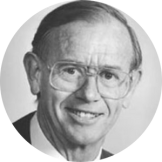
- The Fellowship commemorates the work of Dr G.J. Caughley, FAA in ecology and wildlife management.
The Fellowship commemorates the work of Dr G.J. Caughley, FAA in ecology and wildlife management.
The inaugural Fellowship was in 1996. The Fellowship is offered every two years. Up to $10,000 (GST exclusive) is offered.
The purpose of the Fellowship is to enable ecologists resident in Australia or New Zealand to share their expertise by visiting scientific centres in countries outside of the Fellow's own country to deliver lectures.
Fellowships are normally expected to have been undertaken within two years from the date of award. Awardees may apply for extensions due to extenuating circumstances or to apply for variations to remove or adapt to barriers encountered to their planned travel.
Key dates
Below are the key dates for the nomination process. While we aim to keep to this schedule, some dates may change depending on circumstances.
GUIDELINES
The following guidelines provide important information about eligibility, submission requirements, and assessment processes. Please review them carefully before submitting an application.
The Fellow will be an ecologist resident in Australia or New Zealand. Preference will be given to an applicant who indicates an interest in population ecology of wildlife and its scientific management.
The Australian Academy of Science encourages nominations of female candidates and of candidates from a broad geographical distribution.
Fellowships are tenable for tours of not less than two weeks and not more than three months. Funding may be used towards direct economy class airfares, a daily allowance, and other costs relating to the tour.
The Academy does not, in general, have the resources to offer support to partners and children to accompany an awardee of a travelling fellowship or scholarship, but will on a case by case basis and subject to the availability of funds, consider support for a carer to accompany an infant if this allows the carer to accept the award.
Fellowships are normally expected to have been undertaken within two years from the date of award. Awardees may apply for extensions due to extenuating circumstances or to apply for variations to remove or adapt to barriers encountered to their planned travel.
Applications must include the following:
- Brief curriculum vitae. Maximum of three pages using size 12 font.
- Evidence of scientific achievements and honours (max. 150 words).
- Evidence of lecturing capabilities (max. 100 words). Provide a summary of lecturing capabilities, including the ability to communicate with scientific and lay-audiences.
- List of 5 of the most significant publications (of most relevance to this Fellowship), each including up to 50-words on why they are significant. Each must have an outline the candidate's specific role in the research and indicate percentage contribution.
- Aims and benefits of the tour and an outline of the planned itinerary.
- Itemised budget with brief justification for each item. Up to $A10,000 is available to cover travel and living expenses. Daily allowance rates followed for this scheme are listed in table 1 of the ATO Tax determination ruling. They can also be found through contacting the awards team at awards@science.org.au
- Contact details of two referees.
Applications are assessed by a committee of scientists with diverse expertise based on the assessed competitiveness of the proposal. The Academy is not able to enter into discussion or correspondence regarding the reasons why an application is successful or not.
- It is the responsibility of the grant-holder to nominate and contact hosts for the arrangement of both public and scientific lectures in the various centres to be visited.
- This grant does not provide funds for bench fees, managerial, visa, insurance, infrastructure costs, or salaries.
- Applicants can only receive funding from the same research or travelling research award once in a three calendar year period.
- Applicants may apply for more than one award but can only receive one Academy travelling or research award per calendar year.
- Supporting institutes and awardees are required to ensure that any research they undertake that is funded by the Australian Academy of Science adheres to the Australian Code for the Responsible Conduct of research, severe breach of these codes may result in the withdrawal of current and refusal of future funding support. Research involving Indigenous Australians must comply with the Guidelines for Ethical Research in Australian Indigenous Studies.
A report is due after the completion of travel. The report should include the purpose and outcomes of the tour, along with details of venues, approximate attendee numbers (with specifics on EMCR attendee numbers), and expected vs. actual expenditure.
Applications are to be completed through an online form found by clicking on the Apply button on the top right of this web page when the round is open.
Past awardees
2026—Dr Lil van Eeden: To travel to India, Germany and the United Kingdom
2024—Richard Kingsford: To travel to South Africa, Botswana, Kenya, the UK and Europe
2022—Peter Caley: To travel to New Zealand and Sweden
2020—Benjamin Allen: to travel to Sri Lanka, Nepal and South Africa
2018—Graham Nugent: travel to Canada, Mexico, Spain and the USA
2016—Mike: Letnic: to travel to the University of California, Los Angeles, Oregon State University, the University of Wyoming and Yellowstone National Park Center for Resources
2014—R. van der Ree
2012—A. Byrom
2010—D.M.J.S. Bowman
2008—D.P. Armstrong
2006—D.M. Forsyth
2004—R. Shine
2002—J. Parkes
2000—P. Rismiller
1998—J. Hone
1996—D. Choquenot