


Fellows' biographical memoirs
Each biographical memoir of deceased Fellows of the Academy is carefully researched, resulting in a unique biographical collection of celebrated lives and important achievements.


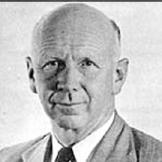
Arthur Robert Hogg 1903-1966
Arthur Robert Hogg was born in Melbourne, Victoria, on 25 November, 1903. He became a student at the Royal Melbourne Technical College, then at the University of Melbourne, where he graduated BSc in 1923, with first-class honours in chemistry and the Dixson Scholarship, and as MSc in 1925, with the Kernot Scholarship. He went first to the Broken Hill Associated Smelters at Port Pirie, South Australia, quickly to become Assistant Superintendent of Research, a post he held until 1929.
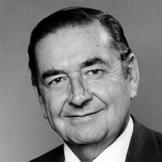
Athelstan Laurence Johnson Beckwith 1930–2010
Athel Beckwith was an organic chemist whose research was concerned with free radicals, the reactive intermediates that play important roles in many organic chemical reactions. After studies and junior appointments at Australian universities, at Oxford University he worked with W. A. Waters and completed his doctorate at a time when scepticism about the very existence of free radicals was being rolled back by a small group of experimentalists.
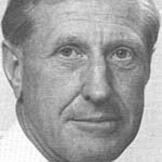
Bede Morris 1927-1988
Bede Morris was born in Sydney on 10 June 1927, the younger of two sons of Grainger and Evelyn Morris. During his school days, Bede was a choir boy at St Paul's Church. He also played several sports with great enthusiasm and, as with most things, worked hard to achieve a standard of excellence which satisfied him.
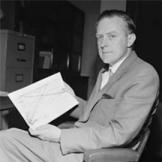
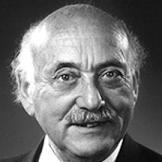
Bernhard Hermann Neumann 1909–2002
Bernhard Hermann Neumann was born and educated in Berlin. He held doctorates from Berlin and Cambridge, and mathematical positions at universities in Cardiff, Hull, Manchester, and the Australian National University (ANU) in Canberra. Whereas his move to the UK in 1933 was a result of the difficulties he faced as a Jew in finding employment in Germany, his move to Australia in 1962 was to set up a new research Department of Mathematics at the Institute of Advanced Studies at the ANU.
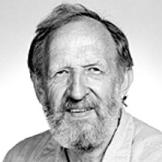
Brian John Robinson 1930–2004
In a half-century involvement in radio astronomy, Brian Robinson achieved international recognition and received many honours. During a forty-year career at CSIRO Division of Radiophysics, he undertook leading research, headed the Astrophysics Group, and contributed significantly in the Australia Telescope planning and funding campaign. Internationally, he distinguished himself in radio astronomy committees and negotiations to protect radio astronomy observations from interference from telecommunication transmissions.