

Fellows' biographical memoirs

Each biographical memoir of deceased Fellows of the Academy is carefully researched, resulting in a unique biographical collection of celebrated lives and important achievements.

Image Description
patttern
Filters
Clear filters
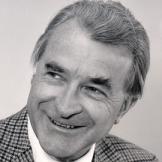
Otto Frankel

Otto Frankel 1900-1998

Sir Otto Frankel was a geneticist by training, plant breeder by occupation, cytologist by inclination and genetic conservationist by acclaim. His career in science was unusual in that his most widely acclaimed work was done after his official retirement.
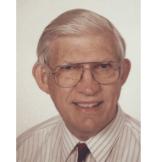
Pehr Edman

Pehr Victor Edman 1916-1977

Pehr Victor Edman was born in Stockholm, Sweden, in April 1916 and died in Munich, FRG, in March 1977. He was born into a lawyer's family and received his schooling in Stockholm. In 1935 he began medical studies at the Karolinska Institute and graduated with his primary medical qualifications in 1938. He became interested in research and, following graduation, continued to work at the Karolinska Institute, largely in the laboratory of Professor Eric Jorpes.
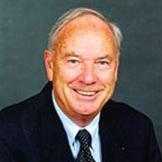
Peter Gage

Peter William Gage 1937–2005

Peter William Gage (1937–2005) was recognised nationally and internationally as one of Australia’s leaders in membrane physiology, biophysics and neuroscience. His research on neurotransmission, muscle and the structure–function of ion channels was extraordinarily productive, with over 7,000 citations. A gifted speaker with a great enthusiasm for research and for the introduction of cutting-edge technology, Peter Gage influenced and encouraged a great many research students, postdoctoral fellows and senior colleagues in their scientific careers.
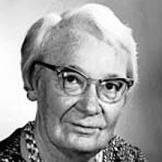
Raymond Le Fevre

Raymond James Wood Le Fèvre 1905-1986

Raymond James Wood Le Fèvre was born in North London on the first day of April, 1905. He was the eldest of three children of Raymond James Le Fèvre, the managing clerk of a firm of London solicitors, and his wife Ethel May (née Wood). Of his four grandparents, three had died before 1910. Only his father's mother, née Louise Darby, of Bath survived into his childhood.
Richard Casey

Richard Gardiner Casey 1890-1976

Richard Gardiner Casey was elected to the fellowship of the Australian Academy of Science in 1966 in recognition of his conspicuous service to the cause of science. Initially trained as an engineer, he began, upon his return from the 1914-18 War, to practise the profession of mining geologist. Early in his life he was diverted from this occupation and, after a short period as a political representative of the Australian government in London, entered Federal politics as a member of Parliament.
Richard Woolley

Richard van der Riet Woolley 1906-1986

Richard van der Riet Woolley was born on 24 April 1906 at Weymouth, Dorset, England. He was the fourth of five children of Paymaster Rear Admiral Charles Edward Allen Woolley, C.M.G., R.N. (1863-1940) and his wife Julia Marian Marguerite van der Riet. To Woolley, his parents' families appeared to be 'professional, with some contact with University circles'. To us now, however, the 'contact' adds up to rather a lot.
Bruce Knox

Robert Bruce Knox 1938-1997

Robert Bruce Knox was elected Fellow of the Australian Academy of Science in 1989 and Fellow of the American Academy of Allergy and Clinical Immunology in 1990, a rare honour for any one without a medical degree. He was elected President of the International Association of Sexual Plant Reproductive Research from 1990-1994. He was known internationally as an innovative plant scientist who published extensively on a wide range of topics.
Robert Menzies

Robert Gordon Menzies 1894-1978

Robert Gordon Menzies was born on 20 December 1894 in the country town of Jeparit in the State of Victoria, Australia. By the brilliance of his intellect he won the scholarships that enabled him to qualify with distinction as a barrister, and to be called to the Victorian Bar. He abandoned the successful professional practice of the law to devote the greater part of his life to a political career, first in his own State, but later in the Parliament of the Commonwealth of Australia.
Hanbury Brown

Robert Hanbury Brown 1916-2002

Robert Hanbury Brown was born on 31 August 1916 in Aruvankadu, Nilgiri Hills, South India; son of an Officer in the Indian Army, Col. Basil Hanbury Brown, and of Joyce Blaker. From the age of three Hanbury was educated in England, initially at a School in Bexhill and then from the age of eight to fourteen at the Cottesmore Preparatory School in Hove, Sussex. In 1930 he entered Tonbridge School as a Judde scholar in classics.

Robert Henry Symons 1934–2006

Bob Symons died in Adelaide on 4 October 2006 after a long illness. He was distinguished through his contributions to our knowledge of the structure, function and replication of plant viruses, viroids and virusoids. His research culminated in the discovery of the hammerhead folding of the RNA chain and its role as a ribozyme in self-cleavage of the RNA in some of these plant pathogens. He was a leader in his field and was responsible for commercial applications of his research and the establishment in Adelaide of the first Australian company to produce and market molecular biologicals for research.