

Fellows' biographical memoirs

Each biographical memoir of deceased Fellows of the Academy is carefully researched, resulting in a unique biographical collection of celebrated lives and important achievements.

Image Description
patttern
Filters
Clear filters
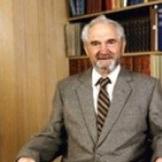
John Anderson

John Robert Anderson 1928–2007

John Anderson was born in Sydney on 5 March 1928 and died in Melbourne on 26 February 2007. He was educated at Sydney Boys’ High School, Sydney Technical College, the New South Wales University of Technology (now the University of New South Wales) and the University of Cambridge.
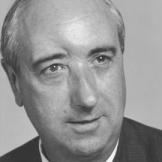
John Booker

John Robert Booker 1942-1998

John Booker was born at Crown Street Hospital in Sydney on the 24 July, 1942. His mother was Beryl Joan Booker (née Nagle) and his father was Jack Edgar Booker, an accountant and teacher. John had a younger sister Judith, who was born in 1950.
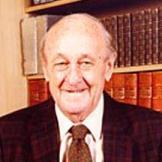
John Philip

John Robert Philip 1927-1999

This memoir discusses John Philip’s character and his work as Australia’s most distinguished environmental physicist. It explores his management of science and his role in the Australian Academy of Science as well as his poetry and his fascination with architecture.
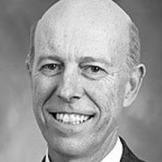
John Turner

John Stewart Turner 1908-1991

John Stewart Turner was born in Middlesborough, England on 9 September 1908, second son of Thomas Stewart and Ellen Turner (née Spice). His father was a Government inspector of armour plate. Apart from an older brother he had one sister and two younger brothers. His early childhood was spent in Stockport, Cheshire, where the family lived in a big rambling house with a large garden wonderfully suited to playing games and going for secret walks.
Keith Bullen

Keith Edward Bullen 1906-1976

Keith Edward Bullen was born in Auckland, New Zealand, on 29 June 1906. He attended schools in the Auckland area, completing his schooling at Auckland Grammar School in 1922; he earned recognition as a National Scholar, and was awarded the Eric Astley Prize for mathematics and science and a University Entrance Scholarship. From 1923 to 1925 he was a full-time student at Auckland University College and graduated BA in 1925, his major subjects being pure and applied mathematics.
Kenneth Myer

Kenneth Baillieu Myer 1921-1992

Kenneth Baillieu Myer was elected to the Fellowship of the Australian Academy in April 1992, under the provision for special election of people who are not scientists but have rendered conspicuous service to the cause of science.
Lawrence Johnson

Lawrence Alexander Sidney Johnson 1925-1997

Lawrence Alexander Sidney (Lawrie) Johnson was a taxonomic botanist notable for the outstanding breadth of his interests and expertise, the rigour of his scientific approach, and the intensity with which he defended scientific conclusions and opinions. His major contributions came through broad synthesis so that systematic studies were integrated with evolutionary and ecological considerations.
Mark Oliphant

Marcus Laurence Elwin Oliphant 1901-2000

With the death of Professor Sir Mark Oliphant, the first President of the Australian Academy of Science, Australia lost one of its most distinguished scientists. The Academy will remember and honour him for his leading role in its establishment, and for his continuing association with it until the last years of his long life.
Maurice Mawby

Maurice Alan Edgar Mawby 1904-1977

Sir Maurice Mawby was a memorable figure in the Australian minerals industry – an Australian proud of his country and of what mining had done to make it strong. He was one of a handful of professional mining executives who set in motion the greatest upsurge in mineral exploration, discovery, and development ever seen in the country's history. Well known and highly regarded, he inspired international confidence in the people who worked with him.
Michael White

Michael James Denham White 1910-1983

Michael White put chromosomes into evolutionary thinking and made a primary contribution to the emerging neo-Darwinian evolutionary synthesis. He emphasised cytogenetic systems and argued that genic and chromosomal evolution were of seminal importance in the process of speciation and evolution. His major scientific contribution was Animal Cytology and Evolution (1945), a book that summarised, analysed and synthesised current information on animal chromosomes.