


What we choose for science today, will shape our destiny. Because at the heart of every global challenge and the poly-crisis we are experiencing lies science and technology.
In an era of mass disruption, the world is being reshaped before our eyes. Technological advances are a daily norm, while geopolitics and decarbonisation drive major science and technology investment decisions. And the global race for STEM talent has never been more intense. Science and technology are the currency of power and prosperity.
We've not been surprised by our scientists – full of innovative spirit and creative genius – who have been able to pivot to adapt to new national security paradigms. They are finding new ways to engage with international counterparts and contribute to solving societal issues, cognisant of our rapidly changing world. They are also playing a key role in fighting disinformation which is destabilising our knowledge environment.
At the Australian Academy of Science, we have responded to these conditions in myriad ways. We have seized the opportunity to help shape the future R&D system via our evidence-based input into the current Strategic Examination of R&D. At the time of writing this message, the Denholm Review of R&D has just been delivered to the Australian Government.
We have continued to deliver timely advice to government on AI and critical infrastructure, especially the high-performance computing needs of our nation. We have also established Australia’s Global Talent Attraction Program so our nation can benefit from the global movement of STEM talent.
This year, we are especially proud of the insights we have been able to provide in comprehensively assessing Australia’s science capability gaps, so that we can make decision now that set us in good stead to face an uncertain future. Australian science, Australia’s future: Science 2035 shows – among other things – that our workforce has significant and worrying capability gaps, such as material scientists needed for AI and quantum industries, and geoscientists needed for mineral exploration.
Over the course of 2025 we have also heavily invested in strengthening our international scientific relations across the Asia–Pacific region and the world. We have worked closely with the Australian Government to strengthen Australia’s science diplomacy efforts. And our visits to Indonesia, China and the United States have been influential.
Read on to learn more about our activities and achievements in science policy and diplomacy for 2025.
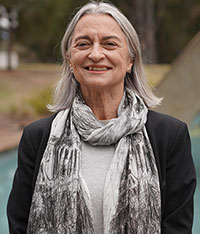
– Emeritus Professor Frances Separovic AO FAA – Foreign Secretary
– Professor Margaret Sheil AO FAA FTSE – Secretary for Science Policy
Don't miss future updates
The Science Policy and Diplomacy Newsletter of the Australian Academy of Science highlights essential discussions, developments and events at the science–policy nexus in Australia and around the globe.
The Academy champions science for the benefit of all, bringing together Australian expertise to provide authoritative advice that shapes evidence-based policy development and decision-making.
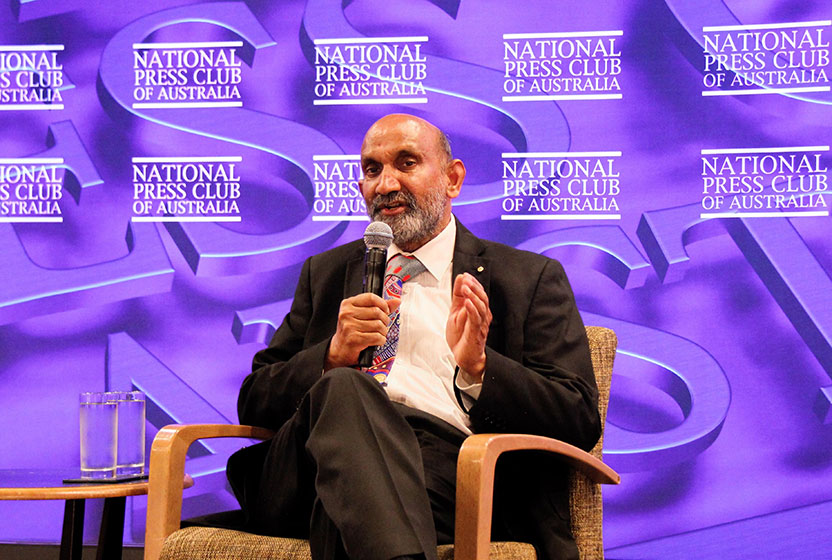
Science is a national strategic asset that Australia cannot afford to treat as anything less, said Professor Chennupati Jagadish AC, Australian Academy of Science President, in the 2025 Ralph Slatyer Address on Science and Society at the National Press Club in November.
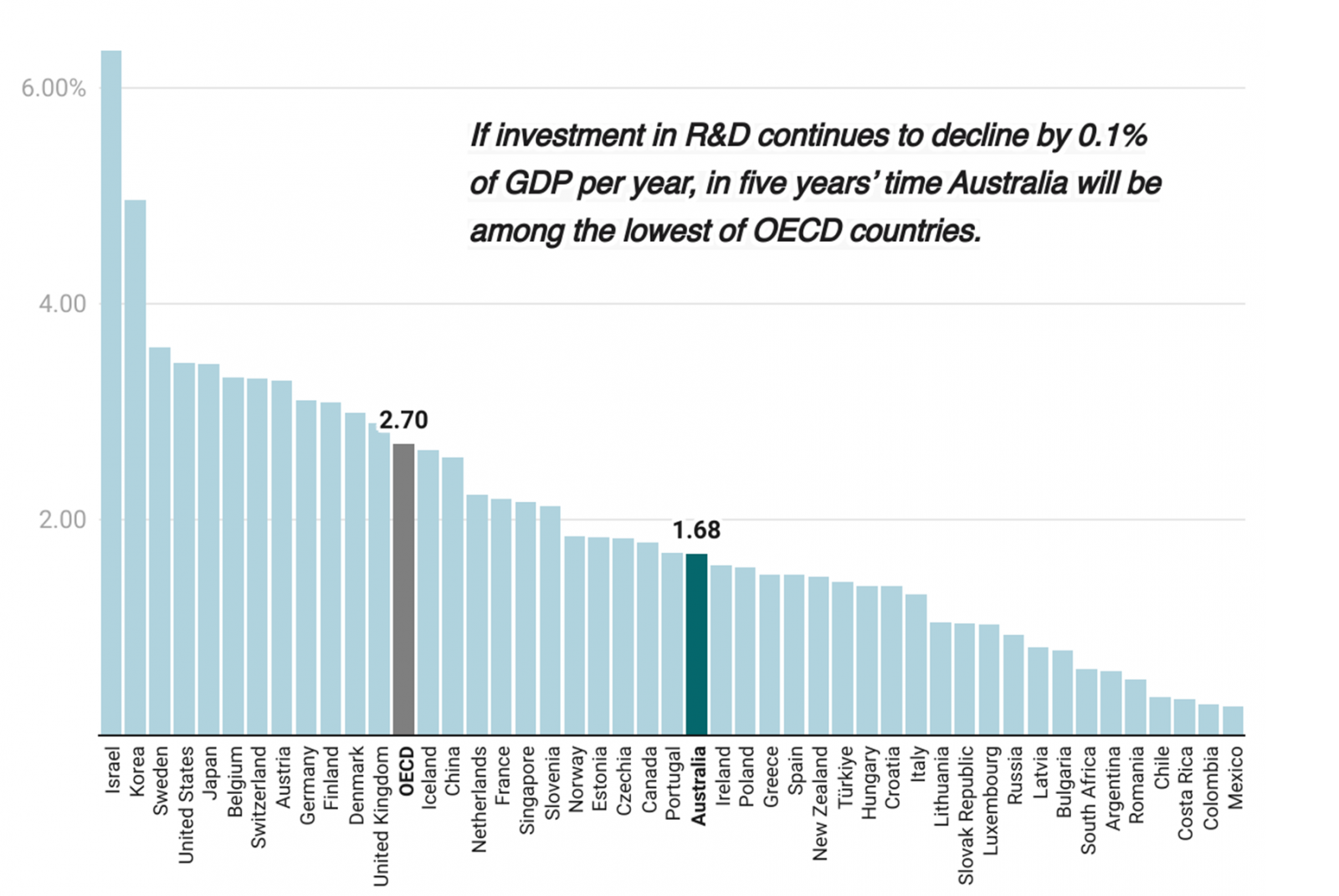
Professor Jagadish noted the sustained decline in Australia’s investment in R&D and the consequences that this is already having on the sector mpacting our national resilience.
He argued for a mature, national approach to reverse the decline and build sovereign capability, to ensure that Australia can prosper in an era of geopolitical, technological and environmental disruption. This approach includes a long-term R&D investment plan and a temporary R&D levy.
The Strategic Examination of Research and Development (SERD) is an opportunity to take stock of the health of Australia’s science system, Professor Jagadish noted. Once published, the Academy will measure the SERD’s success against attributes of an effective science system outlined in the address – from stable funding to talent pipelines, and research integrity to international engagement.
Read a transcript of Professor Jagadish’s address
The Strategic Examination of Research and Development (SERD) highlights low investment in R&D by the business sector. However, government investment in R&D, including in fundamental research, is also declining and must be urgently addressed.
Public and private R&D investment serve different but complementary roles. Private investment typically focuses on scaling and commercialising viable lower-risk applied research. Government funding underpins research that provides broad societal benefit.
The Academy has proposed a 10-year R&D investment plan to build public and private investment, reverse the long-standing funding decline, and strengthen Australia’s R&D system.
This includes a budget-positive proposal for a temporary levy that incentivises companies to invest in R&D. Similar levies in the agricultural and grains sector have applied since 1989, are well tolerated, and have enabled significant innovations in these sectors.
Independent analysis shows the economic impact of an R&D levy on low-intensity R&D businesses is tolerable and is unlikely to have unintended consequences.
The SERD offers a once-in-a-generation opportunity to assess the state of Australian science, identify duplication and gaps, and ensure our science system aligns with our national ambitions.
Read the Academy’s responses to the SERD issues papers and media release
Recent CSIRO job cuts and proposed closures of ANSTO beamlines are symptomatic of a science sector under strain from long-term under-resourcing.
In a recent interview, Academy President Professor Chennupati Jagadish AC said that at the same time as the cost of research going up, research investments have decreased, leading to job cuts across the entire sector.
Currently, even the funding that is allocated and legislated to support research and innovation is not being used to full effect. The Medical Research Future Fund (MRFF) was designed to deliver $1 billion every year to supporting Australian health and medical research and innovation, aiming to improve lives, build the economy and contribute to health system sustainability. However, only $650 million is being distributed for this purpose.
This means hundreds of millions in medical research funding is sitting idle while labs close, researchers leave, and most importantly Australian’s don’t fully benefit from discoveries that improve our health.
The Academy, independent MP Dr Monique Ryan, the Association of Australian Medical Research Institutes (AAMRI) and others are calling for the full MRFF to be unlocked.
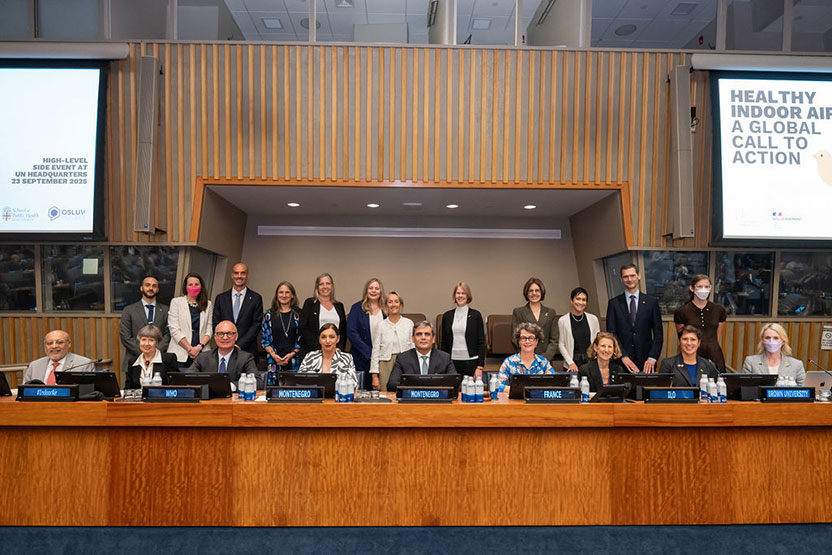
Internationally, there is a growing momentum to recognise the fundamental importance of healthy indoor air to our health and wellbeing.
A high-level event alongside the 80th UN General Assembly attracted 300 leaders in this field who signed a global pledge to recognise healthy indoor air as a human right.
The Academy, in partnership with Burnet Institute, Brown University’s School of Public Health, and the OSLUV Project, led this initiative.
In Australia, we do not measure nor monitor indoor air quality to scientifically acceptable standards, despite most exposure to airborne pathogens and other pollutants occurring indoors, where we spend 90% of our time.
Indoor air pollution has a negative impact on our health and wellbeing, the accessibility of indoor spaces, and our economy.
The good news is that the scientific, technological and policy solutions to improve indoor air already exist.
In November, the Academy published a new report providing the latest scientific evidence on the state of indoor air and outlined policy pathways to create indoor air quality standards.
This body of work was led by Distinguished Professor Lidia Morawska FAA FTSE, a world-leading expert in the field and who was awarded the 2025 Prime Minister’s Prize for Science.
The Academy’s report was launched by Assistant Minister the Hon Rebecca White MP at the Safer Air Project’s annual conference at Parliament House.
Dr Amanda Cohn MLC also announced a NSW parliamentary inquiry into clean indoor air at the conference.
The Academy’s new report complements the State of indoor air in Australia 2025, which provides a baseline profile of 10 pollutants across Australian buildings and examines risks, exposure limits, health and economic consequences, and policy responses.
Strong and diverse international collaboration is essential for Australia to access the 97% of knowledge produced elsewhere, and to boost the country's scientific impact.
A national science diplomacy framework would align science and technology with national security and foreign policy, leveraging Australia’s research strengths strategically on the global stage.
What the Academy is doing
The Academy’s international work promotes collaboration at diplomatic, organisational and individual levels. We work with partners worldwide to highlight Australia’s strengths and identify opportunities for joint research.
Since 2023, the Academy has hosted the Regional Focal Point for Asia and the Pacific (RFP-AP) of the International Science Council (ISC), supported by the Australian Government. The RFP-AP's role includes fostering scientific collaboration with the region through science advice and capacity-building programs, and ensuring the region’s needs are represented in the ISC’s global work.
The global exchange of people and ideas provides immeasurable benefit to Australia. The Academy’s Global Talent Attraction Program, launched in April, opens the door to stellar scientists and technologists wishing to call Australia home. The Academy also co-delivers the Global Science and Technology Diplomacy Fund Strategic Element in collaboration with the Academy of Technological Sciences and Engineering (ATSE). The Fund supports bi- and multi-lateral science collaboration between Australia and priority partner countries on behalf of the Australian Government.
Connections forged through visits
In 2025, Academy President Professor Chennupati Jagadish AC led the Academy’s science diplomacy engagement across the Asia–Pacific, including high-level visits to China, Indonesia and India to underscore the benefits of risk-informed international research collaboration.
In November, the Academy met with a delegation from Chile’s National Agency for Research and Development interested in Australia’s Astronomy decadal plan 2026–2035. We also hosted a delegation from the National Academy of Science and Technology of the Philippines that was interested in learning more about Australian science, Australia’s future: Science 2035.
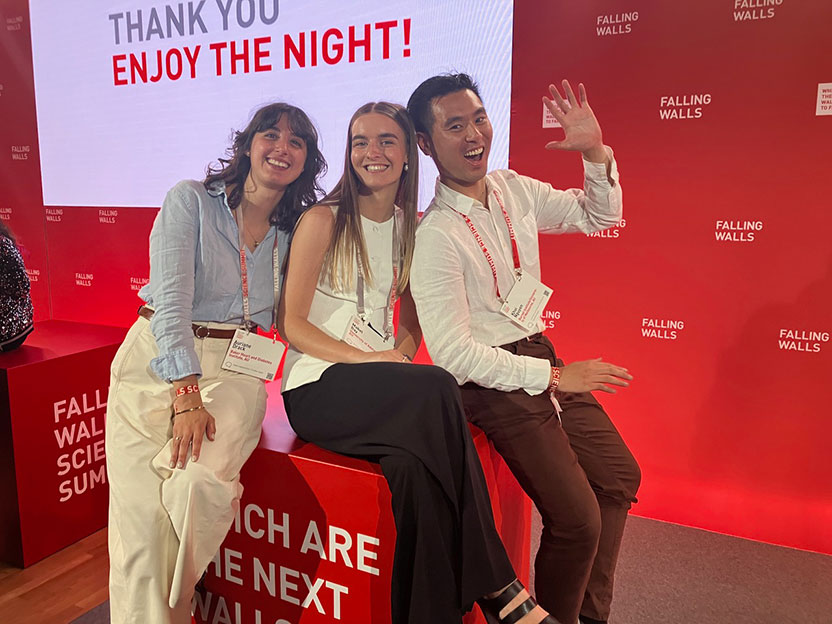
The Academy visited partners in the US, China, Indonesia, New Zealand and New Caledonia to deepen our engagement across mutually beneficial priorities – including biodiversity research, engagement with Indigenous knowledge holders, and mechanisms to support early- and mid-career researchers (EMCRs). This included supporting three EMCRs to pitch their research at the global Falling Walls Science Summit in Berlin.
In addition, Australian experts and Academy Foreign Secretary Emeritus Professor Frances Separovic AO contributed to the Science20 (S20) 2025 statement, Climate change and well-being.
The Belmont Forum
In 2025, Future Earth Australia became the Australian member of the Belmont Forum.
The Belmont Forum is a partnership of funding agencies, international scientific councils, and regional consortia to support transdisciplinary, transnational research on global environmental change.
Active participation reinforces Australia’s leadership in sustainability research and diversifies our partnerships while strengthening sovereign interests. Previously, CSIRO represented Australia and leveraged €1.65 million in contributions against €6.48 million received from international partners.
Horizon Europe
Horizon Europe is the world’s largest research and innovation program, offering access to more than A$163 billion in funding opportunities.
Now is an ideal time to advance consideration of Australian association to Horizon Europe.
In July, the Academy co-hosted a forum at the Shine Dome, with EURAXESS Australia & New Zealand, the EU Delegation to Australia, and various embassies, convening stakeholders from government, academia, industry and the diplomatic community to discuss strategic benefits of association.
In September, the Academy further welcomed an announcement that Australian government has entered into exploratory talks with the European Commission on a possible association to Horizon Europe.
In December, the Academy released a series of eight discussion papers on AI and the future of Australian science: Is Australian science ready for AI? The papers build on the findings of Australian science, Australia’s future, and examine how AI is reshaping research, accelerating discovery and redefining the capabilities Australia will need by 2035.
The papers outline the opportunities and risks ahead and highlight the investment required to ensure Australia can harness AI responsibly and remain competitive.
The Australian Academy of Science will host the third summit of the Tri-Academy Partnership in Canberra in November 2026.
A collaboration between the Australian Academy of Science, the Royal Society of Canada and The Royal Society – Te Apārangi, this initiative brings together Indigenous Fellows, thought leaders, and knowledge holders from Australia, Canada, and Aotearoa New Zealand to progress the agenda of collaborative international Indigenous-led research.
The inaugural summit was held in Vancouver, with the second summit taking place in Auckland in November 2025. Academy Fellow Professor Tom Calma AO FAA FAHA FASSA provided a keynote on opportunities for strengthening engagement with Indigenous knowledge holders.
The 2025 Summit saw the participation of all learned academies in Australia, enabling rich, multidisciplinary contributions from the Indigenous Australian delegation. A joint communiqué from Indigenous research leaders and Presidents’ statement was published at the summit’s conclusion.
Stay tuned for details on the 2026 summit in the new year.
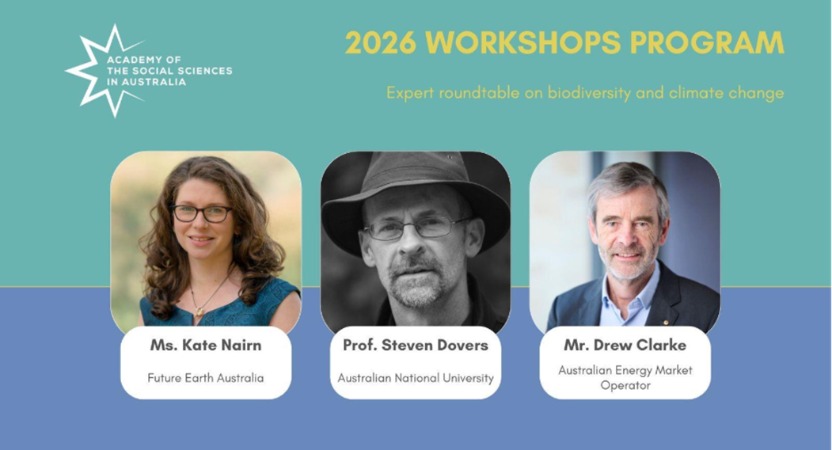
Future Earth Australia, the Australian National University and Australian Energy Market Operator will convene an Expert Roundtable on Biodiversity and Climate Change in February 2026.
The roundtable will bring together voices from science, Indigenous leadership, and across sectors to co-design a national strategy, focused on the crucial links between a clean energy transition and biodiversity conservation.
The roundtable is supported by a 2026 Workshops Program Grant from the Academy of the Social Sciences in Australia.
Ocean 2 supports transdisciplinary research addressing global ocean challenges. This is an opportunity for Australian researchers or institutions to collaborate on project proposals. Research themes include:
Future Earth Australia is coordinating participation as the member organisation for Australia. To discuss participation opportunities, proposal development, and potential funding pathways, please get in touch with Kate Nairn, Manager of Future Earth Australia, at kate.nairn@science.org.au
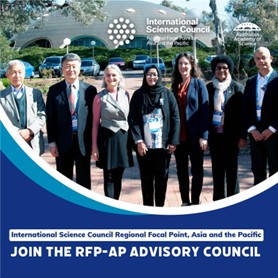
The International Science Council (ISC) Regional Focal Point for Asia and the Pacific is seeking exceptional new members to join its advisory council to help deepen regional collaboration across sectors.
This is a unique opportunity to shape the future of science in the Asia–Pacific region by contributing diverse perspectives and strengthening cross-sectoral partnerships.
Nominations are welcome from leaders in:
Find out more and submit your nomination before 11 January 2026
Please note: nominations must be from ISC member organisations.
The ISC Regional Focal Point for Asia and the Pacific and the Pacific Islands Universities Regional Network (PIURN) are pleased to launch the inaugural Tupu Pacific Research Grants.
Multidisciplinary and diverse teams made up of at least two Pacific Island universities and one Australian university will collaborate on projects of their choice aligned with the Blue Pacific Strategy 2050. Up to five consortia will receive funding of up to A$40,000 each, all coordinated with the support of PIURN.
Applications close 15 December 2025.
The UN Secretary-General’s Scientific Advisory Board is inviting scientists and researchers from all fields to share insights on emerging issues in science and technology through its 2026 Horizon scanning survey. Your input will help identify key developments, risks, and opportunities shaping global scientific advisory processes.
Responses are anonymous, and a summary of findings will be shared with participants.
In a position statement, the Academy asserts that Australia’s interests in Antarctica are best supported through a long-term, sustainable funding model aimed at maintaining its scientific research and leadership within the Antarctic governance framework.
Experts convened by the Academy appeared before the Government’s Senate Select Committee on PFAS (per- and polyfluoroalkyl substances). The Committee subsequently made 47 recommendations reflecting this scientific advice. This included coordinated national monitoring of PFAS contamination in the environment and working with relevant research organisations to develop a PFAS research strategy and roadmap.
In November, the Academy highlighted the need for environmental reforms to include clear and legislated mechanisms to embed science advice into decision-making. Recommendations included removing damaging exemptions, limiting discretionary ministerial powers, and the need for independent governance boards. The Academy also recommended that the reforms include clear, legislated definitions of key terms and criteria, such as the ‘net-gain’ test, to reduce interpretive discretion and improve clarity.
The scientific evidence for the health, social and economic importance of indoor air quality (IAQ) is unequivocal. This report provides a baseline profile of 10 pollutants measured in different Australian building types and examines risks, exposure limits, health and economic consequences, and possible policy responses.
This report presents the results of five EU Science Diplomacy Working Groups that were established by the European Commission in order to develop recommendations for a European Framework for Science Diplomacy.
The Geneva Science and Diplomacy Anticipator examines how diplomacy and multilateral institutions can keep pace with scientific breakthroughs and innovations through mapping, convening stakeholders, sandboxes and pilot projects, and capacity building.
An editorial by Marcelo Knobel, Executive Director of The World Academy of Sciences for the advancement of science in developing countries, on the essential role of scientific capacity-building in the Global South for tackling planetary challenges. (Paywalled.)
The global partner of choice for R&D: Finding the UK’s place in a changing world
This report asks the UK Government to recognise the power that R&D has to create economic growth in the UK, as well as boosting its soft power and making it healthier and safer.
A governance-minded look at why long-range, systemic investment in science pays off, by Sir Adrian Smith PRS, President of the Royal Society.
The International Science Council (ISC) has released a new position calling for the fully transparent disclosure of all research funding sources to be recognised as a shared responsibility and adopted as a core norm by all levels of the global science system.
A blog by ISC Fellow Jan Marco Müller warns that global research hubs like CERN and ITER, once symbols of science diplomacy, are under threat from rising geopolitical tensions, sanctions and funding cuts.
The Australian Academy of Science occasionally partners with Australian Government departments and other science and research organisations to produce independent research reports and science advice and facilitate international science linkages on their behalf. If you are interested in working with the Academy, please contact us.
Gifts and legacies from Fellows and friends have helped the Australian Academy of Science to maintain its independence.
Support given through general donations is directly responsible for strengthening the Academy’s core activities such as scientific meetings, independent advice to support policy development, publications, education, public awareness and outreach, international activities, awards and fellowships.
Each time you make a gift through our annual tax or special appeals, you help to make the Academy a vital, viable and visible presence in our region.
© 2025 Australian Academy of Science
